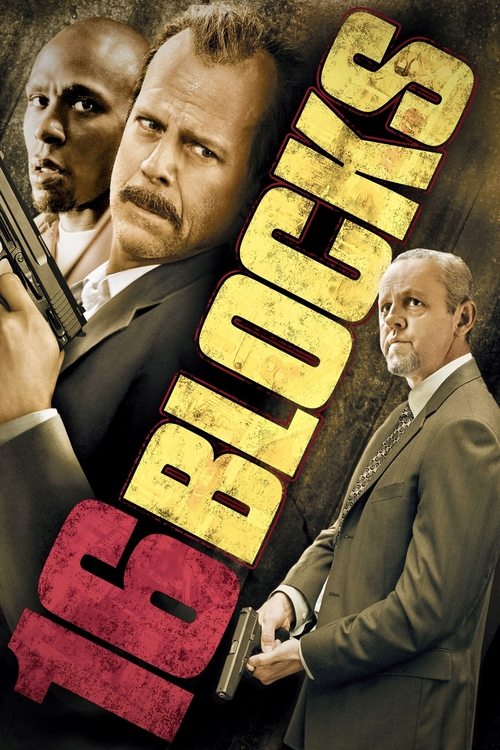
16 Blocks
An aging cop is assigned the ordinary task of escorting a fast-talking witness from police custody to a courthouse, but they find themselves running the gauntlet as other forces try to prevent them from getting there.
Working with a mid-range budget of $55.0M, the film achieved a steady performer with $65.7M in global revenue (+19% profit margin).


Plot Structure
Story beats plotted across runtime


Narrative Arc
Emotional journey through the story's key moments
Story Circle
Blueprint 15-beat structure
Arcplot Score Breakdown
Weighted: Precision (70%) + Arc (15%) + Theme (15%)
16 Blocks (2006) exemplifies strategically placed narrative design, characteristic of Richard Donner's storytelling approach. This structural analysis examines how the film's 15-point plot structure maps to proven narrative frameworks across 1 hour and 45 minutes. With an Arcplot score of 6.7, the film balances conventional beats with creative variation.
Characters
Cast & narrative archetypes

Jack Mosley
Eddie Bunker
Frank Nugent
Main Cast & Characters
Jack Mosley
Played by Bruce Willis
Burned-out NYPD detective tasked with escorting a witness 16 blocks to the courthouse.
Eddie Bunker
Played by Mos Def
Talkative witness who must testify before a grand jury about police corruption.
Frank Nugent
Played by David Morse
Jack's former partner and corrupt detective who wants to stop Eddie from testifying.
Structural Analysis
The Status Quo at 1 minutes (1% through the runtime) establishes Jack Mosley finishes a grueling night shift, exhausted and drinking. He's a broken man, limping through life, assigned to guard a crime scene while other detectives handle the real work.. Notably, this early placement immediately immerses viewers in the story world.
The inciting incident occurs at 13 minutes when While Jack stops to buy whiskey, a man attempts to assassinate Eddie. Jack kills the shooter and realizes this is no ordinary witness transport - Eddie is set to testify against corrupt NYPD cops.. At 12% through the film, this Disruption aligns precisely with traditional story structure. This beat shifts the emotional landscape, launching the protagonist into the central conflict.
The First Threshold at 27 minutes marks the transition into Act II, occurring at 26% of the runtime. This illustrates the protagonist's commitment to Jack makes his choice: he refuses to surrender Eddie to Frank. He commandeers a city bus with Eddie, crossing the threshold from passive compliance into active resistance against his corrupt former colleagues., moving from reaction to action.
At 53 minutes, the Midpoint arrives at 51% of the runtime—precisely centered, creating perfect narrative symmetry. The analysis reveals that this crucial beat Frank's team corners them in an apartment building. The stakes escalate from escape to survival as the corrupt cops close in. Jack realizes the entire NYPD is compromised - there's no one to trust. False defeat: they're trapped with no way out., fundamentally raising what's at risk. The emotional intensity shifts, dividing the narrative into clear before-and-after phases.
The Collapse moment at 79 minutes (75% through) represents the emotional nadir. Here, Cornered in a bar, Jack is shot and gravely wounded. Eddie is recaptured by Frank's men. Jack lies bleeding, his mission failed, his redemption seemingly impossible. The "whiff of death" is literal - Jack appears to be dying., demonstrates the protagonist at their lowest point. This beat's placement in the final quarter sets up the climactic reversal.
The Second Threshold at 84 minutes initiates the final act resolution at 80% of the runtime. Jack rises. Wounded but determined, he realizes he must finish this - not just to save Eddie, but to save himself. He synthesizes his old detective skills with his new moral clarity. He knows how Frank thinks and where they'll take Eddie., demonstrating the transformation achieved throughout the journey.
Emotional Journey
16 Blocks's emotional architecture traces a deliberate progression across 15 carefully calibrated beats.
Narrative Framework
This structural analysis employs systematic plot point analysis that identifies crucial turning points. By mapping 16 Blocks against these established plot points, we can identify how Richard Donner utilizes or subverts traditional narrative conventions. The plot point approach reveals not only adherence to structural principles but also creative choices that distinguish 16 Blocks within the action genre.
Richard Donner's Structural Approach
Among the 16 Richard Donner films analyzed on Arcplot, the average structural score is 6.9, demonstrating varied approaches to story architecture. 16 Blocks takes a more unconventional approach compared to the director's typical style. For comparative analysis, explore the complete Richard Donner filmography.
Comparative Analysis
Additional action films include The Bad Guys, Puss in Boots and Venom: The Last Dance. For more Richard Donner analyses, see Assassins, Superman and Lethal Weapon 2.
Plot Points by Act
Act I
SetupStatus Quo
Jack Mosley finishes a grueling night shift, exhausted and drinking. He's a broken man, limping through life, assigned to guard a crime scene while other detectives handle the real work.
Theme
Eddie tells Jack about his dream of opening a bakery, saying people can change and start over. "You ever think that maybe you could do something else?" - the theme of redemption and second chances is stated.
Worldbuilding
We see Jack's world: the precinct, his estrangement from his sister, his alcoholism and physical deterioration. He's assigned a "simple" task - transport prisoner Eddie Bunker 16 blocks to testify at the courthouse by 10 AM.
Disruption
While Jack stops to buy whiskey, a man attempts to assassinate Eddie. Jack kills the shooter and realizes this is no ordinary witness transport - Eddie is set to testify against corrupt NYPD cops.
Resistance
Jack's former partner Frank Nugent arrives and reveals the conspiracy - Eddie will expose their unit's crimes. Frank offers Jack an out: hand over Eddie and walk away. Jack must decide whether to betray Eddie or fight his former brothers in blue.
Act II
ConfrontationFirst Threshold
Jack makes his choice: he refuses to surrender Eddie to Frank. He commandeers a city bus with Eddie, crossing the threshold from passive compliance into active resistance against his corrupt former colleagues.
Mirror World
On the bus, Eddie and Jack have a genuine conversation. Eddie's optimism and belief in second chances begins to affect the cynical Jack. Eddie represents everything Jack has lost - hope, dreams, and faith in humanity.
Premise
Cat-and-mouse through Manhattan. Jack and Eddie navigate hostile territory - the bus standoff, escaping through Chinatown, hiding in Eddie's neighborhood. Jack uses old detective skills while bonding with Eddie over birthday cake and bakery dreams.
Midpoint
Frank's team corners them in an apartment building. The stakes escalate from escape to survival as the corrupt cops close in. Jack realizes the entire NYPD is compromised - there's no one to trust. False defeat: they're trapped with no way out.
Opposition
Relentless pursuit intensifies. Jack and Eddie flee through buildings, into the subway system. Frank manipulates the media to paint Jack as a kidnapper. Jack's body fails him - his leg, his stamina. Eddie is wounded. Every ally turns enemy.
Collapse
Cornered in a bar, Jack is shot and gravely wounded. Eddie is recaptured by Frank's men. Jack lies bleeding, his mission failed, his redemption seemingly impossible. The "whiff of death" is literal - Jack appears to be dying.
Crisis
Jack struggles with his wounds in the dark. He could give up and die - no one would blame him. He thinks about his wasted life, the good cop he used to be, and Eddie's belief that people can change. This is his dark night of the soul.
Act III
ResolutionSecond Threshold
Jack rises. Wounded but determined, he realizes he must finish this - not just to save Eddie, but to save himself. He synthesizes his old detective skills with his new moral clarity. He knows how Frank thinks and where they'll take Eddie.
Synthesis
Jack intercepts Frank at the courthouse. Tense confrontation with hostages. Jack offers himself in exchange for Eddie's testimony. The final showdown between former partners ends with Frank's arrest and Eddie reaching the courtroom to testify.
Transformation
Two years later: Jack, now sober and at peace, visits Eddie's bakery. The broken detective from the opening is transformed - he walks without his limp of defeat, he's connected to his sister again, he found his redemption in those 16 blocks.