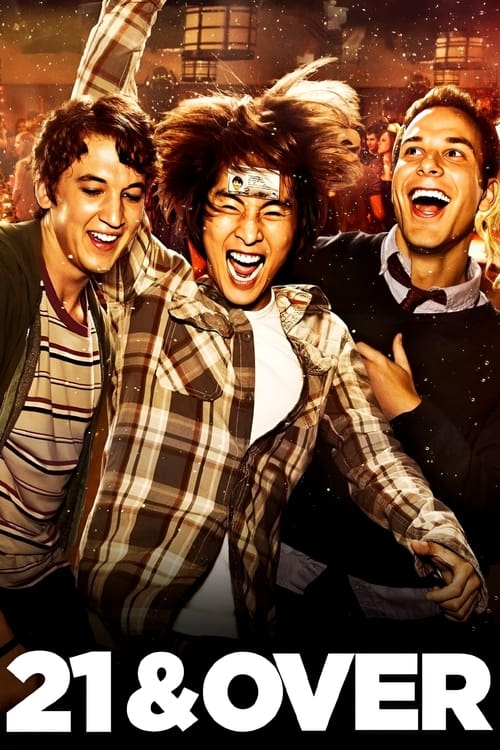
21 & Over
Brilliant student Jeff Chang has the most important interview of his life tomorrow. But today is still his birthday, what starts off as a casual celebration with friends evolves into a night of debauchery that risks to derail his life plan.
Despite its limited budget of $13.0M, 21 & Over became a solid performer, earning $48.1M worldwide—a 270% return. The film's distinctive approach attracted moviegoers, proving that strong storytelling can transcend budget limitations.







Plot Structure
Story beats plotted across runtime


Narrative Arc
Emotional journey through the story's key moments
Story Circle
Blueprint 15-beat structure
Arcplot Score Breakdown
Weighted: Precision (70%) + Arc (15%) + Theme (15%)
21 & Over (2013) exhibits strategically placed story structure, characteristic of Jon Lucas's storytelling approach. This structural analysis examines how the film's 15-point plot structure maps to proven narrative frameworks across 1 hour and 33 minutes. With an Arcplot score of 7.3, the film balances conventional beats with creative variation.
Characters
Cast & narrative archetypes

Jeff Chang

Casey

Miller
Nicole
Randy
Main Cast & Characters
Jeff Chang
Played by Justin Chon
Straight-laced pre-med student pressured into a wild night before his crucial medical school interview.
Casey
Played by Skylar Astin
Impulsive party enthusiast who drives the chaotic birthday celebration despite his friend's protests.
Miller
Played by Miles Teller
Cynical slacker who reluctantly joins the birthday chaos while avoiding his own responsibilities.
Nicole
Played by Sarah Wright
Jeff's friend and love interest who gets caught up in the wild night and helps navigate the chaos.
Randy
Played by Jonathan Keltz
Aggressive fraternity member and antagonist who creates conflict throughout the night.
Structural Analysis
The Status Quo at 1 minutes (1% through the runtime) establishes Miller and Casey, former high school friends, drive to visit Jeff Chang on his 21st birthday. Miller is carefree and wild, Casey is responsible with a job interview looming. Establishes their contrasting personalities and the distance that has grown between the old friends.. Structural examination shows that this early placement immediately immerses viewers in the story world.
The inciting incident occurs at 10 minutes when Miller convinces Jeff to have "just one beer" to celebrate his 21st birthday, promising they'll get him home early. Jeff reluctantly agrees to one drink. This seemingly small decision will cascade into chaos, disrupting both Jeff's controlled life and Casey's responsible plans.. At 11% through the film, this Disruption aligns precisely with traditional story structure. This beat shifts the emotional landscape, launching the protagonist into the central conflict.
The First Threshold at 22 minutes marks the transition into Act II, occurring at 23% of the runtime. This illustrates the protagonist's commitment to Jeff becomes completely blackout drunk and unresponsive. Miller and Casey realize they don't know where Jeff lives (he moved recently) and can't take him home. They make the choice to embark on a wild night trying to figure out his address while keeping him safe - committing fully to the chaos ahead., moving from reaction to action.
At 45 minutes, the Midpoint arrives at 49% of the runtime—precisely centered, creating perfect narrative symmetry. Of particular interest, this crucial beat False defeat: The guys discover Jeff's address, but when they arrive at his apartment, they find it's been completely trashed and his buffalo (yes, buffalo) is missing. The "solution" only reveals bigger problems. Meanwhile, they're being pursued by angry jocks and the stakes are raised significantly., fundamentally raising what's at risk. The emotional intensity shifts, dividing the narrative into clear before-and-after phases.
The Collapse moment at 67 minutes (72% through) represents the emotional nadir. Here, Jeff nearly dies - he's dangerously unresponsive and they rush him to the hospital, fearing they've killed their friend through their irresponsibility. This is the "whiff of death" moment where the consequences of the night's chaos become terrifyingly real. Their friendship and Jeff's life hang in the balance., demonstrates the protagonist at their lowest point. This beat's placement in the final quarter sets up the climactic reversal.
The Second Threshold at 73 minutes initiates the final act resolution at 79% of the runtime. Jeff wakes up and reveals the truth about his struggles with his father's pressure and his suicide attempt. This honest moment catalyzes change - Miller realizes friendship means more than partying, Casey understands that living matters too, and Jeff gains the courage to stand up to his father. They synthesize fun and responsibility., demonstrating the transformation achieved throughout the journey.
Emotional Journey
21 & Over's emotional architecture traces a deliberate progression across 15 carefully calibrated beats.
Narrative Framework
This structural analysis employs proven narrative structure principles that track dramatic progression. By mapping 21 & Over against these established plot points, we can identify how Jon Lucas utilizes or subverts traditional narrative conventions. The plot point approach reveals not only adherence to structural principles but also creative choices that distinguish 21 & Over within the comedy genre.
Comparative Analysis
Additional comedy films include The Ministry of Ungentlemanly Warfare, The Bad Guys and Lake Placid.
Plot Points by Act
Act I
SetupStatus Quo
Miller and Casey, former high school friends, drive to visit Jeff Chang on his 21st birthday. Miller is carefree and wild, Casey is responsible with a job interview looming. Establishes their contrasting personalities and the distance that has grown between the old friends.
Theme
Jeff Chang's father sternly warns him about his medical school interview the next morning, stating "Your future is more important than one night of fun." This establishes the central tension between responsibility and freedom that will drive the story.
Worldbuilding
Introduction to Jeff Chang's controlled life under his strict father's watch. We see his pre-med pressure, his girlfriend Nicole, and the reunion with Miller and Casey. Jeff insists he can't go out, but his friends persist. The setup reveals Jeff's repressed desire for freedom and the weight of parental expectations.
Disruption
Miller convinces Jeff to have "just one beer" to celebrate his 21st birthday, promising they'll get him home early. Jeff reluctantly agrees to one drink. This seemingly small decision will cascade into chaos, disrupting both Jeff's controlled life and Casey's responsible plans.
Resistance
The "one beer" quickly escalates as Miller pushes for more drinks and bar-hopping. Casey debates leaving for his interview prep, but stays out of loyalty. Jeff gets progressively drunker. The friends navigate increasingly rowdy bars, with Casey trying to maintain control while Miller encourages wildness.
Act II
ConfrontationFirst Threshold
Jeff becomes completely blackout drunk and unresponsive. Miller and Casey realize they don't know where Jeff lives (he moved recently) and can't take him home. They make the choice to embark on a wild night trying to figure out his address while keeping him safe - committing fully to the chaos ahead.
Mirror World
Miller and Casey meet Nicole, Jeff's girlfriend, and later encounter two Latina women (including Randy Chestnut) who become romantic interests. These relationships create a subplot about connection and honesty - Nicole represents commitment while Randy represents spontaneity, mirroring the responsibility vs. freedom theme.
Premise
The promise of the premise: a wild, outrageous night of bad decisions. Miller and Casey drag unconscious Jeff through increasingly absurd situations - crashing a sorority party, getting into fights, dodging an angry boyfriend, cheerleader pyramid mishaps, and facing hostile jocks. Comedy escalates as they desperately search for clues to Jeff's address.
Midpoint
False defeat: The guys discover Jeff's address, but when they arrive at his apartment, they find it's been completely trashed and his buffalo (yes, buffalo) is missing. The "solution" only reveals bigger problems. Meanwhile, they're being pursued by angry jocks and the stakes are raised significantly.
Opposition
Everything gets worse: they're chased by violent jocks led by Randy's psychotic boyfriend, Jeff remains unconscious creating medical concerns, Casey's relationship falls apart when his girlfriend finds out he's partying instead of preparing, they get involved in a protest, and their friendship tensions surface as Miller and Casey argue about responsibility.
Collapse
Jeff nearly dies - he's dangerously unresponsive and they rush him to the hospital, fearing they've killed their friend through their irresponsibility. This is the "whiff of death" moment where the consequences of the night's chaos become terrifyingly real. Their friendship and Jeff's life hang in the balance.
Crisis
At the hospital, Casey and Miller face their own failures and the potential loss of their friend. They confront what their "fun" has cost. Jeff recovers but they realize the deeper damage - he attempted suicide earlier (explaining his condition). They sit with this dark revelation and their own role in not seeing their friend's pain.
Act III
ResolutionSecond Threshold
Jeff wakes up and reveals the truth about his struggles with his father's pressure and his suicide attempt. This honest moment catalyzes change - Miller realizes friendship means more than partying, Casey understands that living matters too, and Jeff gains the courage to stand up to his father. They synthesize fun and responsibility.
Synthesis
The finale: Jeff confronts his domineering father, asserting his independence and rejecting medical school for his own path. Miller and Casey support him, showing true friendship. They resolve conflicts with the jocks, find closure with romantic interests, and Casey makes peace with missing his interview for something more important - being there for a friend in crisis.
Transformation
Closing image mirrors the opening but transformed: the three friends together again, but now with honest connection instead of distance. Jeff is free from his father's control, Miller has learned responsibility, Casey has learned to live. They've found balance between freedom and responsibility, chaos and care.