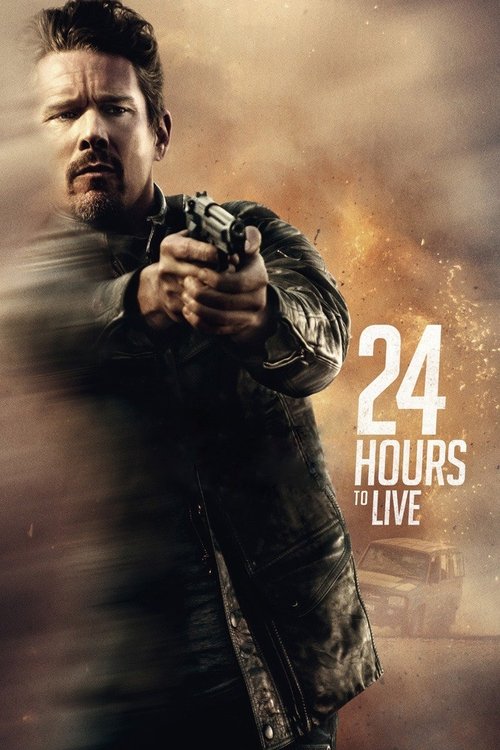
24 Hours to Live
An assassin seeks redemption after being given a second chance at life.
The film earned $5.8M at the global box office.


Plot Structure
Story beats plotted across runtime


Narrative Arc
Emotional journey through the story's key moments
Story Circle
Blueprint 15-beat structure
Arcplot Score Breakdown
Weighted: Precision (70%) + Arc (15%) + Theme (15%)
24 Hours to Live (2017) reveals meticulously timed plot construction, characteristic of Brian Smrz's storytelling approach. This structural analysis examines how the film's 15-point plot structure maps to proven narrative frameworks across 1 hour and 34 minutes. With an Arcplot score of 7.4, the film balances conventional beats with creative variation.
Characters
Cast & narrative archetypes

Travis Conrad
Lin
Jim Morrow
Keith
Main Cast & Characters
Travis Conrad
Played by Ethan Hawke
Elite assassin brought back to life for one final mission after being killed in action.
Lin
Played by Xu Qing
Interpol agent and Travis's ally who helps him navigate his final 24 hours.
Jim Morrow
Played by Paul Anderson
Travis's handler and mentor who orchestrates the resurrection mission.
Keith
Played by Rutger Hauer
Ruthless assassin and primary antagonist hunting Travis and his family.
Structural Analysis
The Status Quo at 1 minutes (1% through the runtime) establishes Travis Conrad, a broken assassin, visits his wife's and son's graves. He's haunted, empty, living in grief after their deaths in a car accident a year ago.. Notably, this early placement immediately immerses viewers in the story world.
The inciting incident occurs at 12 minutes when Jim convinces Travis to take one last job in South Africa—eliminate Keith Zera, an activist who threatens a powerful corporation. Travis reluctantly agrees, pulled back into the life he tried to escape.. At 13% through the film, this Disruption is delayed, allowing extended setup of the story world. This beat shifts the emotional landscape, launching the protagonist into the central conflict.
The First Threshold at 22 minutes marks the transition into Act II, occurring at 24% of the runtime. This indicates the protagonist's commitment to Travis executes the hit on Keith Zera in front of his family. But he's ambushed immediately afterward—Jim and his team betray Travis, killing him. Travis dies, blood pooling on the floor., moving from reaction to action.
At 47 minutes, the Midpoint arrives at 50% of the runtime—precisely centered, creating perfect narrative symmetry. Structural examination shows that this crucial beat Travis and Lin discover the conspiracy: a multinational corporation ordered the hits to cover up illegal activities. Travis realizes he can expose them. False victory—he has a plan and allies, but the clock is still ticking., fundamentally raising what's at risk. The emotional intensity shifts, dividing the narrative into clear before-and-after phases.
The Collapse moment at 69 minutes (74% through) represents the emotional nadir. Here, Travis is captured and beaten severely. His time is running out—he's visibly dying, blood seeping from his wounds. He's failed to protect Lin's son. All seems lost. The whiff of death is literal—he's already a dead man., demonstrates the protagonist at their lowest point. This beat's placement in the final quarter sets up the climactic reversal.
The Second Threshold at 75 minutes initiates the final act resolution at 79% of the runtime. Lin helps Travis escape and gives him crucial information about where her son is being held. Travis synthesizes his killer skills with his newfound purpose—not revenge, but redemption through sacrifice. He's ready for the finale., demonstrating the transformation achieved throughout the journey.
Emotional Journey
24 Hours to Live's emotional architecture traces a deliberate progression across 15 carefully calibrated beats.
Narrative Framework
This structural analysis employs systematic plot point analysis that identifies crucial turning points. By mapping 24 Hours to Live against these established plot points, we can identify how Brian Smrz utilizes or subverts traditional narrative conventions. The plot point approach reveals not only adherence to structural principles but also creative choices that distinguish 24 Hours to Live within the action genre.
Comparative Analysis
Additional action films include The Bad Guys, Puss in Boots and Venom: The Last Dance.
Plot Points by Act
Act I
SetupStatus Quo
Travis Conrad, a broken assassin, visits his wife's and son's graves. He's haunted, empty, living in grief after their deaths in a car accident a year ago.
Theme
Jim Morrow tells Travis: "You can't bring them back by punishing yourself." The theme is stated—redemption requires letting go of the past and choosing to live for something beyond revenge.
Worldbuilding
We learn Travis was an elite assassin who retired after his family died. His handler Jim tries to pull him back in. We see Travis's guilt, his skills, and the dangerous world of corporate espionage he left behind.
Disruption
Jim convinces Travis to take one last job in South Africa—eliminate Keith Zera, an activist who threatens a powerful corporation. Travis reluctantly agrees, pulled back into the life he tried to escape.
Resistance
Travis travels to Johannesburg and prepares for the mission. He debates whether he still has what it takes. He conducts surveillance on Zera and his family, including Lin, Zera's wife, and their young son.
Act II
ConfrontationFirst Threshold
Travis executes the hit on Keith Zera in front of his family. But he's ambushed immediately afterward—Jim and his team betray Travis, killing him. Travis dies, blood pooling on the floor.
Mirror World
Travis wakes up in a medical facility, resurrected by experimental technology. He meets Lin Zera (now his thematic mirror)—the widow of the man he killed. She represents the family he destroyed, both hers and his own.
Premise
The promise of the premise: Travis has 24 hours to live before his body shuts down. He must protect Lin and her son from the same people who killed him, while racing against time. Action sequences as he fights his former team.
Midpoint
Travis and Lin discover the conspiracy: a multinational corporation ordered the hits to cover up illegal activities. Travis realizes he can expose them. False victory—he has a plan and allies, but the clock is still ticking.
Opposition
Jim and his team close in. Travis's body begins to deteriorate—bloody nose, pain, weakness. The opposition tightens the noose. Lin's son is kidnapped. Travis must choose between revenge and saving an innocent life.
Collapse
Travis is captured and beaten severely. His time is running out—he's visibly dying, blood seeping from his wounds. He's failed to protect Lin's son. All seems lost. The whiff of death is literal—he's already a dead man.
Crisis
In his darkest moment, Travis reflects on his failures—his family, Keith Zera, and now Lin's son. He processes that he can't undo the past, but he can still choose to do the right thing with the time he has left.
Act III
ResolutionSecond Threshold
Lin helps Travis escape and gives him crucial information about where her son is being held. Travis synthesizes his killer skills with his newfound purpose—not revenge, but redemption through sacrifice. He's ready for the finale.
Synthesis
Travis storms the facility where Lin's son is held. Epic firefight with his former team. He confronts Jim in a brutal final battle. Travis saves the boy and ensures evidence of the conspiracy is released. He completes his mission as his body fails.
Transformation
Travis dies peacefully, having saved Lin's family—the family he destroyed. Lin and her son are safe. Travis transformed from a man dead inside, seeking only oblivion, to someone who died with purpose and redemption.