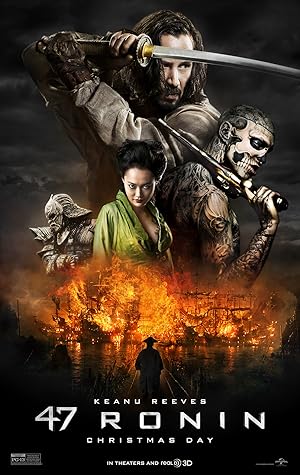
47 Ronin
While hunting in the forest, Lord Asano of Ako and his samurai find a young half-breed and take him with them to live in the castle. Several years later, Lord Asano holds a tournament to welcome the Shogun to Ako. The night after the tournament, Lord Asano is bewitched into hurting Lord Kira of Nagato, and is punished into committing seppuku by the Shogun. Realizing that it was a Lord Kira's evil plot, the samurais and the half-breed sets out for revenge against the Shogun's order.
The film underperformed commercially against its massive budget of $175.0M, earning $151.8M globally (-13% loss).


Plot Structure
Story beats plotted across runtime


Narrative Arc
Emotional journey through the story's key moments
Story Circle
Blueprint 15-beat structure
Arcplot Score Breakdown
Weighted: Precision (70%) + Arc (15%) + Theme (15%)
47 Ronin (2013) exemplifies strategically placed dramatic framework, characteristic of Carl Rinsch's storytelling approach. This structural analysis examines how the film's 15-point plot structure maps to proven narrative frameworks across 1 hour and 59 minutes. With an Arcplot score of 7.1, the film balances conventional beats with creative variation.
Characters
Cast & narrative archetypes

Kai
Oishi
Mika
Lord Kira
Mizuki
Lord Asano
Main Cast & Characters
Kai
Played by Keanu Reeves
A half-Japanese, half-English outcast who joins the ronin to avenge his master and save the woman he loves.
Oishi
Played by Hiroyuki Sanada
The loyal leader of the ronin who must restore his honor and avenge Lord Asano.
Mika
Played by Ko Shibasaki
Lord Asano's daughter and Kai's forbidden love, forced into marriage with Lord Kira.
Lord Kira
Played by Tadanobu Asano
The treacherous nobleman who uses dark magic and deceit to destroy Lord Asano and seize his lands.
Mizuki
Played by Rinko Kikuchi
A powerful witch serving Lord Kira who uses supernatural abilities to manipulate events.
Lord Asano
Played by Min Tanaka
The honorable daimyo of Ako who is betrayed and forced to commit seppuku.
Structural Analysis
The Status Quo at 1 minutes (1% through the runtime) establishes Young Kai is found as an outcast child in the forest by Lord Asano, who shows mercy and takes him in. We see the peaceful domain of Ako and its honorable samurai culture, establishing the world of honor and hierarchy.. Notably, this early placement immediately immerses viewers in the story world.
The inciting incident occurs at 14 minutes when During a hunt, a supernatural demon attacks. Kai recognizes it as witchcraft, but when he tries to warn others, he's dismissed due to his outcast status. The witch Mizuki enchants Lord Asano, setting the trap that will destroy everything.. At 12% through the film, this Disruption aligns precisely with traditional story structure. This beat shifts the emotional landscape, launching the protagonist into the central conflict.
The First Threshold at 31 minutes marks the transition into Act II, occurring at 26% of the runtime. This shows the protagonist's commitment to Oishi is released after a year of imprisonment and humiliation. He makes the active choice to gather the ronin and plan revenge against Lord Kira, despite the shogun's order forbidding it. He seeks out Kai in the fighting pits and recruits him, crossing the threshold into the revenge mission., moving from reaction to action.
At 60 minutes, the Midpoint arrives at 50% of the runtime—precisely centered, creating perfect narrative symmetry. Notably, this crucial beat The ronin successfully infiltrate Kira's fortress during a public ceremony. They appear to have the advantage and the element of surprise. False victory - they seem positioned for success, but they underestimate Mizuki's supernatural power. Stakes are raised as they fully commit to the attack., fundamentally raising what's at risk. The emotional intensity shifts, dividing the narrative into clear before-and-after phases.
The Collapse moment at 88 minutes (74% through) represents the emotional nadir. Here, Mizuki defeats Kai and appears to kill him. Oishi is captured and faces execution. The mission has failed, the ronin are scattered or dead, and all hope seems lost. The whiff of death: Kai appears to die, and the cause of honor dies with him., shows the protagonist at their lowest point. This beat's placement in the final quarter sets up the climactic reversal.
The Second Threshold at 94 minutes initiates the final act resolution at 79% of the runtime. Kai realizes that Mizuki can be defeated - not by strength alone but by using both his samurai training AND his mystical knowledge from the Tengu. The synthesis of his two worlds (outcast magic-user and honorable samurai) gives him the insight to prevail. The ronin rally for one final coordinated assault., demonstrating the transformation achieved throughout the journey.
Emotional Journey
47 Ronin's emotional architecture traces a deliberate progression across 15 carefully calibrated beats.
Narrative Framework
This structural analysis employs a 15-point narrative structure framework that maps key story moments. By mapping 47 Ronin against these established plot points, we can identify how Carl Rinsch utilizes or subverts traditional narrative conventions. The plot point approach reveals not only adherence to structural principles but also creative choices that distinguish 47 Ronin within the action genre.
Comparative Analysis
Additional action films include The Bad Guys, Puss in Boots and Venom: The Last Dance.
Plot Points by Act
Act I
SetupStatus Quo
Young Kai is found as an outcast child in the forest by Lord Asano, who shows mercy and takes him in. We see the peaceful domain of Ako and its honorable samurai culture, establishing the world of honor and hierarchy.
Theme
Lord Asano speaks about honor, duty, and the true meaning of being samurai - that honor is not about birth but about one's actions and heart. This establishes the central theme of honor versus birthright.
Worldbuilding
Introduction to the feudal world: Kai grows into an outsider warrior with mysterious past, his forbidden love for Mika (Lord Asano's daughter), the honorable domain of Ako, the corrupt Lord Kira who covets Ako, and his witch Mizuki. The political tensions and social hierarchies are established.
Disruption
During a hunt, a supernatural demon attacks. Kai recognizes it as witchcraft, but when he tries to warn others, he's dismissed due to his outcast status. The witch Mizuki enchants Lord Asano, setting the trap that will destroy everything.
Resistance
Kai tries to prevent the tragedy but is powerless due to his status. Lord Asano, under enchantment, appears to attack Lord Kira and is forced to commit seppuku. Oishi (the loyal samurai leader) and the 47 ronin are disbanded, Mika is promised to Kira, and Kai is sold into slavery. The ronin debate whether to accept their fate or seek vengeance despite the consequences.
Act II
ConfrontationFirst Threshold
Oishi is released after a year of imprisonment and humiliation. He makes the active choice to gather the ronin and plan revenge against Lord Kira, despite the shogun's order forbidding it. He seeks out Kai in the fighting pits and recruits him, crossing the threshold into the revenge mission.
Mirror World
The band of ronin begins to form, representing a new kind of family and brotherhood. Kai is accepted by Oishi despite the other samurai's prejudice. This subplot carries the theme: true honor transcends social class and birth, found in loyalty and sacrifice.
Premise
The ronin gather allies, acquire weapons from the mysterious Tengu (Kai's former masters), and plan their assault. Training sequences, bonding moments, and preparation for the impossible mission. The promise of the premise: a band of dishonored samurai planning an audacious revenge against a powerful, protected lord.
Midpoint
The ronin successfully infiltrate Kira's fortress during a public ceremony. They appear to have the advantage and the element of surprise. False victory - they seem positioned for success, but they underestimate Mizuki's supernatural power. Stakes are raised as they fully commit to the attack.
Opposition
The witch Mizuki unleashes her full power, transforming into a dragon and decimating the ronin forces. Kira's samurai prove formidable. The ronin are outmatched both martially and supernaturally. Casualties mount, the plan falls apart, and their noble cause seems doomed against dark magic and superior numbers.
Collapse
Mizuki defeats Kai and appears to kill him. Oishi is captured and faces execution. The mission has failed, the ronin are scattered or dead, and all hope seems lost. The whiff of death: Kai appears to die, and the cause of honor dies with him.
Crisis
Kai survives but is broken. Oishi faces death with dignity. The remaining ronin must decide whether to flee or make a final stand. The darkest moment of contemplating failure and dishonor, processing the cost of their mission.
Act III
ResolutionSecond Threshold
Kai realizes that Mizuki can be defeated - not by strength alone but by using both his samurai training AND his mystical knowledge from the Tengu. The synthesis of his two worlds (outcast magic-user and honorable samurai) gives him the insight to prevail. The ronin rally for one final coordinated assault.
Synthesis
The final battle. Kai defeats Mizuki by accepting both parts of himself. Oishi and the ronin fight their way to Kira. They successfully kill Lord Kira, avenging their master. They surrender to the shogun, accepting the consequence: they must all commit seppuku for breaking the law, but they die with honor restored.
Transformation
The 47 ronin commit seppuku with honor. Kai, the outcast half-breed, dies as a true samurai alongside his brothers. Their graves become a shrine, honored for generations. The closing image mirrors the opening: once Kai was an outsider found in the forest; now he is remembered as a legendary samurai, proving that honor comes from one's choices, not one's birth.