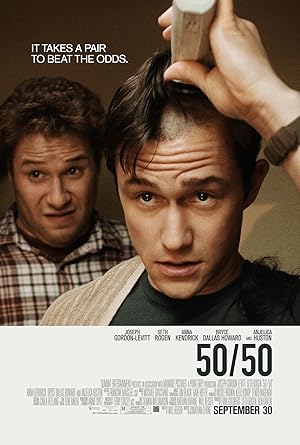
50/50
Adam is a 27 year old writer of radio programs and is diagnosed with a rare form of spinal cancer. With the help of his best friend, his mother, and a young therapist at the cancer center, Adam learns what and who the most important things in his life are.
Despite its tight budget of $8.0M, 50/50 became a solid performer, earning $39.2M worldwide—a 390% return. The film's fresh perspective resonated with audiences, illustrating how strong storytelling can transcend budget limitations.
12 wins & 28 nominations


Plot Structure
Story beats plotted across runtime


Narrative Arc
Emotional journey through the story's key moments
Story Circle
Blueprint 15-beat structure
Arcplot Score Breakdown
Weighted: Precision (70%) + Arc (15%) + Theme (15%)
50/50 (2011) exemplifies meticulously timed plot construction, characteristic of Jonathan Levine's storytelling approach. This structural analysis examines how the film's 15-point plot structure maps to proven narrative frameworks across 1 hour and 40 minutes. With an Arcplot score of 7.0, the film balances conventional beats with creative variation.
Characters
Cast & narrative archetypes

Adam Lerner
Kyle Hirons
Katherine McKay
Rachael Lerner
Diane Lerner
Main Cast & Characters
Adam Lerner
Played by Joseph Gordon-Levitt
A 27-year-old public radio journalist diagnosed with a rare spinal cancer who must navigate treatment while maintaining relationships.
Kyle Hirons
Played by Seth Rogen
Adam's best friend and coworker, a brash and crude but loyal companion who helps him through his cancer journey.
Katherine McKay
Played by Anna Kendrick
Adam's inexperienced but empathetic therapist who develops a deep connection with him during his treatment.
Rachael Lerner
Played by Bryce Dallas Howard
Adam's girlfriend who struggles to cope with his cancer diagnosis and ultimately proves unable to handle the situation.
Diane Lerner
Played by Anjelica Huston
Adam's overbearing but well-meaning mother who is already caring for her husband with Alzheimer's.
Structural Analysis
The Status Quo at 1 minutes (1% through the runtime) establishes Adam drives to work listening to NPR, living his cautious, controlled life. He doesn't jaywalk even when no cars are coming, establishing his rule-following, risk-averse personality.. Significantly, this early placement immediately immerses viewers in the story world.
The inciting incident occurs at 12 minutes when The doctor tells Adam he has a malignant tumor on his spine—a rare form of cancer. At 27 years old, he has a 50/50 chance of survival.. At 12% through the film, this Disruption aligns precisely with traditional story structure. This beat shifts the emotional landscape, launching the protagonist into the central conflict.
The First Threshold at 26 minutes marks the transition into Act II, occurring at 26% of the runtime. This shows the protagonist's commitment to Adam begins chemotherapy treatment, fully entering the world of cancer patient. He shaves his head as his hair falls out, physically and symbolically crossing into his new identity., moving from reaction to action.
At 50 minutes, the Midpoint arrives at 50% of the runtime—precisely centered, creating perfect narrative symmetry. Of particular interest, this crucial beat Adam discovers Rachael is cheating on him. He catches her in an intimate moment with another man, shattering his support system and the illusion that he can maintain his old life., fundamentally raising what's at risk. The emotional intensity shifts, dividing the narrative into clear before-and-after phases.
The Collapse moment at 76 minutes (76% through) represents the emotional nadir. Here, Adam learns that Alan has died. Confronted with mortality directly, he breaks down completely in the car with his mother, finally allowing himself to feel the terror and grief he's been suppressing., demonstrates the protagonist at their lowest point. This beat's placement in the final quarter sets up the climactic reversal.
The Second Threshold at 81 minutes initiates the final act resolution at 81% of the runtime. Adam goes into surgery, having made peace with uncertainty. He tells Katherine he likes her and asks her to wait for him, finally taking an emotional risk and accepting he can't control the outcome., demonstrating the transformation achieved throughout the journey.
Emotional Journey
50/50's emotional architecture traces a deliberate progression across 15 carefully calibrated beats.
Narrative Framework
This structural analysis employs proven narrative structure principles that track dramatic progression. By mapping 50/50 against these established plot points, we can identify how Jonathan Levine utilizes or subverts traditional narrative conventions. The plot point approach reveals not only adherence to structural principles but also creative choices that distinguish 50/50 within the comedy genre.
Jonathan Levine's Structural Approach
Among the 5 Jonathan Levine films analyzed on Arcplot, the average structural score is 7.3, reflecting strong command of classical structure. 50/50 takes a more unconventional approach compared to the director's typical style. For comparative analysis, explore the complete Jonathan Levine filmography.
Comparative Analysis
Additional comedy films include The Bad Guys, Ella Enchanted and The Evening Star. For more Jonathan Levine analyses, see Snatched, Long Shot and The Night Before.
Plot Points by Act
Act I
SetupStatus Quo
Adam drives to work listening to NPR, living his cautious, controlled life. He doesn't jaywalk even when no cars are coming, establishing his rule-following, risk-averse personality.
Theme
Kyle tells Adam "You can't get hit by a car if you don't cross the street," foreshadowing the film's central theme about risk, control, and truly living life versus avoiding it.
Worldbuilding
Establishment of Adam's ordinary world: his job at Seattle Public Radio, his friendship with Kyle, his relationship with girlfriend Rachael, his back pain, and his careful, controlled approach to life.
Disruption
The doctor tells Adam he has a malignant tumor on his spine—a rare form of cancer. At 27 years old, he has a 50/50 chance of survival.
Resistance
Adam processes the diagnosis, tells Rachael and Kyle, researches his odds online, and begins navigating the medical system. He meets his therapist Katherine and starts chemotherapy while trying to maintain normalcy.
Act II
ConfrontationFirst Threshold
Adam begins chemotherapy treatment, fully entering the world of cancer patient. He shaves his head as his hair falls out, physically and symbolically crossing into his new identity.
Mirror World
Adam connects with Katherine, his young therapist, establishing the relationship that will carry the emotional/thematic weight. He also bonds with Alan and Mitch, two older chemo patients who become unlikely mentors.
Premise
Adam navigates life as a cancer patient: chemo sessions with Alan and Mitch, therapy with Katherine, maintaining work, managing his relationship with Rachael, and Kyle's attempts to help him "get laid" using the cancer card.
Midpoint
Adam discovers Rachael is cheating on him. He catches her in an intimate moment with another man, shattering his support system and the illusion that he can maintain his old life.
Opposition
Adam spirals after the breakup. His disease progresses, requiring surgery. He becomes angry and bitter, pushing people away including Katherine. His emotional walls crumble as he loses control of everything.
Collapse
Adam learns that Alan has died. Confronted with mortality directly, he breaks down completely in the car with his mother, finally allowing himself to feel the terror and grief he's been suppressing.
Crisis
Adam confronts his fear and vulnerability. He reconciles with his mother, apologizes to Katherine, and prepares for surgery, no longer trying to control everything or hide his emotions.
Act III
ResolutionSecond Threshold
Adam goes into surgery, having made peace with uncertainty. He tells Katherine he likes her and asks her to wait for him, finally taking an emotional risk and accepting he can't control the outcome.
Synthesis
The surgery is successful. Adam recovers and begins rebuilding his life with new perspective, reconnecting with Katherine, maintaining his friendship with Kyle, and embracing vulnerability and genuine connection.
Transformation
Adam crosses the street without obsessively checking for cars, jaywalking with Katherine and his dog. The image mirrors the opening but shows his transformation: he's learned to take risks and truly live.