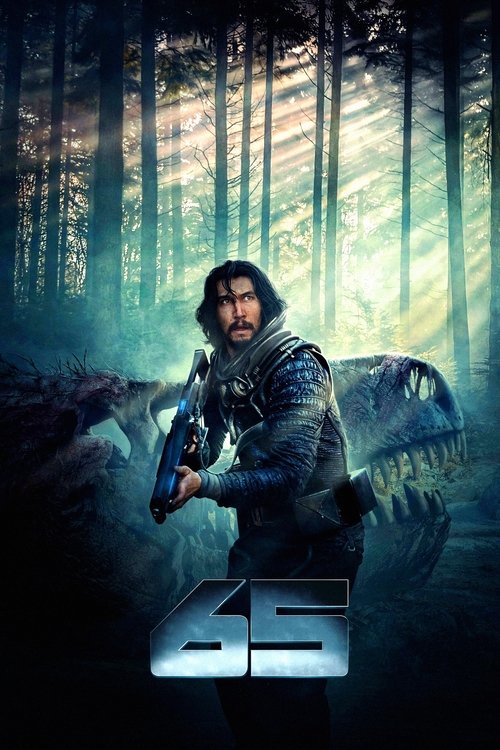
65
An astronaut crash lands on a mysterious planet only to discover he's not alone.
Working with a moderate budget of $45.0M, the film achieved a steady performer with $60.7M in global revenue (+35% profit margin).


Plot Structure
Story beats plotted across runtime


Narrative Arc
Emotional journey through the story's key moments
Story Circle
Blueprint 15-beat structure
Arcplot Score Breakdown
Weighted: Precision (70%) + Arc (15%) + Theme (15%)
65 (2023) demonstrates carefully calibrated narrative design, characteristic of Scott Beck's storytelling approach. This structural analysis examines how the film's 15-point plot structure maps to proven narrative frameworks across 1 hour and 33 minutes. With an Arcplot score of 6.8, the film balances conventional beats with creative variation.
Characters
Cast & narrative archetypes

Mills
Koa
Main Cast & Characters
Mills
Played by Adam Driver
A pilot from an advanced civilization who crash-lands on prehistoric Earth while transporting passengers, desperate to return home to his dying daughter.
Koa
Played by Ariana Greenblatt
A young girl and sole survivor from the passenger section who doesn't speak Mills' language but forms a bond with him during their survival journey.
Structural Analysis
The Status Quo at 1 minutes (1% through the runtime) establishes Mills says goodbye to his sick daughter Nevine on planet Somaris, accepting a two-year pilot mission to pay for her medical treatment. His world is defined by duty and sacrifice for family.. Of particular interest, this early placement immediately immerses viewers in the story world.
The inciting incident occurs at 10 minutes when The ship is struck by asteroids and crashes onto an unknown planet. Mills wakes from cryo-sleep to find the ship destroyed, passengers dead, and himself stranded on a hostile world.. At 11% through the film, this Disruption aligns precisely with traditional story structure. This beat shifts the emotional landscape, launching the protagonist into the central conflict.
The First Threshold at 23 minutes marks the transition into Act II, occurring at 24% of the runtime. This shows the protagonist's commitment to Mills decides to protect Koa and journey to the escape shuttle located on a distant mountain. He chooses responsibility over despair, committing to keep them both alive despite overwhelming odds., moving from reaction to action.
At 47 minutes, the Midpoint arrives at 50% of the runtime—precisely centered, creating perfect narrative symmetry. Of particular interest, this crucial beat Mills and Koa are separated when attacked by a massive theropod. Mills falls into a cave system and discovers they're on Earth 65 million years ago—the planet is doomed. Stakes raise: even if they escape, time is running out., fundamentally raising what's at risk. The emotional intensity shifts, dividing the narrative into clear before-and-after phases.
The Collapse moment at 68 minutes (73% through) represents the emotional nadir. Here, Mills reveals the truth to Koa: no one is coming to rescue them, and his daughter died while he was in cryo-sleep years ago. His lie and his deepest loss are exposed. Koa runs away, trust shattered., demonstrates the protagonist at their lowest point. This beat's placement in the final quarter sets up the climactic reversal.
The Second Threshold at 73 minutes initiates the final act resolution at 79% of the runtime. Mills and Koa reconcile. He apologizes and commits to getting her home to her real family. Mills synthesizes his lesson: being present and fighting for someone matters more than the outcome. They choose to face extinction together., demonstrating the transformation achieved throughout the journey.
Emotional Journey
65's emotional architecture traces a deliberate progression across 15 carefully calibrated beats.
Narrative Framework
This structural analysis employs proven narrative structure principles that track dramatic progression. By mapping 65 against these established plot points, we can identify how Scott Beck utilizes or subverts traditional narrative conventions. The plot point approach reveals not only adherence to structural principles but also creative choices that distinguish 65 within the action genre.
Scott Beck's Structural Approach
Among the 2 Scott Beck films analyzed on Arcplot, the average structural score is 7.1, reflecting strong command of classical structure. 65 takes a more unconventional approach compared to the director's typical style. For comparative analysis, explore the complete Scott Beck filmography.
Comparative Analysis
Additional action films include The Bad Guys, Puss in Boots and Venom: The Last Dance. For more Scott Beck analyses, see Heretic.
Plot Points by Act
Act I
SetupStatus Quo
Mills says goodbye to his sick daughter Nevine on planet Somaris, accepting a two-year pilot mission to pay for her medical treatment. His world is defined by duty and sacrifice for family.
Theme
Mills' wife tells him "She needs you here, not just your money." The theme of presence versus provision, connection versus survival, is established.
Worldbuilding
Mills pilots a transport ship with cryogenically frozen passengers through space. We learn about his advanced civilization, his guilt over leaving his daughter, and the routine nature of his mission until an asteroid field threatens the ship.
Disruption
The ship is struck by asteroids and crashes onto an unknown planet. Mills wakes from cryo-sleep to find the ship destroyed, passengers dead, and himself stranded on a hostile world.
Resistance
Mills discovers one survivor: a young girl named Koa who doesn't speak his language. He lies to her that they're rescued, planning to kill himself rather than face the dangerous trek to the escape shuttle. He debates whether to give up or fight.
Act II
ConfrontationFirst Threshold
Mills decides to protect Koa and journey to the escape shuttle located on a distant mountain. He chooses responsibility over despair, committing to keep them both alive despite overwhelming odds.
Mirror World
Koa begins to trust Mills and they form a tentative bond despite the language barrier. She represents the daughter he left behind, giving him a chance at redemption through presence rather than absence.
Premise
Mills and Koa trek through the prehistoric landscape, encountering various dinosaurs. They narrowly escape predators, navigate treacherous terrain, and Mills teaches Koa to use weapons. The premise delivers: man vs. dinosaur survival action.
Midpoint
Mills and Koa are separated when attacked by a massive theropod. Mills falls into a cave system and discovers they're on Earth 65 million years ago—the planet is doomed. Stakes raise: even if they escape, time is running out.
Opposition
Mills fights through caves filled with deadly creatures to reunite with Koa. Their bond deepens but danger intensifies. The environment becomes more hostile, predators more numerous, and Mills' injuries and guilt threaten to overwhelm him.
Collapse
Mills reveals the truth to Koa: no one is coming to rescue them, and his daughter died while he was in cryo-sleep years ago. His lie and his deepest loss are exposed. Koa runs away, trust shattered.
Crisis
Mills pursues Koa through the dark wilderness, both emotionally and physically broken. He confronts his failure as a father and his guilt. The asteroid that will end the dinosaurs looms visibly in the sky—extinction is imminent.
Act III
ResolutionSecond Threshold
Mills and Koa reconcile. He apologizes and commits to getting her home to her real family. Mills synthesizes his lesson: being present and fighting for someone matters more than the outcome. They choose to face extinction together.
Synthesis
Mills and Koa make a final desperate push to the escape shuttle, fighting through waves of predators including a massive T-Rex-like creature. Mills uses everything he's learned, protecting Koa with fierce determination. They reach the shuttle and launch as the extinction asteroid strikes.
Transformation
Mills and Koa escape Earth's atmosphere, watching the planet burn below. Mills holds Koa close—no longer the absent father haunted by guilt, but a protector who chose presence over despair. He has become the father he failed to be.