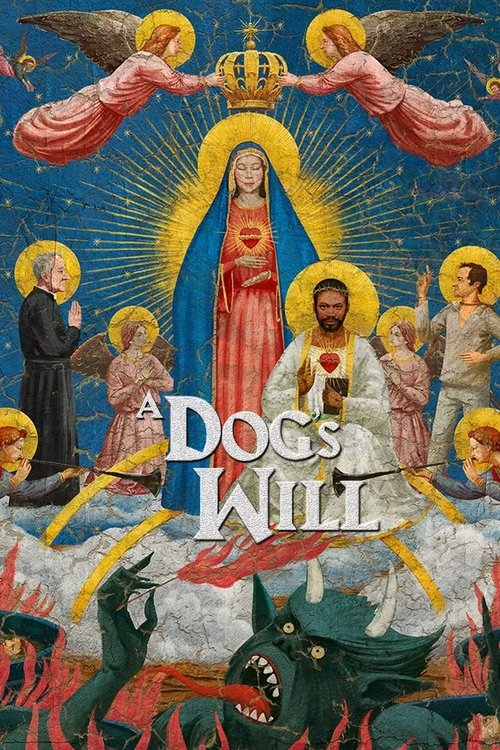
A Dog's Will
The lively João Grilo and the sly Chicó are poor guys living in the hinterland who cheat a bunch of people in a small town in Northeastern Brazil. When they die, they have to be judged by Christ, the Devil and the Virgin Mary before they are admitted to paradise.
The film earned $4.9M at the global box office.
Plot Structure
Story beats plotted across runtime


Narrative Arc
Emotional journey through the story's key moments
Story Circle
Blueprint 15-beat structure
Arcplot Score Breakdown
Weighted: Precision (70%) + Arc (15%) + Theme (15%)
A Dog's Will (2000) demonstrates strategically placed dramatic framework, characteristic of Guel Arraes's storytelling approach. This structural analysis examines how the film's 15-point plot structure maps to proven narrative frameworks across 1 hour and 44 minutes. With an Arcplot score of 6.8, the film balances conventional beats with creative variation.
Characters
Cast & narrative archetypes

João Grilo
Chicó
Rosinha
Padre João
Bispo
Severino de Aracaju
Major Antônio Morais
Dora
Nossa Senhora
O Encourado
Main Cast & Characters
João Grilo
Played by Matheus Nachtergaele
A clever trickster and street-smart swindler who uses his wit to survive and outsmart the powerful in a poor northeastern Brazilian town.
Chicó
Played by Selton Mello
João Grilo's loyal but cowardly friend, a dreamer and storyteller who follows João into various schemes and adventures.
Rosinha
Played by Denise Fraga
The compassionate and kind-hearted baker's daughter who serves as the moral center and love interest in the story.
Padre João
Played by Rogério Cardoso
The corrupt and greedy priest who refuses to bless a dog but accepts bribes, representing religious hypocrisy.
Bispo
Played by Lima Duarte
The vain and materialistic bishop who is easily manipulated by flattery and gifts, complicit in church corruption.
Severino de Aracaju
Played by Marco Nanini
The ruthless and violent bandit leader who terrorizes the town, representing lawless brutality.
Major Antônio Morais
Played by Paulo Goulart
The wealthy and arrogant landowner who exploits the poor and abuses his power without remorse.
Dora
Played by Virginia Cavendish
The major's unfaithful and manipulative wife who has affairs and shows contempt for her husband.
Nossa Senhora
Played by Fernanda Montenegro
The compassionate Virgin Mary who appears in the afterlife trial, advocating for mercy and second chances.
O Encourado
Played by Diogo Vilela
The devil figure who prosecutes the dead, representing justice through fear and temptation.
Structural Analysis
The Status Quo at 1 minutes (1% through the runtime) establishes João Grilo and Chicó are introduced as poor workers in the arid Brazilian sertão, struggling to survive through odd jobs and João's clever schemes. Their friendship and poverty define their world.. Significantly, this early placement immediately immerses viewers in the story world.
The inciting incident occurs at 12 minutes when The baker's wife's beloved dog falls ill and dies, prompting João to devise his first major scheme: convincing the priest to bless and bury the dog by claiming it left a will with money for the church.. At 12% through the film, this Disruption aligns precisely with traditional story structure. This beat shifts the emotional landscape, launching the protagonist into the central conflict.
The First Threshold at 26 minutes marks the transition into Act II, occurring at 25% of the runtime. This illustrates the protagonist's commitment to Emboldened by the dog's will success, João commits fully to a life of elaborate schemes, introducing the "blessed cat that defecates money" to fleece Major Antônio Moraes, entering a world of escalating deceptions., moving from reaction to action.
At 52 minutes, the Midpoint arrives at 50% of the runtime—precisely centered, creating perfect narrative symmetry. Structural examination shows that this crucial beat The cangaceiro bandit Severino and his lieutenant arrive in Taperoá. This false defeat transforms the comedy into danger—João's cleverness now faces lethal stakes rather than merely angry townspeople., fundamentally raising what's at risk. The emotional intensity shifts, dividing the narrative into clear before-and-after phases.
The Collapse moment at 78 minutes (75% through) represents the emotional nadir. Here, João is shot and killed by Severino after a scheme backfires. The ultimate consequence of his trickster life—death. His wit could not save him, and he faces divine judgment alongside those he schemed against., demonstrates the protagonist at their lowest point. This beat's placement in the final quarter sets up the climactic reversal.
The Second Threshold at 83 minutes initiates the final act resolution at 80% of the runtime. João calls upon the Virgin Mary (the Compadecida—the Compassionate One) to intercede. She appears and argues for mercy, revealing that João's sins came from desperation and poverty, not malice. Divine grace enters the equation., demonstrating the transformation achieved throughout the journey.
Emotional Journey
A Dog's Will's emotional architecture traces a deliberate progression across 15 carefully calibrated beats.
Narrative Framework
This structural analysis employs a 15-point narrative structure framework that maps key story moments. By mapping A Dog's Will against these established plot points, we can identify how Guel Arraes utilizes or subverts traditional narrative conventions. The plot point approach reveals not only adherence to structural principles but also creative choices that distinguish A Dog's Will within the comedy genre.
Comparative Analysis
Additional comedy films include The Bad Guys, Ella Enchanted and The Evening Star.
Plot Points by Act
Act I
SetupStatus Quo
João Grilo and Chicó are introduced as poor workers in the arid Brazilian sertão, struggling to survive through odd jobs and João's clever schemes. Their friendship and poverty define their world.
Theme
Chicó remarks on the nature of truth and lies in their harsh world, establishing the film's exploration of morality, mercy, and the gray areas between right and wrong in survival.
Worldbuilding
The corrupt hierarchy of Taperoá is established: the greedy baker and his adulterous wife Dora, the morally flexible priest, the pompous bishop, and Major Antônio Moraes. João and Chicó occupy the lowest rung.
Disruption
The baker's wife's beloved dog falls ill and dies, prompting João to devise his first major scheme: convincing the priest to bless and bury the dog by claiming it left a will with money for the church.
Resistance
João debates and refines his schemes while Chicó expresses doubts. The dog's will scheme succeeds, teaching João that his wit can manipulate the greedy. He gains confidence but also makes enemies.
Act II
ConfrontationFirst Threshold
Emboldened by the dog's will success, João commits fully to a life of elaborate schemes, introducing the "blessed cat that defecates money" to fleece Major Antônio Moraes, entering a world of escalating deceptions.
Mirror World
Chicó's romantic pursuit of Rosinha, the Major's daughter, introduces the love subplot. Their innocent love contrasts with the corruption around them and represents what João's schemes might actually win: genuine human connection.
Premise
João's schemes multiply gloriously: the money-defecating cat, the magic healing gaita, playing the baker against the Major. Each con is more audacious, showcasing João's wit while the town's moral hypocrisy is exposed.
Midpoint
The cangaceiro bandit Severino and his lieutenant arrive in Taperoá. This false defeat transforms the comedy into danger—João's cleverness now faces lethal stakes rather than merely angry townspeople.
Opposition
Severino terrorizes the town, killing the baker, his wife, the bishop, and the priest. João tries to use his wits to survive but the bandit is unpredictable. All João's previous schemes become meaningless against true violence.
Collapse
João is shot and killed by Severino after a scheme backfires. The ultimate consequence of his trickster life—death. His wit could not save him, and he faces divine judgment alongside those he schemed against.
Crisis
In the afterlife court, the Devil prosecutes João and the other dead, cataloging their sins. Jesus presides as judge. João faces the weight of his deceptions as the Devil makes a compelling case for damnation.
Act III
ResolutionSecond Threshold
João calls upon the Virgin Mary (the Compadecida—the Compassionate One) to intercede. She appears and argues for mercy, revealing that João's sins came from desperation and poverty, not malice. Divine grace enters the equation.
Synthesis
Mary argues each case with compassion, finding humanity in all the sinners. João is given a second chance at life. He returns to the mortal world transformed, reuniting with Chicó as Rosinha and Chicó's love is blessed.
Transformation
João awakens alive, reborn through mercy. He and Chicó walk together toward a new life, João now understanding that divine compassion transcends human schemes. The trickster has been tricked by grace itself.