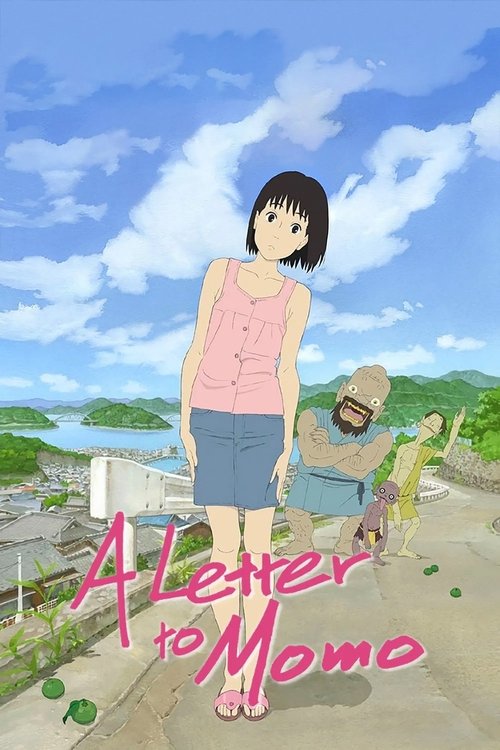
A Letter to Momo
A shy 11-year-old's life takes a strange turn when she discovers three hungry goblins living in the attic of her new house. She misses her old life. She misses her father so very much. Until she makes some new ghoulish friends.
The film earned $6.7M at the global box office.
3 wins & 7 nominations


Plot Structure
Story beats plotted across runtime


Narrative Arc
Emotional journey through the story's key moments
Story Circle
Blueprint 15-beat structure
Arcplot Score Breakdown
Weighted: Precision (70%) + Arc (15%) + Theme (15%)
A Letter to Momo (2012) exhibits meticulously timed story structure, characteristic of Hiroyuki Okiura's storytelling approach. This structural analysis examines how the film's 15-point plot structure maps to proven narrative frameworks across 2 hours. With an Arcplot score of 7.0, the film balances conventional beats with creative variation.
Characters
Cast & narrative archetypes

Momo Miyaura
Iwa
Kawa
Mame
Ikuko Miyaura
Koichi
Main Cast & Characters
Momo Miyaura
Played by Karen Miyama
A grieving 11-year-old girl who moves to a remote island with her mother after her father's death, struggling with an unfinished letter he left behind.
Iwa
Played by Ikuko Tani
The largest and oldest of three yokai guardians, a gruff but protective spirit who appears as a rotund creature and serves as the group's leader.
Kawa
Played by Takeo Ogawa
A mischievous middle-sized yokai with a long nose, impulsive and playful, often causing trouble while trying to help Momo.
Mame
Played by Yoshisada Sakaguchi
The smallest and youngest yokai, childlike and innocent, who bonds closely with Momo despite his timid nature.
Ikuko Miyaura
Played by Yuka
Momo's mother, a widow adjusting to life back in her childhood island home while worrying about her daughter's emotional wellbeing.
Koichi
Played by Daizaburo Arakawa
A cheerful local boy who befriends Momo and helps her adjust to island life.
Structural Analysis
The Status Quo at 2 minutes (1% through the runtime) establishes Momo sits withdrawn and silent on the ferry to the island, clutching her father's incomplete letter that reads only "Dear Momo," carrying guilt from their final argument before his death.. Notably, this early placement immediately immerses viewers in the story world.
The inciting incident occurs at 14 minutes when Momo discovers three grotesque yokai (supernatural spirits) living in the attic of her house. Strange phenomena she's been experiencing suddenly has a terrifying explanation—she's not alone and these creatures are real.. At 12% through the film, this Disruption aligns precisely with traditional story structure. This beat shifts the emotional landscape, launching the protagonist into the central conflict.
The First Threshold at 29 minutes marks the transition into Act II, occurring at 25% of the runtime. This demonstrates the protagonist's commitment to Momo makes a deal with the yokai: she'll help them get food if they stop causing trouble. This marks her active choice to engage with the supernatural world rather than resist it, accepting her new reality., moving from reaction to action.
At 60 minutes, the Midpoint arrives at 50% of the runtime—precisely centered, creating perfect narrative symmetry. Of particular interest, this crucial beat Ikuko collapses from illness, raising the stakes dramatically. Momo realizes her mother has been hiding her poor health, and the consequences of the yokai's food theft become serious as the community grows suspicious. The fun is over., fundamentally raising what's at risk. The emotional intensity shifts, dividing the narrative into clear before-and-after phases.
The Collapse moment at 89 minutes (75% through) represents the emotional nadir. Here, A massive storm hits the island, Ikuko must be evacuated for emergency medical care, and Momo is separated from her mother. She faces the potential loss of her mother just as she lost her father—the "whiff of death" as her worst fear materializes., shows the protagonist at their lowest point. This beat's placement in the final quarter sets up the climactic reversal.
The Second Threshold at 95 minutes initiates the final act resolution at 80% of the runtime. The yokai reveal their true purpose: they are guardian spirits sent by Momo's father to watch over her. Momo realizes that the incomplete letter doesn't need more words—"Dear Momo" was his complete message of love. She gains the clarity to act., demonstrating the transformation achieved throughout the journey.
Emotional Journey
A Letter to Momo's emotional architecture traces a deliberate progression across 15 carefully calibrated beats.
Narrative Framework
This structural analysis employs structural analysis methodology used to understand storytelling architecture. By mapping A Letter to Momo against these established plot points, we can identify how Hiroyuki Okiura utilizes or subverts traditional narrative conventions. The plot point approach reveals not only adherence to structural principles but also creative choices that distinguish A Letter to Momo within the comedy genre.
Comparative Analysis
Additional comedy films include The Bad Guys, Ella Enchanted and The Evening Star.
Plot Points by Act
Act I
SetupStatus Quo
Momo sits withdrawn and silent on the ferry to the island, clutching her father's incomplete letter that reads only "Dear Momo," carrying guilt from their final argument before his death.
Theme
Ikuko's mother tells Momo that the island is a place where "the old and new live together," hinting at the film's theme of reconciling past and present, grief and healing.
Worldbuilding
Momo and her mother arrive on the rural island in the Seto Inland Sea. We see Momo's isolation, her mother's health struggles, the old traditional house, and the tight-knit island community. Momo remains emotionally closed off, avoiding connection.
Disruption
Momo discovers three grotesque yokai (supernatural spirits) living in the attic of her house. Strange phenomena she's been experiencing suddenly has a terrifying explanation—she's not alone and these creatures are real.
Resistance
Momo tries to deal with the yokai (Iwa, Kawa, and Mame) who cause chaos, eating the neighbors' food and creating mischief. She debates whether to tell her mother, fears she's going crazy, and struggles to control them while keeping their existence secret.
Act II
ConfrontationFirst Threshold
Momo makes a deal with the yokai: she'll help them get food if they stop causing trouble. This marks her active choice to engage with the supernatural world rather than resist it, accepting her new reality.
Mirror World
Momo begins to bond with the local island children and the yokai become unlikely companions. This new web of relationships represents the connection and forgiveness she needs, contrasting with her isolated grief.
Premise
The "fun and games" of living with yokai: Momo navigates comedic misadventures as the spirits cause chaos around the island, stealing food and creating supernatural havoc. She slowly opens up, making friends and exploring her new home while managing her secret.
Midpoint
Ikuko collapses from illness, raising the stakes dramatically. Momo realizes her mother has been hiding her poor health, and the consequences of the yokai's food theft become serious as the community grows suspicious. The fun is over.
Opposition
Pressure intensifies as Ikuko's health deteriorates, the islanders grow angry about the thefts, and Momo's guilt deepens. The yokai's true nature and purpose remain unclear. Momo's internal struggle with her father's death and her inability to forgive herself escalates.
Collapse
A massive storm hits the island, Ikuko must be evacuated for emergency medical care, and Momo is separated from her mother. She faces the potential loss of her mother just as she lost her father—the "whiff of death" as her worst fear materializes.
Crisis
Momo breaks down emotionally, confronting her deepest pain: her final argument with her father, her inability to say goodbye, and her terror of losing her mother too. She sits in darkness with her grief, the incomplete letter representing all her unresolved pain.
Act III
ResolutionSecond Threshold
The yokai reveal their true purpose: they are guardian spirits sent by Momo's father to watch over her. Momo realizes that the incomplete letter doesn't need more words—"Dear Momo" was his complete message of love. She gains the clarity to act.
Synthesis
Momo and the yokai work together to reach her mother through the storm, using both her human courage and their supernatural abilities. She demonstrates her growth by taking action, accepting help, and fighting for connection rather than isolating in grief.
Transformation
Momo reunites with her recovering mother, now able to smile and speak openly about her father. She has forgiven herself, accepted his death, and found a new home. The yokai depart, their mission complete, and Momo peacefully lets them go.