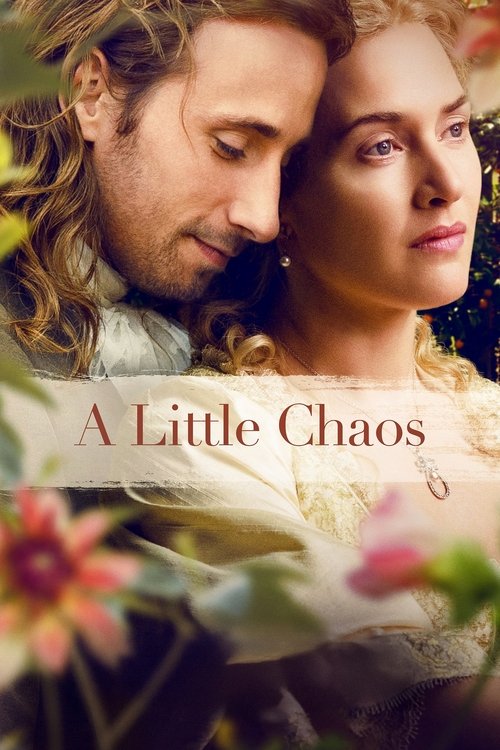
A Little Chaos
N/A
The film earned $10.1M at the global box office.


Plot Structure
Story beats plotted across runtime


Narrative Arc
Emotional journey through the story's key moments
Story Circle
Blueprint 15-beat structure
Arcplot Score Breakdown
Weighted: Precision (70%) + Arc (15%) + Theme (15%)
A Little Chaos (2015) exhibits carefully calibrated plot construction, characteristic of Alan Rickman's storytelling approach. This structural analysis examines how the film's 15-point plot structure maps to proven narrative frameworks across 1 hour and 57 minutes. With an Arcplot score of 7.0, the film balances conventional beats with creative variation.
Characters
Cast & narrative archetypes

Sabine De Barra
André Le Nôtre
King Louis XIV
Madame Le Nôtre
Philippe d'Orléans
Main Cast & Characters
Sabine De Barra
Played by Kate Winslet
A talented landscape gardener hired to create an outdoor ballroom at Versailles, dealing with loss and professional challenges in a male-dominated field.
André Le Nôtre
Played by Matthias Schoenaerts
The King's principal gardener at Versailles, a perfectionist and master of formal garden design who becomes drawn to Sabine.
King Louis XIV
Played by Alan Rickman
The Sun King of France, a complex monarch who values beauty and control, struggling with personal grief and the demands of absolute power.
Madame Le Nôtre
Played by Helen McCrory
André's dutiful wife who maintains appearances at court while enduring an emotionally distant marriage.
Philippe d'Orléans
Played by Stanley Tucci
The King's flamboyant and witty brother, providing comic relief and insight into court politics.
Structural Analysis
The Status Quo at 1 minutes (1% through the runtime) establishes Sabine De Barra works independently in her unconventional garden, a self-taught landscaper operating outside the formal aristocratic world of 17th century France.. Of particular interest, this early placement immediately immerses viewers in the story world.
The inciting incident occurs at 15 minutes when Sabine learns of an opportunity to compete for a commission to design an outdoor ballroom at Versailles, a chance that could transform her life and career.. At 13% through the film, this Disruption is delayed, allowing extended setup of the story world. This beat shifts the emotional landscape, launching the protagonist into the central conflict.
The First Threshold at 29 minutes marks the transition into Act II, occurring at 25% of the runtime. This illustrates the protagonist's commitment to Sabine is awarded the commission to create the outdoor ballroom at Versailles, accepting the challenge to enter the elite world despite being a woman and an outsider., moving from reaction to action.
At 59 minutes, the Midpoint arrives at 50% of the runtime—precisely centered, creating perfect narrative symmetry. Significantly, this crucial beat Sabine's design gains acceptance and her relationship with André deepens romantically, suggesting she might achieve both professional success and personal happiness—a false victory as complications loom., fundamentally raising what's at risk. The emotional intensity shifts, dividing the narrative into clear before-and-after phases.
The Collapse moment at 88 minutes (75% through) represents the emotional nadir. Here, Sabine's garden is sabotaged or severely criticized, and her concealed grief and past trauma are exposed, causing her to question whether she deserves happiness or success. Her emotional walls collapse., illustrates the protagonist at their lowest point. This beat's placement in the final quarter sets up the climactic reversal.
The Second Threshold at 94 minutes initiates the final act resolution at 80% of the runtime. Sabine realizes that embracing chaos and imperfection—in gardens and in life—is not weakness but strength. She chooses to complete her garden authentically and open her heart despite risk., demonstrating the transformation achieved throughout the journey.
Emotional Journey
A Little Chaos's emotional architecture traces a deliberate progression across 15 carefully calibrated beats.
Narrative Framework
This structural analysis employs proven narrative structure principles that track dramatic progression. By mapping A Little Chaos against these established plot points, we can identify how Alan Rickman utilizes or subverts traditional narrative conventions. The plot point approach reveals not only adherence to structural principles but also creative choices that distinguish A Little Chaos within the short genre.
Comparative Analysis
Additional short films include Star Wars: The Last Jedi, Dead Money and The Best Exotic Marigold Hotel.
Plot Points by Act
Act I
SetupStatus Quo
Sabine De Barra works independently in her unconventional garden, a self-taught landscaper operating outside the formal aristocratic world of 17th century France.
Theme
A character suggests that true beauty comes from controlled chaos and finding order in nature's wildness, hinting at the tension between rigid formality and natural authenticity.
Worldbuilding
Establishment of Sabine's humble position as a female landscaper in a male-dominated field, her unconventional methods, and the grandeur of King Louis XIV's Versailles where André Le Nôtre oversees the gardens.
Disruption
Sabine learns of an opportunity to compete for a commission to design an outdoor ballroom at Versailles, a chance that could transform her life and career.
Resistance
Sabine prepares her presentation and interviews with André Le Nôtre, concealing her gender initially. She debates whether she truly belongs in the aristocratic world of Versailles.
Act II
ConfrontationFirst Threshold
Sabine is awarded the commission to create the outdoor ballroom at Versailles, accepting the challenge to enter the elite world despite being a woman and an outsider.
Mirror World
Sabine and André Le Nôtre begin developing a deeper connection beyond professional collaboration, with André representing the possibility of emotional vulnerability and authentic connection.
Premise
Sabine works on creating her wild, unconventional garden design at Versailles, navigating palace politics, facing resistance from traditional designers, and growing closer to André while keeping her tragic past hidden.
Midpoint
Sabine's design gains acceptance and her relationship with André deepens romantically, suggesting she might achieve both professional success and personal happiness—a false victory as complications loom.
Opposition
Court politics intensify, rivals undermine Sabine's work, and her painful past involving the loss of her husband and daughter begins to surface, threatening both her project and her relationship with André.
Collapse
Sabine's garden is sabotaged or severely criticized, and her concealed grief and past trauma are exposed, causing her to question whether she deserves happiness or success. Her emotional walls collapse.
Crisis
Sabine confronts her devastating loss and grief, wrestling with whether to flee back to her isolated life or face her pain and remain vulnerable in both love and work.
Act III
ResolutionSecond Threshold
Sabine realizes that embracing chaos and imperfection—in gardens and in life—is not weakness but strength. She chooses to complete her garden authentically and open her heart despite risk.
Synthesis
Sabine completes her unconventional garden for the King's viewing, integrating her wild design vision with the demands of Versailles. She reconciles her past grief with present possibility, finding resolution with André.
Transformation
Sabine stands in her completed garden at Versailles—a woman who has found her place, integrated order and chaos, and transformed from isolated grief to connected wholeness.