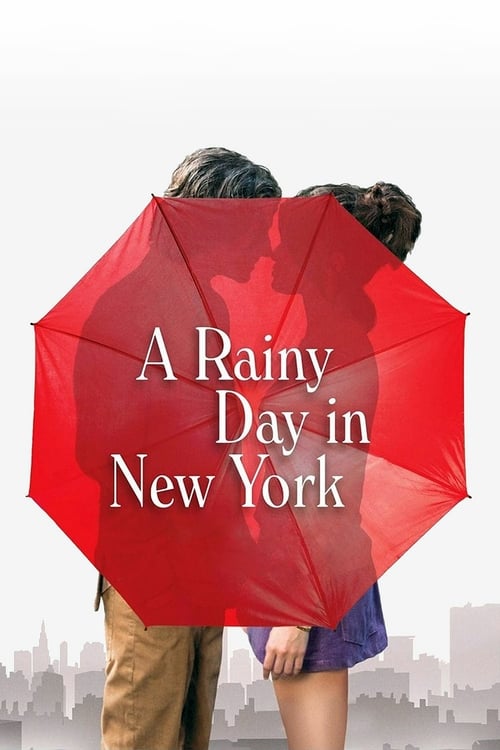
A Rainy Day in New York
Two young people arrive in New York to spend a weekend, but once they arrive they're met with bad weather and a series of adventures.
The film struggled financially against its mid-range budget of $25.0M, earning $23.8M globally (-5% loss).


Plot Structure
Story beats plotted across runtime


Narrative Arc
Emotional journey through the story's key moments
Story Circle
Blueprint 15-beat structure
Arcplot Score Breakdown
Weighted: Precision (70%) + Arc (15%) + Theme (15%)
A Rainy Day in New York (2019) demonstrates strategically placed narrative architecture, characteristic of Woody Allen's storytelling approach. This structural analysis examines how the film's 15-point plot structure maps to proven narrative frameworks across 1 hour and 32 minutes. With an Arcplot score of 7.3, the film balances conventional beats with creative variation.
Characters
Cast & narrative archetypes

Gatsby Welles
Ashleigh Enright
Chan Tyrell
Roland Pollard
Francisco Vega
Ted Davidoff
Main Cast & Characters
Gatsby Welles
Played by Timothée Chalamet
A romantic college student obsessed with old New York who accompanies his girlfriend on a journalism trip to Manhattan.
Ashleigh Enright
Played by Elle Fanning
Gatsby's ambitious journalism student girlfriend who gets caught up in the glamorous Manhattan film world.
Chan Tyrell
Played by Selena Gomez
Gatsby's younger high school-aged love interest, sister of his friend, aspiring actress with sophistication beyond her years.
Roland Pollard
Played by Liev Schreiber
A neurotic, philosophical film director in the midst of a creative crisis during post-production.
Francisco Vega
Played by Diego Luna
A charming screenwriter who sweeps Ashleigh off her feet during their encounter in Manhattan.
Ted Davidoff
Played by Jude Law
A charismatic movie star who flirts with Ashleigh after meeting her at a screening.
Structural Analysis
The Status Quo at 1 minutes (1% through the runtime) establishes Gatsby at Yardley College planning a romantic weekend in Manhattan with girlfriend Ashleigh. He's wealthy, charming, but somewhat out of place at college.. The analysis reveals that this early placement immediately immerses viewers in the story world.
The inciting incident occurs at 10 minutes when Ashleigh's interview with director Roland Pollard extends beyond the planned time, disrupting Gatsby's carefully planned romantic weekend. She becomes swept up in Pollard's world.. At 11% through the film, this Disruption aligns precisely with traditional story structure. This beat shifts the emotional landscape, launching the protagonist into the central conflict.
The First Threshold at 22 minutes marks the transition into Act II, occurring at 24% of the runtime. This demonstrates the protagonist's commitment to Gatsby commits to spending the day with Chan, actively choosing this alternative path rather than waiting passively for Ashleigh. Meanwhile, Ashleigh chooses to continue her adventure with the film people rather than meeting Gatsby., moving from reaction to action.
At 46 minutes, the Midpoint arrives at 50% of the runtime—precisely centered, creating perfect narrative symmetry. Significantly, this crucial beat Gatsby is unexpectedly confronted by his wealthy mother at a society event. His carefully maintained separation from his privileged background is exposed. Simultaneously, Ashleigh kisses Francisco Vega, betraying Gatsby., fundamentally raising what's at risk. The emotional intensity shifts, dividing the narrative into clear before-and-after phases.
The Collapse moment at 67 minutes (73% through) represents the emotional nadir. Here, Ashleigh fully falls for the allure of Francisco Vega and the film world, completing her emotional departure from Gatsby. Gatsby realizes his romantic weekend and relationship are dead. He faces the collapse of his idealized vision of their relationship., shows the protagonist at their lowest point. This beat's placement in the final quarter sets up the climactic reversal.
The Second Threshold at 73 minutes initiates the final act resolution at 79% of the runtime. Gatsby gains clarity: Ashleigh isn't right for him, and he should embrace his authentic self rather than running from his background. He recognizes his genuine connection with Chan and accepts who he really is., demonstrating the transformation achieved throughout the journey.
Emotional Journey
A Rainy Day in New York's emotional architecture traces a deliberate progression across 15 carefully calibrated beats.
Narrative Framework
This structural analysis employs a 15-point narrative structure framework that maps key story moments. By mapping A Rainy Day in New York against these established plot points, we can identify how Woody Allen utilizes or subverts traditional narrative conventions. The plot point approach reveals not only adherence to structural principles but also creative choices that distinguish A Rainy Day in New York within the comedy genre.
Woody Allen's Structural Approach
Among the 42 Woody Allen films analyzed on Arcplot, the average structural score is 7.0, demonstrating varied approaches to story architecture. A Rainy Day in New York represents one of the director's most structurally precise works. For comparative analysis, explore the complete Woody Allen filmography.
Comparative Analysis
Additional comedy films include The Bad Guys, Ella Enchanted and The Evening Star. For more Woody Allen analyses, see Everyone Says I Love You, Celebrity and Interiors.
Plot Points by Act
Act I
SetupStatus Quo
Gatsby at Yardley College planning a romantic weekend in Manhattan with girlfriend Ashleigh. He's wealthy, charming, but somewhat out of place at college.
Theme
Ashleigh discusses her interview assignment with filmmaker Roland Pollard, revealing her journalistic ambitions and naivety about the sophisticated New York art world she's about to enter.
Worldbuilding
Establishing Gatsby and Ashleigh's relationship dynamic. Gatsby is refined and knows New York intimately; Ashleigh is earnest but unsophisticated. We see Gatsby's estrangement from his wealthy family and his romantic plans for the weekend.
Disruption
Ashleigh's interview with director Roland Pollard extends beyond the planned time, disrupting Gatsby's carefully planned romantic weekend. She becomes swept up in Pollard's world.
Resistance
Gatsby wanders New York alone while waiting for Ashleigh. He encounters his ex-girlfriend's younger sister Chan and gets pulled into helping with a student film. Ashleigh continues to be drawn deeper into the sophisticated film world with Pollard and screenwriter Ted Davidoff.
Act II
ConfrontationFirst Threshold
Gatsby commits to spending the day with Chan, actively choosing this alternative path rather than waiting passively for Ashleigh. Meanwhile, Ashleigh chooses to continue her adventure with the film people rather than meeting Gatsby.
Mirror World
Chan represents authenticity and genuine connection - she appreciates Gatsby for who he really is, not the persona he presents. Their easy rapport contrasts sharply with Gatsby and Ashleigh's mismatched relationship.
Premise
Parallel adventures in Manhattan: Gatsby experiences an authentic, comfortable connection with Chan while working on the student film. Ashleigh becomes increasingly starstruck, having encounters with Pollard, screenwriter Ted Davidoff, and actor Francisco Vega, getting drawn into their sophisticated but superficial world.
Midpoint
Gatsby is unexpectedly confronted by his wealthy mother at a society event. His carefully maintained separation from his privileged background is exposed. Simultaneously, Ashleigh kisses Francisco Vega, betraying Gatsby.
Opposition
Complications intensify: Gatsby must deal with his mother's attempts to control his life and his growing feelings for Chan. Ashleigh becomes increasingly lost in the glamorous film world, further from both Gatsby and reality. Both face the truth about their relationship's incompatibility.
Collapse
Ashleigh fully falls for the allure of Francisco Vega and the film world, completing her emotional departure from Gatsby. Gatsby realizes his romantic weekend and relationship are dead. He faces the collapse of his idealized vision of their relationship.
Crisis
Gatsby processes the end of his relationship with Ashleigh and contemplates what he truly wants. He reflects on his connection with Chan and where he genuinely belongs - not in denial of his background but in authentic acceptance of who he is.
Act III
ResolutionSecond Threshold
Gatsby gains clarity: Ashleigh isn't right for him, and he should embrace his authentic self rather than running from his background. He recognizes his genuine connection with Chan and accepts who he really is.
Synthesis
Gatsby and Ashleigh have their final conversation, acknowledging their incompatibility. Ashleigh returns to her world; Gatsby pursues Chan. He reconciles with his identity and his place in New York, no longer fighting against his background but integrating it authentically.
Transformation
Gatsby and Chan share a kiss in the rain in Central Park - mirroring the opening's planned romantic weekend, but now with authentic connection instead of forced romance. Gatsby has found where he truly belongs.