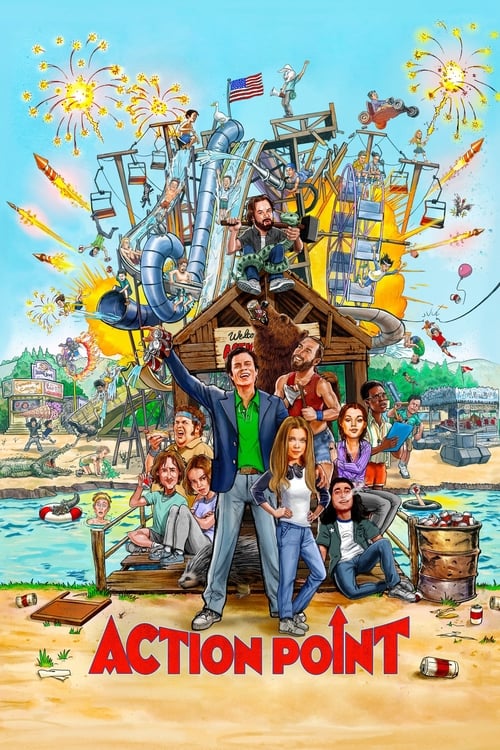
Action Point
A daredevil designs and operates his own theme park with his friends.
The film financial setback against its respectable budget of $19.0M, earning $5.1M globally (-73% loss). While initial box office returns were modest, the film has gained appreciation for its innovative storytelling within the comedy genre.





Plot Structure
Story beats plotted across runtime


Narrative Arc
Emotional journey through the story's key moments
Story Circle
Blueprint 15-beat structure
Arcplot Score Breakdown
Weighted: Precision (70%) + Arc (15%) + Theme (15%)
Action Point (2018) demonstrates carefully calibrated story structure, characteristic of Tim Kirkby's storytelling approach. This structural analysis examines how the film's 15-point plot structure maps to proven narrative frameworks across 1 hour and 25 minutes. With an Arcplot score of 6.8, the film balances conventional beats with creative variation.
Characters
Cast & narrative archetypes

D.C. Carver

Boogie

Benny

Four Finger Annie
Knoblach
Stiv
Main Cast & Characters
D.C. Carver
Played by Johnny Knoxville
Owner and operator of a dangerous, low-budget amusement park who refuses to compromise safety for profit regulations.
Boogie
Played by Eleanor Worthington Cox
D.C.'s teenage daughter visiting for the summer, caught between her father's reckless world and her desire for normalcy.
Benny
Played by Chris Pontius
D.C.'s loyal but dim-witted best friend and park employee who supports every dangerous idea.
Four Finger Annie
Played by Camilla Wolfson
Tough, resourceful park employee who handles operations and keeps things running despite the chaos.
Knoblach
Played by Dan Bakkedahl
The wealthy, corporate theme park owner who wants to buy out and shut down Action Point.
Stiv
Played by Brigette Lundy-Paine
Young park employee and Boogie's summer love interest who works at Action Point.
Structural Analysis
The Status Quo at 1 minutes (1% through the runtime) establishes Present-day D.C. Runs a struggling, rundown amusement park called Action Point, showing his reckless management style and dedication to dangerous fun over safety.. Notably, this early placement immediately immerses viewers in the story world.
The inciting incident occurs at 11 minutes when D.C. Learns that a slick corporate theme park called 7 Parks is opening nearby, threatening to put Action Point out of business permanently.. At 13% through the film, this Disruption is delayed, allowing extended setup of the story world. This beat shifts the emotional landscape, launching the protagonist into the central conflict.
The First Threshold at 21 minutes marks the transition into Act II, occurring at 25% of the runtime. This indicates the protagonist's commitment to D.C. Makes the active decision to remove ALL safety measures from Action Point, committing to an all-or-nothing strategy to save the park through pure insanity., moving from reaction to action.
At 43 minutes, the Midpoint arrives at 50% of the runtime—precisely centered, creating perfect narrative symmetry. Notably, this crucial beat Action Point reaches peak popularity and success, appearing to have beaten the corporate competition, but tensions rise as injuries mount and D.C.'s daughter sees his recklessness clearly., fundamentally raising what's at risk. The emotional intensity shifts, dividing the narrative into clear before-and-after phases.
The Collapse moment at 64 minutes (75% through) represents the emotional nadir. Here, Action Point is forced to close due to safety violations and financial ruin, and D.C.'s daughter leaves, disappointed in his inability to prioritize their relationship over dangerous thrills., shows the protagonist at their lowest point. This beat's placement in the final quarter sets up the climactic reversal.
The Second Threshold at 68 minutes initiates the final act resolution at 80% of the runtime. D.C. Realizes that the spirit of Action Point wasn't about the park itself but about creating genuine experiences and connections, giving him clarity on how to move forward., demonstrating the transformation achieved throughout the journey.
Emotional Journey
Action Point's emotional architecture traces a deliberate progression across 15 carefully calibrated beats.
Narrative Framework
This structural analysis employs systematic plot point analysis that identifies crucial turning points. By mapping Action Point against these established plot points, we can identify how Tim Kirkby utilizes or subverts traditional narrative conventions. The plot point approach reveals not only adherence to structural principles but also creative choices that distinguish Action Point within the comedy genre.
Comparative Analysis
Additional comedy films include The Ministry of Ungentlemanly Warfare, The Bad Guys and Lake Placid.
Plot Points by Act
Act I
SetupStatus Quo
Present-day D.C. runs a struggling, rundown amusement park called Action Point, showing his reckless management style and dedication to dangerous fun over safety.
Theme
D.C.'s daughter or staff member comments on the danger of the park and whether it's worth risking everything for thrills, establishing the film's theme about responsibility versus freedom.
Worldbuilding
Introduction to Action Point park in the 1970s, D.C.'s staff of misfits, his estranged relationship with his daughter, and the park's reputation for being dangerously fun with no safety regulations.
Disruption
D.C. learns that a slick corporate theme park called 7 Parks is opening nearby, threatening to put Action Point out of business permanently.
Resistance
D.C. debates how to compete with the corporate park, considers closing, and reluctantly contemplates making Action Point even more dangerous and extreme to attract customers.
Act II
ConfrontationFirst Threshold
D.C. makes the active decision to remove ALL safety measures from Action Point, committing to an all-or-nothing strategy to save the park through pure insanity.
Mirror World
D.C.'s daughter arrives to spend the summer with him, representing the relationship subplot that will force him to confront what truly matters beyond the park.
Premise
The promise of the premise: Action Point becomes legendarily dangerous and fun, customers flock to the park, insane stunts ensue, and D.C. bonds with his daughter through chaos.
Midpoint
Action Point reaches peak popularity and success, appearing to have beaten the corporate competition, but tensions rise as injuries mount and D.C.'s daughter sees his recklessness clearly.
Opposition
Consequences close in: serious injuries occur, lawsuits threaten, the corporate park fights back, D.C.'s relationship with his daughter deteriorates, and his own body breaks down from stunts.
Collapse
Action Point is forced to close due to safety violations and financial ruin, and D.C.'s daughter leaves, disappointed in his inability to prioritize their relationship over dangerous thrills.
Crisis
D.C. sits in the ruins of Action Point, processing the loss of both his park and his daughter, confronting whether his reckless freedom was worth the cost of real connection.
Act III
ResolutionSecond Threshold
D.C. realizes that the spirit of Action Point wasn't about the park itself but about creating genuine experiences and connections, giving him clarity on how to move forward.
Synthesis
D.C. takes action to reconnect with his daughter, makes peace with the park's closure, and demonstrates growth by showing he values relationships over reckless thrills.
Transformation
Present-day D.C. with his granddaughter shows he's maintained his fun-loving spirit but balanced it with responsibility and genuine human connection, transformed from reckless owner to present family man.