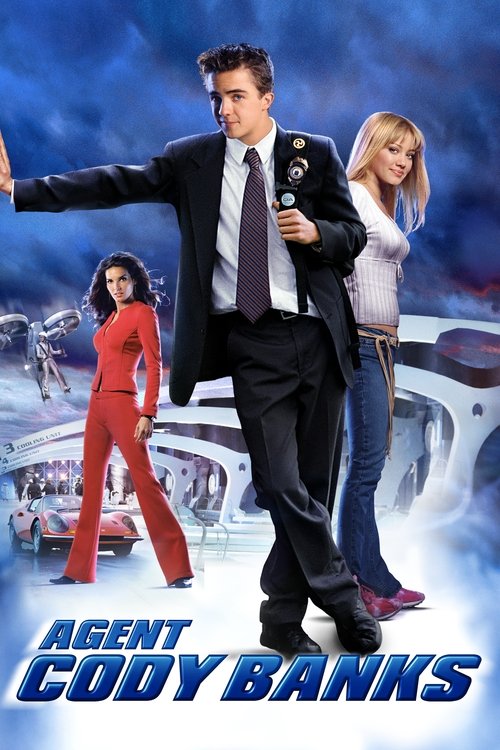
Agent Cody Banks
Recruited by the U.S. government to be a special agent, nerdy teenager Cody Banks must get closer to cute classmate Natalie in order to learn about an evil plan hatched by her father. But despite the agent persona, Cody struggles with teen angst.
Despite a moderate budget of $28.0M, Agent Cody Banks became a solid performer, earning $58.8M worldwide—a 110% return.


Plot Structure
Story beats plotted across runtime


Narrative Arc
Emotional journey through the story's key moments
Story Circle
Blueprint 15-beat structure
Arcplot Score Breakdown
Weighted: Precision (70%) + Arc (15%) + Theme (15%)
Agent Cody Banks (2003) exemplifies deliberately positioned plot construction, characteristic of Harald Zwart's storytelling approach. This structural analysis examines how the film's 15-point plot structure maps to proven narrative frameworks across 1 hour and 42 minutes. With an Arcplot score of 6.2, the film takes an unconventional approach to traditional narrative frameworks.
Characters
Cast & narrative archetypes

Cody Banks
Natalie Connors
Ronica Miles
Dr. Brinkman
François Molay
CIA Director
Dr. Albert Connors
Main Cast & Characters
Cody Banks
Played by Frankie Muniz
A teenage CIA agent balancing high school life with espionage missions, tasked with befriending a scientist's daughter to stop a nanobot threat.
Natalie Connors
Played by Hilary Duff
A smart, independent high school student and daughter of scientist Dr. Connors, unaware she's the target of Cody's mission.
Ronica Miles
Played by Angie Harmon
Cody's no-nonsense CIA handler who poses as his camp counselor and guides him through his mission.
Dr. Brinkman
Played by Ian McShane
A corrupt former government scientist turned villain who plans to use nanobots for world domination.
François Molay
Played by Arnold Vosloo
Dr. Brinkman's ruthless henchman and chef who provides muscle and intimidation.
CIA Director
Played by Keith David
The head of the CIA who recruits Cody for the mission and oversees the operation.
Dr. Albert Connors
Played by Martin Donovan
A brilliant scientist developing nanobot technology, unaware his work is being stolen by Dr. Brinkman.
Structural Analysis
The Status Quo at 1 minutes (1% through the runtime) establishes Cody Banks is shown as an awkward teenage boy who can't talk to girls, struggling at a school social event while being ignored by his crush. Despite being a highly trained CIA operative, he's powerless in normal teenage social situations.. Of particular interest, this early placement immediately immerses viewers in the story world.
The inciting incident occurs at 13 minutes when Cody is pulled from summer camp and briefed on a critical mission: Dr. Connors is developing nanobots that could be weaponized, and Cody must befriend Connors' daughter Natalie to get close to the scientist and assess the threat.. At 13% through the film, this Disruption is delayed, allowing extended setup of the story world. This beat shifts the emotional landscape, launching the protagonist into the central conflict.
The First Threshold at 25 minutes marks the transition into Act II, occurring at 25% of the runtime. This shows the protagonist's commitment to Cody makes his first genuine attempt to talk to Natalie at school, using the cover story that they're lab partners. Despite his nervousness, he chooses to commit to the mission and enter her world, marking his active decision to cross into Act 2., moving from reaction to action.
At 52 minutes, the Midpoint arrives at 51% of the runtime—precisely centered, creating perfect narrative symmetry. Notably, this crucial beat Cody discovers that Dr. Connors is actually being coerced by the villainous Brinkman, who has kidnapped Connors and plans to use the nanobots as weapons. The mission shifts from surveillance to rescue, raising the stakes dramatically. What seemed like a simple observation mission becomes a race against time., fundamentally raising what's at risk. The emotional intensity shifts, dividing the narrative into clear before-and-after phases.
The Collapse moment at 76 minutes (74% through) represents the emotional nadir. Here, Natalie discovers Cody has been lying to her about everything and feels utterly betrayed. She rejects him completely. Simultaneously, the CIA pulls Cody from the mission, and Brinkman successfully kidnaps Dr. Connors. Cody has lost both the girl and the mission - total failure on both fronts., reveals the protagonist at their lowest point. This beat's placement in the final quarter sets up the climactic reversal.
The Second Threshold at 81 minutes initiates the final act resolution at 79% of the runtime. Cody realizes he must act on his own, using both his spy skills AND his genuine care for Natalie and her father. He chooses to disobey the CIA and mount a rescue mission. He synthesizes his training with his authentic emotions - he'll save Dr. Connors not just as an operative, but because he truly cares., demonstrating the transformation achieved throughout the journey.
Emotional Journey
Agent Cody Banks's emotional architecture traces a deliberate progression across 15 carefully calibrated beats.
Narrative Framework
This structural analysis employs a 15-point narrative structure framework that maps key story moments. By mapping Agent Cody Banks against these established plot points, we can identify how Harald Zwart utilizes or subverts traditional narrative conventions. The plot point approach reveals not only adherence to structural principles but also creative choices that distinguish Agent Cody Banks within the action genre.
Harald Zwart's Structural Approach
Among the 6 Harald Zwart films analyzed on Arcplot, the average structural score is 7.0, demonstrating varied approaches to story architecture. Agent Cody Banks takes a more unconventional approach compared to the director's typical style. For comparative analysis, explore the complete Harald Zwart filmography.
Comparative Analysis
Additional action films include The Bad Guys, Puss in Boots and Venom: The Last Dance. For more Harald Zwart analyses, see One Night at McCool's, The 12th Man and The Mortal Instruments: City of Bones.
Plot Points by Act
Act I
SetupStatus Quo
Cody Banks is shown as an awkward teenage boy who can't talk to girls, struggling at a school social event while being ignored by his crush. Despite being a highly trained CIA operative, he's powerless in normal teenage social situations.
Theme
CIA Director remarks that "being a spy is about more than gadgets and training - it's about connecting with people." This establishes the thematic core: true effectiveness comes from authentic human connection, not just technical skills.
Worldbuilding
Cody's double life is established: he's a skilled CIA agent trained in combat and espionage, but a complete failure at normal teenage life. We see his family who don't know his secret, his school environment, and the CIA training facility where he excels.
Disruption
Cody is pulled from summer camp and briefed on a critical mission: Dr. Connors is developing nanobots that could be weaponized, and Cody must befriend Connors' daughter Natalie to get close to the scientist and assess the threat.
Resistance
Cody resists the mission, insisting he can't talk to girls and will fail. He receives extensive preparation, gadgets, and coaching from handler Ronica Miles. He debates whether he can actually pull off befriending Natalie given his social awkwardness.
Act II
ConfrontationFirst Threshold
Cody makes his first genuine attempt to talk to Natalie at school, using the cover story that they're lab partners. Despite his nervousness, he chooses to commit to the mission and enter her world, marking his active decision to cross into Act 2.
Mirror World
Cody and Natalie begin developing a real friendship and budding romance. Natalie represents the "normal" life Cody craves - she's genuine, kind, and sees him as just a regular boy, not as an operative. She becomes his connection to authentic teenage experience.
Premise
The fun spy-kid adventure: Cody uses gadgets, sneaks around Dr. Connors' house and lab, performs surveillance, all while genuinely falling for Natalie. He balances thrilling espionage work with the complexity of real feelings developing for his target's daughter.
Midpoint
Cody discovers that Dr. Connors is actually being coerced by the villainous Brinkman, who has kidnapped Connors and plans to use the nanobots as weapons. The mission shifts from surveillance to rescue, raising the stakes dramatically. What seemed like a simple observation mission becomes a race against time.
Opposition
Brinkman's forces close in. Cody's double life becomes harder to maintain as the danger escalates. His relationship with Natalie is strained by his lies and mysterious behavior. The CIA considers pulling him from the mission, and Brinkman's plan advances toward completion.
Collapse
Natalie discovers Cody has been lying to her about everything and feels utterly betrayed. She rejects him completely. Simultaneously, the CIA pulls Cody from the mission, and Brinkman successfully kidnaps Dr. Connors. Cody has lost both the girl and the mission - total failure on both fronts.
Crisis
Cody processes his losses - his mentor handler is disappointed, Natalie won't speak to him, and Dr. Connors will likely die while the nanobots become weapons. He faces the consequences of trying to live a double life and questions whether he can be both a spy and a real person.
Act III
ResolutionSecond Threshold
Cody realizes he must act on his own, using both his spy skills AND his genuine care for Natalie and her father. He chooses to disobey the CIA and mount a rescue mission. He synthesizes his training with his authentic emotions - he'll save Dr. Connors not just as an operative, but because he truly cares.
Synthesis
Cody infiltrates Brinkman's facility, using all his skills and gadgets while fighting for something real. He rescues Dr. Connors, defeats Brinkman, and stops the nanobot threat. He's finally effective as both a spy and as someone acting from genuine human connection, proving the theme correct.
Transformation
Cody confidently talks to Natalie, now able to be both honest and socially capable. He's reconciled his spy life with his real self. Unlike the opening where he was paralyzed around girls, he's now comfortable in his own skin, having learned that connection comes from authenticity, not from playing a role.