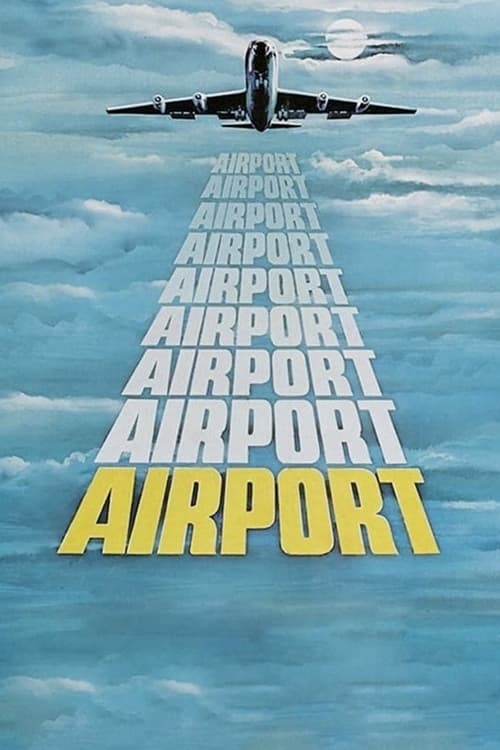
Airport
An airport manager tries to keep his terminals open during a snowstorm, while a suicide bomber plots to blow up a Boeing 707 airliner in flight.
Despite its tight budget of $10.0M, Airport became a commercial juggernaut, earning $100.5M worldwide—a remarkable 905% return. The film's unconventional structure connected with viewers, proving that strong storytelling can transcend budget limitations.
1 Oscar. 5 wins & 19 nominations


Plot Structure
Story beats plotted across runtime


Narrative Arc
Emotional journey through the story's key moments
Story Circle
Blueprint 15-beat structure
Arcplot Score Breakdown
Weighted: Precision (70%) + Arc (15%) + Theme (15%)
Airport (1970) showcases carefully calibrated narrative design, characteristic of George Seaton's storytelling approach. This structural analysis examines how the film's 15-point plot structure maps to proven narrative frameworks across 2 hours and 17 minutes. With an Arcplot score of 6.8, the film balances conventional beats with creative variation.
Characters
Cast & narrative archetypes

Mel Bakersfeld
Vernon Demerest
Tanya Livingston
Gwen Meighen
D.O. Guerrero
Inez Guerrero
Joe Patroni
Cindy Bakersfeld
Ada Quonsett
Main Cast & Characters
Mel Bakersfeld
Played by Burt Lancaster
Airport general manager dealing with a snowstorm crisis while managing personal and professional challenges.
Vernon Demerest
Played by Dean Martin
Arrogant airline captain having an affair with a stewardess while his wife is pregnant.
Tanya Livingston
Played by Jean Seberg
Customer relations manager and Mel's love interest, helping manage the airport crisis.
Gwen Meighen
Played by Jacqueline Bisset
Flight attendant having an affair with Captain Demerest and dealing with an unexpected pregnancy.
D.O. Guerrero
Played by Van Heflin
Desperate man planning to blow up a plane to provide insurance money for his wife.
Inez Guerrero
Played by Maureen Stapleton
D.O. Guerrero's wife who discovers her husband's suicide bombing plan.
Joe Patroni
Played by George Kennedy
Trouble-shooting airline maintenance chief working to free a stuck aircraft from the runway.
Cindy Bakersfeld
Played by Dana Wynter
Mel's social-climbing wife who resents his dedication to the airport.
Ada Quonsett
Played by Helen Hayes
Elderly serial stowaway who charms her way onto flights without paying.
Structural Analysis
The Status Quo at 1 minutes (1% through the runtime) establishes Snow-covered Lincoln International Airport operates in chaos during a major blizzard. General Manager Mel Bakersfeld oversees the busy terminal, juggling operational crises while his marriage crumbles in the background.. Notably, this early placement immediately immerses viewers in the story world.
The inciting incident occurs at 17 minutes when Guerrero purchases flight insurance for $225,000 naming his wife as beneficiary, then boards Trans Global Flight 2 to Rome carrying a homemade bomb. The desperate, suicidal man sets the central crisis in motion.. At 12% through the film, this Disruption aligns precisely with traditional story structure. This beat shifts the emotional landscape, launching the protagonist into the central conflict.
The First Threshold at 34 minutes marks the transition into Act II, occurring at 25% of the runtime. This shows the protagonist's commitment to Flight 2 takes off with Guerrero and the bomb aboard. The plane enters the air, crossing the threshold from ground-based problems to a life-or-death airborne crisis that cannot be easily reversed., moving from reaction to action.
At 68 minutes, the Midpoint arrives at 50% of the runtime—precisely centered, creating perfect narrative symmetry. Of particular interest, this crucial beat Guerrero detonates the bomb in the airplane lavatory. The explosion tears a hole in the fuselage, killing Guerrero and severely damaging the aircraft. False defeat: the crisis escalates from potential threat to actual catastrophe in mid-flight., fundamentally raising what's at risk. The emotional intensity shifts, dividing the narrative into clear before-and-after phases.
The Collapse moment at 102 minutes (75% through) represents the emotional nadir. Here, The crew realizes the structural damage may be too severe for landing—the aircraft could break apart on touchdown, killing everyone aboard. This is the darkest moment where death seems inevitable, and all solutions appear exhausted., shows the protagonist at their lowest point. This beat's placement in the final quarter sets up the climactic reversal.
The Second Threshold at 109 minutes initiates the final act resolution at 79% of the runtime. Patroni successfully frees the stuck 707 from the snowbank, clearing Runway 29 for emergency use. This breakthrough provides Flight 2 with their best chance for survival—combining Patroni's ground expertise with Demerest's flying skill., demonstrating the transformation achieved throughout the journey.
Emotional Journey
Airport's emotional architecture traces a deliberate progression across 15 carefully calibrated beats.
Narrative Framework
This structural analysis employs structural analysis methodology used to understand storytelling architecture. By mapping Airport against these established plot points, we can identify how George Seaton utilizes or subverts traditional narrative conventions. The plot point approach reveals not only adherence to structural principles but also creative choices that distinguish Airport within the action genre.
George Seaton's Structural Approach
Among the 2 George Seaton films analyzed on Arcplot, the average structural score is 7.1, reflecting strong command of classical structure. Airport takes a more unconventional approach compared to the director's typical style. For comparative analysis, explore the complete George Seaton filmography.
Comparative Analysis
Additional action films include The Bad Guys, Puss in Boots and Venom: The Last Dance. For more George Seaton analyses, see Miracle on 34th Street.
Plot Points by Act
Act I
SetupStatus Quo
Snow-covered Lincoln International Airport operates in chaos during a major blizzard. General Manager Mel Bakersfeld oversees the busy terminal, juggling operational crises while his marriage crumbles in the background.
Theme
Patroni tells Mel that "nothing is hopeless" when discussing the stuck 707 blocking the main runway. This establishes the central theme: professionals must solve impossible problems through expertise, determination, and human connection.
Worldbuilding
Introduction to the interconnected world of airport operations: Mel's marital tensions with Cindy, the stuck aircraft crisis, Chief Mechanic Patroni's rescue mission, Captain Demerest's affair with stewardess Gwen, and D.O. Guerrero's desperate plan to bomb Flight 2.
Disruption
Guerrero purchases flight insurance for $225,000 naming his wife as beneficiary, then boards Trans Global Flight 2 to Rome carrying a homemade bomb. The desperate, suicidal man sets the central crisis in motion.
Resistance
Multiple storylines converge as Flight 2 prepares for departure: Mel debates whether to keep the airport open, Patroni works to free the stuck plane, Gwen reveals her pregnancy to Demerest, and Guerrero's wife discovers his insurance purchase and races to the airport.
Act II
ConfrontationFirst Threshold
Flight 2 takes off with Guerrero and the bomb aboard. The plane enters the air, crossing the threshold from ground-based problems to a life-or-death airborne crisis that cannot be easily reversed.
Mirror World
Mel and customer relations agent Tanya Livingston share intimate moments discussing their lives and connection. Their relationship represents the thematic counterpoint: authentic human connection versus the sterile, failing marriage Mel endures with Cindy.
Premise
The "airport disaster" premise delivers: Flight 2 cruises toward Rome while crew serves passengers; Guerrero sweats with his bomb; Patroni executes the dangerous runway rescue; Mel navigates political pressure from the community; Mrs. Guerrero alerts authorities about the bomber.
Midpoint
Guerrero detonates the bomb in the airplane lavatory. The explosion tears a hole in the fuselage, killing Guerrero and severely damaging the aircraft. False defeat: the crisis escalates from potential threat to actual catastrophe in mid-flight.
Opposition
Flight 2 struggles to stay airborne with massive structural damage. Captain Demerest fights the controls while making critical decisions about whether to attempt landing. Ground operations scramble to prepare for emergency landing. Pressure intensifies as fuel runs low and passenger injuries worsen.
Collapse
The crew realizes the structural damage may be too severe for landing—the aircraft could break apart on touchdown, killing everyone aboard. This is the darkest moment where death seems inevitable, and all solutions appear exhausted.
Crisis
Flight 2's crew and passengers face their mortality. Demerest and Gwen share what may be their final moments. On the ground, Mel confronts the possibility of catastrophic failure and massive loss of life on his watch.
Act III
ResolutionSecond Threshold
Patroni successfully frees the stuck 707 from the snowbank, clearing Runway 29 for emergency use. This breakthrough provides Flight 2 with their best chance for survival—combining Patroni's ground expertise with Demerest's flying skill.
Synthesis
The climactic emergency landing sequence. All airport personnel coordinate perfectly. Demerest executes a masterful approach using every bit of his skill. The damaged aircraft touches down on the cleared runway, slides dangerously but holds together, and comes to rest as emergency crews rush to evacuate passengers.
Transformation
All passengers safely evacuated. Mel and Tanya stand together watching the rescue, their connection deepened through crisis. The airport returns to operation. Mel has transformed from a manager trapped in obligations to a leader who chooses authentic connection and purposeful work.