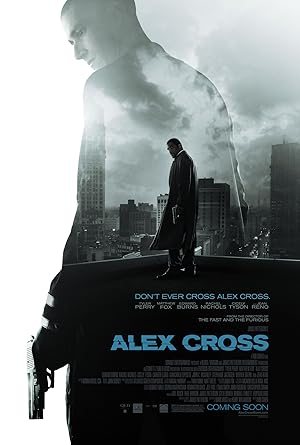
Alex Cross
Dr. Alex Cross is on his last police duty to track down an assassin called Picasso, who's been torturing and killing rich businessmen in Detroit. Soon when the mission gets personal, Cross is pushed to the edge of his moral and psychological limits to end this once and for all.
The film underperformed commercially against its moderate budget of $45.0M, earning $30.4M globally (-33% loss). While initial box office returns were modest, the film has gained appreciation for its distinctive approach within the action genre.


Plot Structure
Story beats plotted across runtime


Narrative Arc
Emotional journey through the story's key moments
Story Circle
Blueprint 15-beat structure
Arcplot Score Breakdown
Weighted: Precision (70%) + Arc (15%) + Theme (15%)
Alex Cross (2012) demonstrates carefully calibrated dramatic framework, characteristic of Rob Cohen's storytelling approach. This structural analysis examines how the film's 15-point plot structure maps to proven narrative frameworks across 1 hour and 41 minutes. With an Arcplot score of 7.3, the film balances conventional beats with creative variation.
Characters
Cast & narrative archetypes

Alex Cross
Picasso
Tommy Kane
Maria Cross
Monica Ashe
Main Cast & Characters
Alex Cross
Played by Tyler Perry
A Detroit homicide detective and psychologist who hunts a sadistic assassin targeting his family and colleagues.
Picasso
Played by Matthew Fox
A ruthless and psychopathic assassin who toys with Cross in a deadly game of cat and mouse.
Tommy Kane
Played by Edward Burns
Alex Cross's loyal partner and best friend, a dedicated detective who stands by Cross through the investigation.
Maria Cross
Played by Carmen Ejogo
Alex Cross's pregnant wife, a loving and supportive partner who becomes a target in the killer's vendetta.
Monica Ashe
Played by Rachel Nichols
Alex Cross's friend and colleague, a fellow detective who becomes one of Picasso's victims.
Structural Analysis
The Status Quo at 1 minutes (1% through the runtime) establishes Alex Cross at his daughter's birthday party, surrounded by family. He's a dedicated Detroit detective and devoted father, balancing his career with a loving home life.. The analysis reveals that this early placement immediately immerses viewers in the story world.
The inciting incident occurs at 11 minutes when Fan Yau, a wealthy businessman, is tortured and murdered by Picasso in an elaborate, sadistic crime scene. Cross is called to investigate this deeply disturbing case.. At 11% through the film, this Disruption aligns precisely with traditional story structure. This beat shifts the emotional landscape, launching the protagonist into the central conflict.
The First Threshold at 25 minutes marks the transition into Act II, occurring at 24% of the runtime. This indicates the protagonist's commitment to Cross and his team interrupt Picasso during an attack. The confrontation becomes personal when Picasso realizes Cross is a worthy adversary. Cross commits fully to hunting this killer., moving from reaction to action.
At 49 minutes, the Midpoint arrives at 49% of the runtime—precisely centered, creating perfect narrative symmetry. Notably, this crucial beat Picasso retaliates against Cross personally. In a devastating attack, Picasso murders Maria, Cross's pregnant wife, in their home. The professional case becomes deeply personal., fundamentally raising what's at risk. The emotional intensity shifts, dividing the narrative into clear before-and-after phases.
The Collapse moment at 74 minutes (73% through) represents the emotional nadir. Here, Tommy Kane, Cross's best friend and partner, is killed by Picasso in a trap meant for Cross. Cross loses another person he loves. His quest for revenge has cost him everything., illustrates the protagonist at their lowest point. This beat's placement in the final quarter sets up the climactic reversal.
The Second Threshold at 80 minutes initiates the final act resolution at 80% of the runtime. Cross discovers Picasso's true identity and location through a final piece of evidence. He chooses to pursue justice rather than blind revenge, regaining his focus and control., demonstrating the transformation achieved throughout the journey.
Emotional Journey
Alex Cross's emotional architecture traces a deliberate progression across 15 carefully calibrated beats.
Narrative Framework
This structural analysis employs a 15-point narrative structure framework that maps key story moments. By mapping Alex Cross against these established plot points, we can identify how Rob Cohen utilizes or subverts traditional narrative conventions. The plot point approach reveals not only adherence to structural principles but also creative choices that distinguish Alex Cross within the action genre.
Rob Cohen's Structural Approach
Among the 11 Rob Cohen films analyzed on Arcplot, the average structural score is 7.2, reflecting strong command of classical structure. Alex Cross represents one of the director's most structurally precise works. For comparative analysis, explore the complete Rob Cohen filmography.
Comparative Analysis
Additional action films include The Bad Guys, Puss in Boots and Venom: The Last Dance. For more Rob Cohen analyses, see The Hurricane Heist, Daylight and Stealth.
Plot Points by Act
Act I
SetupStatus Quo
Alex Cross at his daughter's birthday party, surrounded by family. He's a dedicated Detroit detective and devoted father, balancing his career with a loving home life.
Theme
Cross's partner Tommy Kane tells him about family balance and knowing when to walk away. Theme: revenge versus justice, personal versus professional, knowing when to stop.
Worldbuilding
Establishing Cross's world: his detective skills, his partnership with Tommy and Monica, his psychological profiling abilities, and his upcoming FBI job offer. A brutal killer known as "Picasso" emerges, targeting Detroit's elite.
Disruption
Fan Yau, a wealthy businessman, is tortured and murdered by Picasso in an elaborate, sadistic crime scene. Cross is called to investigate this deeply disturbing case.
Resistance
Cross profiles Picasso, piecing together the killer's psychology and methods. The team investigates connections between victims. Cross debates taking the FBI position versus staying in Detroit to hunt this killer.
Act II
ConfrontationFirst Threshold
Cross and his team interrupt Picasso during an attack. The confrontation becomes personal when Picasso realizes Cross is a worthy adversary. Cross commits fully to hunting this killer.
Mirror World
Cross shares intimate moments with his wife Maria, discussing his future and the FBI opportunity. She represents the life he could have away from this darkness - family, safety, normalcy.
Premise
Cat-and-mouse game between Cross and Picasso intensifies. Cross uses his psychological profiling to get closer. The team follows leads through Detroit's underworld, uncovering a conspiracy involving a German industrialist.
Midpoint
Picasso retaliates against Cross personally. In a devastating attack, Picasso murders Maria, Cross's pregnant wife, in their home. The professional case becomes deeply personal.
Opposition
Cross spirals into grief and rage, obsessed with revenge. The investigation continues but Cross's judgment is compromised. Picasso stays ahead, killing more people while taunting Cross. The line between justice and vengeance blurs.
Collapse
Tommy Kane, Cross's best friend and partner, is killed by Picasso in a trap meant for Cross. Cross loses another person he loves. His quest for revenge has cost him everything.
Crisis
Cross at his lowest point, confronting the cost of his obsession. He processes Tommy's death and his own guilt. Monica challenges him about what he's become and what Maria would want.
Act III
ResolutionSecond Threshold
Cross discovers Picasso's true identity and location through a final piece of evidence. He chooses to pursue justice rather than blind revenge, regaining his focus and control.
Synthesis
Cross tracks Picasso to an abandoned factory. Final confrontation combining Cross's psychological insight with physical combat. Cross must choose between executing Picasso or bringing him to justice.
Transformation
Cross with his children and mother, forever changed by loss but choosing to honor Maria's memory by being present for his family. He's a different man - darker, wounded, but still committed to justice over vengeance.