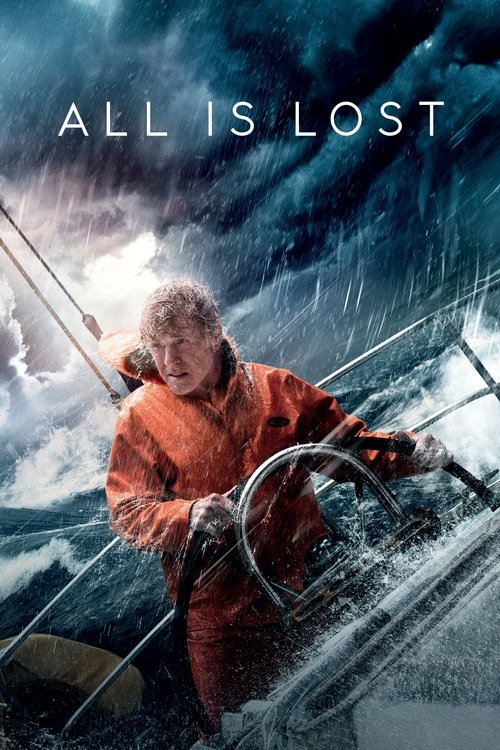
All Is Lost
During a solo voyage in the Indian Ocean, a veteran mariner awakes to find his vessel taking on water after a collision with a stray shipping container. With his radio and navigation equipment disabled, he sails unknowingly into a violent storm and barely escapes with his life. With any luck, the ocean currents may carry him into a shipping lane -- but, with supplies dwindling and the sharks circling, the sailor is forced to face his own mortality.
The film disappointed at the box office against its limited budget of $9.0M, earning $6.1M globally (-32% loss). While initial box office returns were modest, the film has gained appreciation for its bold vision within the action genre.
Nominated for 1 Oscar. 3 wins & 48 nominations


Plot Structure
Story beats plotted across runtime


Narrative Arc
Emotional journey through the story's key moments
Story Circle
Blueprint 15-beat structure
Arcplot Score Breakdown
Weighted: Precision (70%) + Arc (15%) + Theme (15%)
All Is Lost (2013) exhibits meticulously timed story structure, characteristic of J.C. Chandor's storytelling approach. This structural analysis examines how the film's 15-point plot structure maps to proven narrative frameworks across 1 hour and 46 minutes. With an Arcplot score of 6.8, the film balances conventional beats with creative variation.
Characters
Cast & narrative archetypes

Our Man
Main Cast & Characters
Our Man
Played by Robert Redford
An unnamed sailor fighting for survival after his yacht is damaged by a shipping container in the Indian Ocean. Resourceful and determined, he faces the elements alone with minimal dialogue.
Structural Analysis
The Status Quo at 1 minutes (1% through the runtime) establishes Opening voiceover reads the sailor's letter of apology, then cuts to "8 Days Earlier" showing him waking peacefully aboard the Virginia Jean in calm seas - a man of competence and solitude at home on the ocean.. Notably, this early placement immediately immerses viewers in the story world.
The inciting incident occurs at 13 minutes when A stray shipping container, lost from a cargo ship, has punctured the yacht's hull. Water floods the cabin, destroying the radio and electrical systems. The ordinary world is irrevocably breached.. At 12% through the film, this Disruption aligns precisely with traditional story structure. This beat shifts the emotional landscape, launching the protagonist into the central conflict.
The First Threshold at 27 minutes marks the transition into Act II, occurring at 25% of the runtime. This demonstrates the protagonist's commitment to Spotting the approaching storm system on the horizon, the sailor makes the irreversible choice to prepare for survival rather than attempt to flee. He secures everything, knowing the damaged yacht cannot outrun what's coming., moving from reaction to action.
At 53 minutes, the Midpoint arrives at 50% of the runtime—precisely centered, creating perfect narrative symmetry. The analysis reveals that this crucial beat A second, more violent storm capsizes and destroys the Virginia Jean beyond salvation. The sailor must abandon the yacht that was his home and refuge, escaping to the small life raft. False defeat - he has lost everything but his life., fundamentally raising what's at risk. The emotional intensity shifts, dividing the narrative into clear before-and-after phases.
The Collapse moment at 80 minutes (75% through) represents the emotional nadir. Here, The second container ship passes without rescue despite his desperate flares. He watches it disappear over the horizon. His body failing, hope extinguished - true "All Is Lost." The whiff of death becomes its certainty., demonstrates the protagonist at their lowest point. This beat's placement in the final quarter sets up the climactic reversal.
The Second Threshold at 85 minutes initiates the final act resolution at 80% of the runtime. At night, he sees a distant light - another ship. Rather than passive flares, he makes an active choice: he will set fire to the raft itself to create a signal that cannot be missed. One final act of will., demonstrating the transformation achieved throughout the journey.
Emotional Journey
All Is Lost's emotional architecture traces a deliberate progression across 15 carefully calibrated beats.
Narrative Framework
This structural analysis employs systematic plot point analysis that identifies crucial turning points. By mapping All Is Lost against these established plot points, we can identify how J.C. Chandor utilizes or subverts traditional narrative conventions. The plot point approach reveals not only adherence to structural principles but also creative choices that distinguish All Is Lost within the action genre.
J.C. Chandor's Structural Approach
Among the 4 J.C. Chandor films analyzed on Arcplot, the average structural score is 7.1, reflecting strong command of classical structure. All Is Lost takes a more unconventional approach compared to the director's typical style. For comparative analysis, explore the complete J.C. Chandor filmography.
Comparative Analysis
Additional action films include The Bad Guys, Puss in Boots and Venom: The Last Dance. For more J.C. Chandor analyses, see Margin Call, Kraven the Hunter and A Most Violent Year.
Plot Points by Act
Act I
SetupStatus Quo
Opening voiceover reads the sailor's letter of apology, then cuts to "8 Days Earlier" showing him waking peacefully aboard the Virginia Jean in calm seas - a man of competence and solitude at home on the ocean.
Theme
The opening letter states the theme: "I'm sorry... I tried. I think you would all agree that I tried. To be true, to be strong, to be kind, to love, to be right. But I wasn't." The film asks whether one man's will can overcome indifferent nature.
Worldbuilding
Establishes the sailor as experienced and methodical - his well-equipped yacht, his routines, his isolation. We learn nothing of his past, only his present competence. The Indian Ocean stretches endlessly around him.
Disruption
A stray shipping container, lost from a cargo ship, has punctured the yacht's hull. Water floods the cabin, destroying the radio and electrical systems. The ordinary world is irrevocably breached.
Resistance
The sailor works methodically to save his vessel - patching the hull with fiberglass, pumping water, drying equipment, attempting to repair the radio. He consults charts and guides. His competence is tested but not yet overwhelmed.
Act II
ConfrontationFirst Threshold
Spotting the approaching storm system on the horizon, the sailor makes the irreversible choice to prepare for survival rather than attempt to flee. He secures everything, knowing the damaged yacht cannot outrun what's coming.
Mirror World
The ocean itself becomes the Mirror World - no human companion, but the sea is the force he must understand, accept, and ultimately surrender to. His relationship with the water shifts from mastery to negotiation.
Premise
The promise of survival filmmaking: man versus nature in its purest form. He battles the first storm, bails water, repairs damage, navigates by sextant, rations supplies. Each problem solved reveals another. Pure procedural tension.
Midpoint
A second, more violent storm capsizes and destroys the Virginia Jean beyond salvation. The sailor must abandon the yacht that was his home and refuge, escaping to the small life raft. False defeat - he has lost everything but his life.
Opposition
Survival on the tiny life raft - dehydration, failed water collection, sun exposure, sharks circling below. Two massive cargo ships pass without seeing his flares. The indifferent universe ignores his existence.
Collapse
The second container ship passes without rescue despite his desperate flares. He watches it disappear over the horizon. His body failing, hope extinguished - true "All Is Lost." The whiff of death becomes its certainty.
Crisis
Drifting in near-death silence. The sailor confronts mortality with quiet resignation. No dramatic breakdown - just the profound stillness of a man accepting the end. The dark night passes in exhausted waiting.
Act III
ResolutionSecond Threshold
At night, he sees a distant light - another ship. Rather than passive flares, he makes an active choice: he will set fire to the raft itself to create a signal that cannot be missed. One final act of will.
Synthesis
He ignites papers, then the raft catches fire. The blaze illuminates the night but consumes his last refuge. As flames spread, he slips into the water. Sinking into darkness, he looks up at the light above, accepts his fate.
Transformation
A hand reaches down through the water toward him - rescue or transcendence left ambiguous. He reaches up and grasps it. The man who began isolated and apologetic ends connected and perhaps redeemed. Rebirth through surrender.