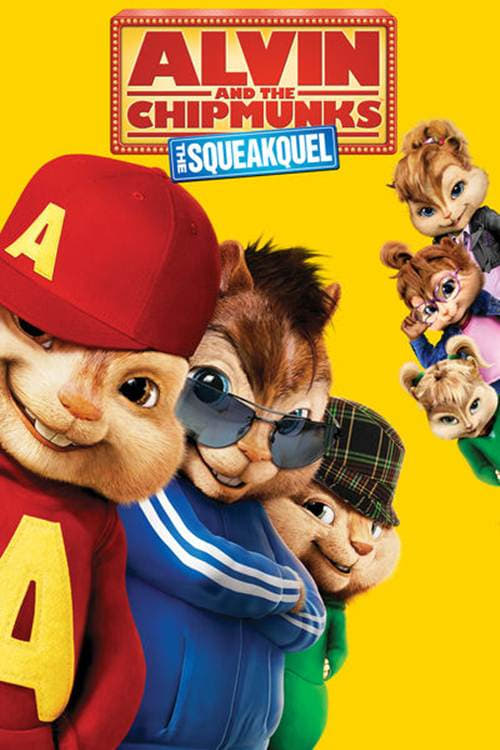
Alvin and the Chipmunks: The Squeakquel
The world-famous singing preteen chipmunk trio return to contend with the pressures of school, celebrity, and a rival female music group known as The Chipettes.
Despite a considerable budget of $75.0M, Alvin and the Chipmunks: The Squeakquel became a financial success, earning $443.1M worldwide—a 491% return.


Plot Structure
Story beats plotted across runtime


Narrative Arc
Emotional journey through the story's key moments
Story Circle
Blueprint 15-beat structure
Characters
Cast & narrative archetypes

Alvin
Simon
Theodore
Brittany
Jeanette
Eleanor
Toby Seville
Ian Hawke
Main Cast & Characters
Alvin
Played by Justin Long
The confident, mischievous leader of the Chipmunks who struggles with fame and responsibility.
Simon
Played by Matthew Gray Gubler
The intelligent, cautious Chipmunk who wears glasses and provides logic to balance Alvin's impulsiveness.
Theodore
Played by Jesse McCartney
The sweet, gentle Chipmunk who loves food and provides emotional heart to the group.
Brittany
Played by Christina Applegate
The confident leader of the Chipettes who rivals Alvin and eventually becomes his love interest.
Jeanette
Played by Anna Faris
The intelligent, clumsy Chipette who wears glasses and forms a bond with Simon.
Eleanor
Played by Amy Poehler
The kind, athletic Chipette who connects with Theodore over their gentle natures.
Toby Seville
Played by Zachary Levi
Dave's immature cousin who reluctantly becomes the Chipmunks' guardian while Dave recovers from injury.
Ian Hawke
Played by David Cross
The former music producer turned theme park worker who exploits the Chipettes for fame and money.
Structural Analysis
The Status Quo at 1 minutes (1% through the runtime) establishes The Chipmunks are international superstars performing at a sold-out concert in Paris, living their dream life with Dave managing them at the height of their success.. The analysis reveals that this early placement immediately immerses viewers in the story world.
The inciting incident occurs at 9 minutes when Dave is hospitalized after an accident at the Paris concert. He must go to the hospital for an extended stay, leaving the Chipmunks in the care of his cousin Toby and forcing them into a normal life.. At 10% through the film, this Disruption aligns precisely with traditional story structure. This beat shifts the emotional landscape, launching the protagonist into the central conflict.
The First Threshold at 21 minutes marks the transition into Act II, occurring at 24% of the runtime. This shows the protagonist's commitment to The Chipmunks decide to embrace school life and compete in the school music competition, actively choosing to create a new identity beyond their celebrity status., moving from reaction to action.
At 43 minutes, the Midpoint arrives at 48% of the runtime—precisely centered, creating perfect narrative symmetry. Notably, this crucial beat False victory: The Chipmunks and Chipettes perform together at a school event and it's a huge success. They seem to have it all - fame, school success, and new relationships. But Ian begins manipulating the Chipettes against them., fundamentally raising what's at risk. The emotional intensity shifts, dividing the narrative into clear before-and-after phases.
The Collapse moment at 64 minutes (72% through) represents the emotional nadir. Here, The Chipmunks and Chipettes have a devastating confrontation before the music competition. Their relationships are destroyed, and the Chipettes are fully under Ian's control. The family unit is "dead" - both groups are alone and broken., demonstrates the protagonist at their lowest point. This beat's placement in the final quarter sets up the climactic reversal.
The Second Threshold at 70 minutes initiates the final act resolution at 78% of the runtime. The Chipmunks discover that Ian is exploiting and mistreating the Chipettes. They realize their true purpose: family means protecting and caring for each other, not competing. They choose to save the Chipettes and expose Ian., demonstrating the transformation achieved throughout the journey.
Emotional Journey
Alvin and the Chipmunks: The Squeakquel's emotional architecture traces a deliberate progression across 15 carefully calibrated beats.
Narrative Framework
This structural analysis employs structural analysis methodology used to understand storytelling architecture. By mapping Alvin and the Chipmunks: The Squeakquel against these established plot points, we can identify how Betty Thomas utilizes or subverts traditional narrative conventions. The plot point approach reveals not only adherence to structural principles but also creative choices that distinguish Alvin and the Chipmunks: The Squeakquel within the animation genre.
Betty Thomas's Structural Approach
Among the 7 Betty Thomas films analyzed on Arcplot, the average structural score is 7.3, reflecting strong command of classical structure. Alvin and the Chipmunks: The Squeakquel exemplifies the director's characteristic narrative technique. For comparative analysis, explore the complete Betty Thomas filmography.
Comparative Analysis
Additional animation films include The Bad Guys, Puss in Boots and Violet Evergarden: Eternity and the Auto Memory Doll. For more Betty Thomas analyses, see The Brady Bunch Movie, Private Parts and I Spy.
Plot Points by Act
Act I
SetupStatus Quo
The Chipmunks are international superstars performing at a sold-out concert in Paris, living their dream life with Dave managing them at the height of their success.
Theme
A background character mentions "family is what matters most" during the airport scene, establishing the film's central theme about chosen family versus fame and success.
Worldbuilding
Establishes the Chipmunks' celebrity lifestyle, their relationship with Dave, and the pressures of fame. Dave gets injured in Paris and must recover, leaving the Chipmunks to attend school.
Disruption
Dave is hospitalized after an accident at the Paris concert. He must go to the hospital for an extended stay, leaving the Chipmunks in the care of his cousin Toby and forcing them into a normal life.
Resistance
The Chipmunks resist normal life, struggle with Toby's laid-back guardianship, and debate whether they can handle school and ordinary teenage problems. Introduction of the Chipettes and Ian Hawke as the antagonist.
Act II
ConfrontationFirst Threshold
The Chipmunks decide to embrace school life and compete in the school music competition, actively choosing to create a new identity beyond their celebrity status.
Mirror World
The Chipettes are introduced as the thematic mirror - they represent what the Chipmunks could become if they prioritize fame over family, being exploited by Ian Hawke without genuine care.
Premise
Fun and games of chipmunks navigating high school: romantic interests between Alvin and Brittany, Simon and Jeanette, Theodore and Eleanor; school rivalries; music battle setup; comedy of regular teenage life.
Midpoint
False victory: The Chipmunks and Chipettes perform together at a school event and it's a huge success. They seem to have it all - fame, school success, and new relationships. But Ian begins manipulating the Chipettes against them.
Opposition
Ian intensifies his manipulation of the Chipettes, driving a wedge between the two groups. The Chipmunks' relationships strain as jealousy and competition take over. Alvin's ego grows and he neglects his brothers and Toby.
Collapse
The Chipmunks and Chipettes have a devastating confrontation before the music competition. Their relationships are destroyed, and the Chipettes are fully under Ian's control. The family unit is "dead" - both groups are alone and broken.
Crisis
Alvin, Simon, and Theodore reflect on how they let fame and ego destroy what matters. They realize they pushed away the Chipettes and nearly lost each other. Emotional processing of their mistakes and the pain of isolation.
Act III
ResolutionSecond Threshold
The Chipmunks discover that Ian is exploiting and mistreating the Chipettes. They realize their true purpose: family means protecting and caring for each other, not competing. They choose to save the Chipettes and expose Ian.
Synthesis
The finale at the music competition: the Chipmunks perform to save the school, rescue the Chipettes from Ian's control, unite both groups as one family, and demonstrate that relationships matter more than winning. Ian is defeated.
Transformation
Mirror to opening: Instead of performing for fame and glory, the Chipmunks and Chipettes perform together as a unified family in Dave's home, choosing intimate connection over celebrity status. They've transformed from fame-seekers to family-first.