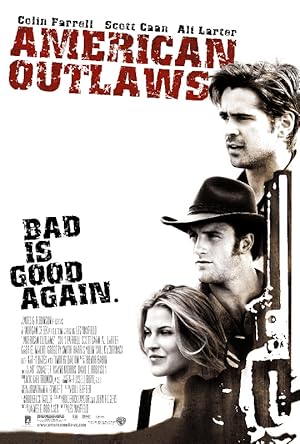
American Outlaws
When a Midwest town learns that a corrupt railroad baron has captured the deeds to their homesteads without their knowledge, a group of young ranchers join forces to take back what is rightfully theirs. In the course of their vendetta, they will become the object of the biggest manhunt in the history of the Old West and, as their fame grows, so will the legend of their leader, a young outlaw by the name of Jesse James.
The film commercial failure against its mid-range budget of $35.0M, earning $13.7M globally (-61% loss). While initial box office returns were modest, the film has gained appreciation for its bold vision within the action genre.


Plot Structure
Story beats plotted across runtime


Narrative Arc
Emotional journey through the story's key moments
Story Circle
Blueprint 15-beat structure
Arcplot Score Breakdown
Weighted: Precision (70%) + Arc (15%) + Theme (15%)
American Outlaws (2001) reveals carefully calibrated narrative design, characteristic of Les Mayfield's storytelling approach. This structural analysis examines how the film's 15-point plot structure maps to proven narrative frameworks across 1 hour and 34 minutes. With an Arcplot score of 7.1, the film balances conventional beats with creative variation.
Characters
Cast & narrative archetypes

Jesse James
Cole Younger
Zee Mimms
Frank James
Jim Younger
Bob Younger
Allan Pinkerton
Thaddeus Rains
Main Cast & Characters
Jesse James
Played by Colin Farrell
Charismatic leader of the James-Younger gang who becomes an outlaw after the railroad forces his family off their land.
Cole Younger
Played by Scott Caan
Jesse's loyal best friend and second-in-command of the gang, practical and level-headed.
Zee Mimms
Played by Ali Larter
Jesse's strong-willed love interest who challenges his outlaw lifestyle while remaining devoted to him.
Frank James
Played by Gabriel Macht
Jesse's older brother and gang member, protective and more cautious than Jesse.
Jim Younger
Played by Gregory Smith
Cole's brother and gang member, impulsive and hot-headed.
Bob Younger
Played by Will McCormack
The youngest Younger brother, eager to prove himself to the gang.
Allan Pinkerton
Played by Timothy Dalton
Ruthless detective hired by the railroad to hunt down the James-Younger gang.
Thaddeus Rains
Played by Harris Yulin
Corrupt railroad executive who orchestrates the land seizures that create the outlaws.
Structural Analysis
The Status Quo at 1 minutes (1% through the runtime) establishes Jesse James and Cole Younger return home as Confederate war heroes to their Missouri farms, greeted by family and community. The opening establishes their world of honor, brotherhood, and simple farming life.. Notably, this early placement immediately immerses viewers in the story world.
The inciting incident occurs at 10 minutes when Railroad agent Thaddeus Rains arrives with Pinkerton detectives, evicting farmers and burning the James family farm. Jesse's mother is killed in the attack, destroying any chance of returning to normal life.. At 11% through the film, this Disruption aligns precisely with traditional story structure. This beat shifts the emotional landscape, launching the protagonist into the central conflict.
The First Threshold at 23 minutes marks the transition into Act II, occurring at 24% of the runtime. This illustrates the protagonist's commitment to Jesse and the gang make the active choice to rob their first bank, transitioning from farmers to outlaws. This is their deliberate decision to fight the railroad through criminal action rather than accept their fate., moving from reaction to action.
At 47 minutes, the Midpoint arrives at 50% of the runtime—precisely centered, creating perfect narrative symmetry. Of particular interest, this crucial beat False victory: The gang pulls off their biggest robbery yet, the town celebrates them as heroes, and Jesse proposes to Zee. They seem untouchable and on top of the world, but Rains is closing in and the stakes are rising., fundamentally raising what's at risk. The emotional intensity shifts, dividing the narrative into clear before-and-after phases.
The Collapse moment at 69 minutes (73% through) represents the emotional nadir. Here, The gang is ambushed and several members are killed or captured. Jesse realizes his vendetta has cost his friends their lives. The dream of being heroic outlaws dies as the brutal reality hits - they're just criminals now., shows the protagonist at their lowest point. This beat's placement in the final quarter sets up the climactic reversal.
The Second Threshold at 74 minutes initiates the final act resolution at 79% of the runtime. Jesse realizes he can't run - he must finish what he started, but this time for the right reasons. He synthesizes his warrior skills with the lesson that fighting isn't about revenge but protecting the innocent. The gang reunites for one final stand., demonstrating the transformation achieved throughout the journey.
Emotional Journey
American Outlaws's emotional architecture traces a deliberate progression across 15 carefully calibrated beats.
Narrative Framework
This structural analysis employs structural analysis methodology used to understand storytelling architecture. By mapping American Outlaws against these established plot points, we can identify how Les Mayfield utilizes or subverts traditional narrative conventions. The plot point approach reveals not only adherence to structural principles but also creative choices that distinguish American Outlaws within the action genre.
Les Mayfield's Structural Approach
Among the 7 Les Mayfield films analyzed on Arcplot, the average structural score is 7.2, reflecting strong command of classical structure. American Outlaws takes a more unconventional approach compared to the director's typical style. For comparative analysis, explore the complete Les Mayfield filmography.
Comparative Analysis
Additional action films include The Bad Guys, Puss in Boots and Venom: The Last Dance. For more Les Mayfield analyses, see Code Name: The Cleaner, Miracle on 34th Street and Encino Man.
Plot Points by Act
Act I
SetupStatus Quo
Jesse James and Cole Younger return home as Confederate war heroes to their Missouri farms, greeted by family and community. The opening establishes their world of honor, brotherhood, and simple farming life.
Theme
A character discusses how the war is over but some men don't know when to stop fighting, and how you can't change the world by running from it - foreshadowing the choice between acceptance and resistance.
Worldbuilding
Establishes post-Civil War Missouri, the James-Younger gang as young veterans, Jesse's attraction to Zee Mimms, the tight-knit farming community, and the encroaching railroad expansion. Shows their desire for peaceful life.
Disruption
Railroad agent Thaddeus Rains arrives with Pinkerton detectives, evicting farmers and burning the James family farm. Jesse's mother is killed in the attack, destroying any chance of returning to normal life.
Resistance
Jesse wrestles with revenge versus moving on. The gang debates how to respond - flee west or fight back. They plan their response, gathering the old gang and preparing for their first robbery against the railroad.
Act II
ConfrontationFirst Threshold
Jesse and the gang make the active choice to rob their first bank, transitioning from farmers to outlaws. This is their deliberate decision to fight the railroad through criminal action rather than accept their fate.
Mirror World
Jesse's romance with Zee Mimms deepens. She represents the normal life and legitimacy he's sacrificing, embodying the film's theme about choosing between justice and vengeance, peace and war.
Premise
The fun outlaw sequences - daring robberies, narrow escapes, growing legend, public adoration as folk heroes. The gang enjoys their Robin Hood status, stealing from the railroad and giving to farmers. Romance flourishes.
Midpoint
False victory: The gang pulls off their biggest robbery yet, the town celebrates them as heroes, and Jesse proposes to Zee. They seem untouchable and on top of the world, but Rains is closing in and the stakes are rising.
Opposition
Rains intensifies his pursuit using Pinkerton agents and increased force. Internal tensions grow in the gang. The law turns against them. Innocent people get caught in crossfire. The romance becomes complicated by Jesse's choices.
Collapse
The gang is ambushed and several members are killed or captured. Jesse realizes his vendetta has cost his friends their lives. The dream of being heroic outlaws dies as the brutal reality hits - they're just criminals now.
Crisis
Jesse contemplates giving up and running away. Dark night where he processes the loss and questions whether revenge was worth it. He faces losing everything - his friends, Zee, his honor, and his life.
Act III
ResolutionSecond Threshold
Jesse realizes he can't run - he must finish what he started, but this time for the right reasons. He synthesizes his warrior skills with the lesson that fighting isn't about revenge but protecting the innocent. The gang reunites for one final stand.
Synthesis
The finale confrontation with Rains and his forces. Jesse and the surviving gang members execute a plan to stop Rains permanently, rescue their captured friends, and protect their town. Final shootout and resolution.
Transformation
Jesse and Zee together, the surviving gang members free, having defeated Rains. Jesse has transformed from a farm boy to a warrior to a legend, accepting his outlaw status but on his own terms - fighting for others, not revenge.