American Pop
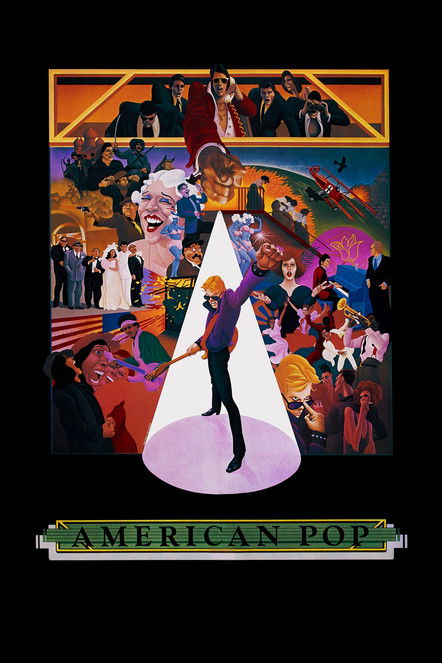
The history of American popular music runs parallel with the history of a Russian Jewish immigrant family, with each male descendant possessing different musical abilities.
Despite its small-scale budget of $1.5M, American Pop became a commercial success, earning $6.0M worldwide—a 300% return. The film's unconventional structure engaged audiences, showing that strong storytelling can transcend budget limitations.


Plot Structure
Story beats plotted across runtime


Narrative Arc
Emotional journey through the story's key moments
Story Circle
Blueprint 15-beat structure
Arcplot Score Breakdown
Weighted: Precision (70%) + Arc (15%) + Theme (15%)
American Pop (1981) demonstrates meticulously timed narrative architecture, characteristic of Ralph Bakshi's storytelling approach. This structural analysis examines how the film's 15-point plot structure maps to proven narrative frameworks across 1 hour and 36 minutes. With an Arcplot score of 7.4, the film balances conventional beats with creative variation.
Structural Analysis
The Status Quo at 1 minutes (1% through the runtime) establishes In a Russian Jewish shtetl, young Zalmie watches his father, a rabbi and cantor, sing in the synagogue. The village is vibrant with tradition, but the threat of pogroms looms—establishing a world of beauty shadowed by persecution.. Notably, this early placement immediately immerses viewers in the story world.
The inciting incident occurs at 12 minutes when The Triangle Shirtwaist Factory fire erupts, killing Zalmie's wife Bella. This tragedy severs Zalmie's connection to his old life and forces him onto a new path—he must now raise his son Benny alone while pursuing his musical ambitions in vaudeville.. At 12% through the film, this Disruption aligns precisely with traditional story structure. This beat shifts the emotional landscape, launching the protagonist into the central conflict.
The First Threshold at 25 minutes marks the transition into Act II, occurring at 26% of the runtime. This demonstrates the protagonist's commitment to The narrative baton passes to Benny, now a young man. He actively chooses to pursue music professionally as a pianist during the Jazz Age, stepping out of his father's shadow and into his own career. This generational handoff marks the true beginning of the American Pop journey., moving from reaction to action.
At 48 minutes, the Midpoint arrives at 50% of the runtime—precisely centered, creating perfect narrative symmetry. Significantly, this crucial beat Benny is killed in a mob hit—a false defeat that shatters the family. Tony, now a young man with musical dreams of his own, must confront the violent cost of his father's choices. The death raises the stakes: will the cycle of tragedy continue, or can Tony break free?., fundamentally raising what's at risk. The emotional intensity shifts, dividing the narrative into clear before-and-after phases.
The Collapse moment at 73 minutes (76% through) represents the emotional nadir. Here, Tony overdoses and dies, leaving young Pete orphaned and adrift. Three generations have now been destroyed by the pursuit of the American Dream through music. Pete is alone, strung out, dealing drugs—the family legacy appears to end in complete collapse and spiritual death., demonstrates the protagonist at their lowest point. This beat's placement in the final quarter sets up the climactic reversal.
The Second Threshold at 77 minutes initiates the final act resolution at 80% of the runtime. Pete discovers his father Tony's unfinished song lyrics and realizes he can complete them. He synthesizes his punk rock sensibility with his inherited musical gift. This fusion of past and present—honoring the family legacy while making it his own—launches him into Act Three., demonstrating the transformation achieved throughout the journey.
Emotional Journey
American Pop's emotional architecture traces a deliberate progression across 15 carefully calibrated beats.
Narrative Framework
This structural analysis employs systematic plot point analysis that identifies crucial turning points. By mapping American Pop against these established plot points, we can identify how Ralph Bakshi utilizes or subverts traditional narrative conventions. The plot point approach reveals not only adherence to structural principles but also creative choices that distinguish American Pop within the animation genre.
Ralph Bakshi's Structural Approach
Among the 5 Ralph Bakshi films analyzed on Arcplot, the average structural score is 7.2, reflecting strong command of classical structure. American Pop represents one of the director's most structurally precise works. For comparative analysis, explore the complete Ralph Bakshi filmography.
Comparative Analysis
Additional animation films include The Bad Guys, Puss in Boots and Violet Evergarden: Eternity and the Auto Memory Doll. For more Ralph Bakshi analyses, see The Lord of the Rings, Wizards and Cool World.
Plot Points by Act
Act I
SetupStatus Quo
In a Russian Jewish shtetl, young Zalmie watches his father, a rabbi and cantor, sing in the synagogue. The village is vibrant with tradition, but the threat of pogroms looms—establishing a world of beauty shadowed by persecution.
Theme
Zalmie's mother tells him that music is in his blood—it's who they are. "Sing, and they can never take your soul." This establishes the film's central theme: music as survival, identity, and the vehicle for the American Dream across generations.
Worldbuilding
The film establishes Zalmie's Russian origins, the brutal pogrom that kills his father and destroys his village, his immigration to America through Ellis Island, and his early struggles in the tenements of New York's Lower East Side working in a sweatshop while dreaming of performing.
Disruption
The Triangle Shirtwaist Factory fire erupts, killing Zalmie's wife Bella. This tragedy severs Zalmie's connection to his old life and forces him onto a new path—he must now raise his son Benny alone while pursuing his musical ambitions in vaudeville.
Resistance
Zalmie rises through vaudeville and burlesque, eventually connecting with the mob to book acts. He mentors young Benny in the ways of show business and survival. Zalmie becomes both father and guide, teaching Benny that talent alone isn't enough—you need connections and hustle.
Act II
ConfrontationFirst Threshold
The narrative baton passes to Benny, now a young man. He actively chooses to pursue music professionally as a pianist during the Jazz Age, stepping out of his father's shadow and into his own career. This generational handoff marks the true beginning of the American Pop journey.
Mirror World
Benny falls in love with a singer and they have a son, Tony. This romantic relationship and new family represents the Mirror World—the promise that this generation might achieve the stable happiness that eluded Zalmie. Love and family become the thematic counterpoint to ambition.
Premise
The "promise of the premise" delivers the generational saga: Benny's rise as a jazz pianist during Prohibition, his mob connections, and eventual downfall. Tony grows up in this world of music and crime, absorbing both the talent and the dysfunction. The film explores the Jazz Age, swing era, and early rock through the family's eyes.
Midpoint
Benny is killed in a mob hit—a false defeat that shatters the family. Tony, now a young man with musical dreams of his own, must confront the violent cost of his father's choices. The death raises the stakes: will the cycle of tragedy continue, or can Tony break free?
Opposition
Tony's story unfolds through the 1960s counterculture. He pursues music but struggles with drug addiction and the Vietnam War era's chaos. His relationship with a flower child produces Pete, but Tony's demons intensify. The opposition isn't external—it's the inherited trauma and addiction that plague each generation.
Collapse
Tony overdoses and dies, leaving young Pete orphaned and adrift. Three generations have now been destroyed by the pursuit of the American Dream through music. Pete is alone, strung out, dealing drugs—the family legacy appears to end in complete collapse and spiritual death.
Crisis
Pete hits rock bottom as a drug dealer in the late 1970s punk scene. He carries his father's unfinished songs but sees no future. The dark night of the soul forces Pete to confront whether music is a curse or a salvation—whether the family dream was always doomed.
Act III
ResolutionSecond Threshold
Pete discovers his father Tony's unfinished song lyrics and realizes he can complete them. He synthesizes his punk rock sensibility with his inherited musical gift. This fusion of past and present—honoring the family legacy while making it his own—launches him into Act Three.
Synthesis
Pete transforms his father's lyrics into a rock anthem. He gets clean, forms a band, and pursues music with the passion of all his ancestors but without their fatal flaws. The finale builds to Pete's triumphant performance, synthesizing four generations of musical ambition into success.
Transformation
Pete performs "Night After Night" to a massive arena crowd, achieving the rock stardom his ancestors dreamed of. The final image shows him triumphant on stage—the immigrant cantor's great-great-grandson has fulfilled the American Dream through music, breaking the cycle of tragedy at last.