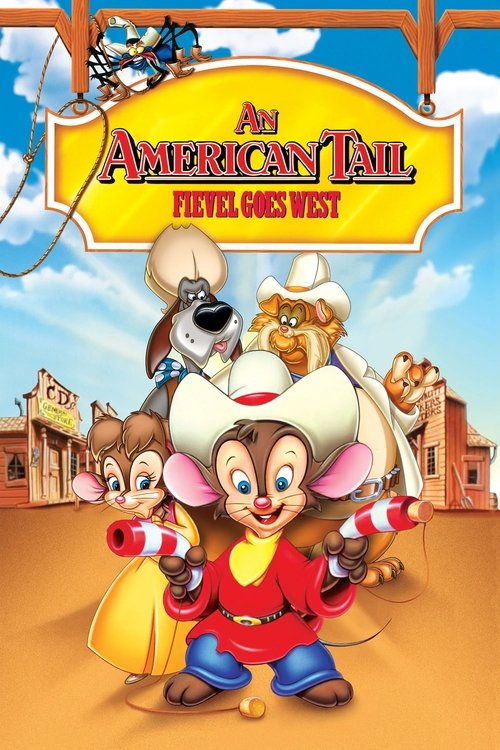
An American Tail: Fievel Goes West
Some time after the Mousekewitz's have settled in America, they find that they are still having problems with the threat of cats. That makes them eager to try another home out in the west, where they are promised that mice and cats live in peace. Unfortunately, the one making this claim is an oily con artist named Cat R. Waul who is intent on his own sinister plan.
The film earned $40.8M at the global box office.


Plot Structure
Story beats plotted across runtime


Narrative Arc
Emotional journey through the story's key moments
Story Circle
Blueprint 15-beat structure
Arcplot Score Breakdown
Weighted: Precision (70%) + Arc (15%) + Theme (15%)
An American Tail: Fievel Goes West (1991) showcases carefully calibrated story structure, characteristic of Phil Nibbelink's storytelling approach. This structural analysis examines how the film's 15-point plot structure maps to proven narrative frameworks across 1 hour and 15 minutes. With an Arcplot score of 6.8, the film balances conventional beats with creative variation.
Characters
Cast & narrative archetypes

Fievel Mousekewitz
Wylie Burp
Cat R. Waul
Tanya Mousekewitz
Tiger
Miss Kitty
Papa Mousekewitz
Mama Mousekewitz
Main Cast & Characters
Fievel Mousekewitz
Played by Phillip Glasser
A young, optimistic mouse immigrant who dreams of becoming a law-mouse and hero of the Wild West.
Wylie Burp
Played by James Stewart
A legendary but aging lawdog and Fievel's hero, now a washed-up mail carrier who must rediscover his courage.
Cat R. Waul
Played by John Cleese
A sophisticated, manipulative cat who lures mice to Green River with false promises while planning to eat them.
Tanya Mousekewitz
Played by Cathy Cavadini
Fievel's older sister who dreams of becoming a singer and eventually performs in Cat R. Waul's saloon.
Tiger
Played by Dom DeLuise
A friendly, vegetarian cat and Fievel's loyal friend who falls in love with Miss Kitty.
Miss Kitty
Played by Amy Irving
A showgirl cat who performs at Cat R. Waul's saloon and becomes Tiger's love interest.
Papa Mousekewitz
Played by Nehemiah Persoff
Fievel's hardworking father who moves his family west hoping for a better life as a tailor.
Mama Mousekewitz
Played by Erica Yohn
Fievel's caring mother who worries about her son's safety and the family's wellbeing.
Structural Analysis
The Status Quo at 1 minutes (1% through the runtime) establishes Fievel dreams of becoming a famous gunslinger in the Wild West, only to wake to the harsh reality of living in poverty in a cramped New York tenement overrun with cats. This establishes his status as a dreamer trapped in a dangerous, disappointing world.. Notably, this early placement immediately immerses viewers in the story world.
The inciting incident occurs at 8 minutes when A charming con-artist dog named Dog R. Waul arrives in New York with promises of a mouse paradise out West where "there are no cats" and the streets are paved with cheese. This offers an escape from their miserable existence.. At 11% through the film, this Disruption aligns precisely with traditional story structure. This beat shifts the emotional landscape, launching the protagonist into the central conflict.
The First Threshold at 19 minutes marks the transition into Act II, occurring at 25% of the runtime. This indicates the protagonist's commitment to The Mousekewitz family boards the train heading West, making the active choice to leave New York and pursue their dreams in the frontier. They cross into a new world of adventure and unknown dangers., moving from reaction to action.
At 37 minutes, the Midpoint arrives at 49% of the runtime—precisely centered, creating perfect narrative symmetry. Of particular interest, this crucial beat Fievel finally finds his hero Wylie Burp, only to discover he's a washed-up drunk living in a desert cave, not the legendary gunslinger of his dreams. This false defeat shatters Fievel's illusions and raises the stakes—he can't rely on external heroes to save the day., fundamentally raising what's at risk. The emotional intensity shifts, dividing the narrative into clear before-and-after phases.
The Collapse moment at 56 minutes (74% through) represents the emotional nadir. Here, The cats capture all the mice during a fake celebration and load them onto a train headed for the mousetrap. Fievel is separated from his family again, thrown off the train into the desert, seemingly powerless to save anyone. All hope appears lost., shows the protagonist at their lowest point. This beat's placement in the final quarter sets up the climactic reversal.
The Second Threshold at 60 minutes initiates the final act resolution at 80% of the runtime. Wylie Burp gives Fievel his badge and wisdom, helping him realize that being a hero isn't about never being afraid—it's about doing what's right despite your fear. Fievel synthesizes this lesson with his own determination, finding the courage to face the cats himself., demonstrating the transformation achieved throughout the journey.
Emotional Journey
An American Tail: Fievel Goes West's emotional architecture traces a deliberate progression across 15 carefully calibrated beats.
Narrative Framework
This structural analysis employs proven narrative structure principles that track dramatic progression. By mapping An American Tail: Fievel Goes West against these established plot points, we can identify how Phil Nibbelink utilizes or subverts traditional narrative conventions. The plot point approach reveals not only adherence to structural principles but also creative choices that distinguish An American Tail: Fievel Goes West within the animation genre.
Comparative Analysis
Additional animation films include The Bad Guys, Puss in Boots and Violet Evergarden: Eternity and the Auto Memory Doll.
Plot Points by Act
Act I
SetupStatus Quo
Fievel dreams of becoming a famous gunslinger in the Wild West, only to wake to the harsh reality of living in poverty in a cramped New York tenement overrun with cats. This establishes his status as a dreamer trapped in a dangerous, disappointing world.
Theme
Papa tells Fievel about the legend of a "mouse gunslinger" named Wylie Burp who never missed and always stood for what was right. This introduces the theme of finding courage within yourself versus relying on external heroes.
Worldbuilding
The Mousekewitz family struggles in New York with poverty, cat attacks, and discrimination. We meet the family dynamics: Papa the optimist, Mama the pragmatist, Tanya the aspiring singer, and Fievel the dreamer. The cats remain a constant threat despite their hopes.
Disruption
A charming con-artist dog named Dog R. Waul arrives in New York with promises of a mouse paradise out West where "there are no cats" and the streets are paved with cheese. This offers an escape from their miserable existence.
Resistance
The Mousekewitz family debates whether to trust this new opportunity and leave everything behind. They weigh the risks of traveling West versus staying in dangerous New York. Fievel is excited about meeting real Western heroes, while his family is more cautious but desperate for a better life.
Act II
ConfrontationFirst Threshold
The Mousekewitz family boards the train heading West, making the active choice to leave New York and pursue their dreams in the frontier. They cross into a new world of adventure and unknown dangers.
Mirror World
Fievel meets Miss Kitty, a saloon cat who performs for mice and dreams of being a real singer. She represents the thematic counterpoint—someone who looks like the enemy but has her own dreams and becomes an ally, teaching that courage and heroism aren't about appearances.
Premise
Fievel explores the Wild West town of Green River, searching for his hero Wylie Burp while the family settles in. The fun Western adventure unfolds with saloons, desert landscapes, and colorful characters. Meanwhile, the cats' true plan slowly reveals itself as they position themselves to prey on the unsuspecting mice.
Midpoint
Fievel finally finds his hero Wylie Burp, only to discover he's a washed-up drunk living in a desert cave, not the legendary gunslinger of his dreams. This false defeat shatters Fievel's illusions and raises the stakes—he can't rely on external heroes to save the day.
Opposition
Cat R. Waul's plan accelerates as he prepares to turn all the mice into "mouse burgers." Fievel tries to warn everyone but no one believes him. The cats close in, tensions rise in the family as Tanya pursues stardom unaware of danger, and Fievel feels helpless and alone without his hero to help.
Collapse
The cats capture all the mice during a fake celebration and load them onto a train headed for the mousetrap. Fievel is separated from his family again, thrown off the train into the desert, seemingly powerless to save anyone. All hope appears lost.
Crisis
Fievel wanders the desert alone, believing he's failed everyone. He faces his darkest moment of despair, processing the loss and his own perceived inadequacy. He must find strength within himself rather than waiting for a hero to rescue him.
Act III
ResolutionSecond Threshold
Wylie Burp gives Fievel his badge and wisdom, helping him realize that being a hero isn't about never being afraid—it's about doing what's right despite your fear. Fievel synthesizes this lesson with his own determination, finding the courage to face the cats himself.
Synthesis
Fievel rallies Miss Kitty, Tiger, and the other allies to launch a rescue mission. He uses clever ingenuity to construct a giant mechanical mouse that frightens the cats. In the final confrontation, Fievel defeats Cat R. Waul using his wits and courage, saving his family and all the mice of Green River.
Transformation
Fievel stands confidently as the hero of Green River, wearing Wylie Burp's badge. He has transformed from a dreamer waiting for heroes to save him into a hero himself—proving that courage comes from within. The family is together and safe in their new home.