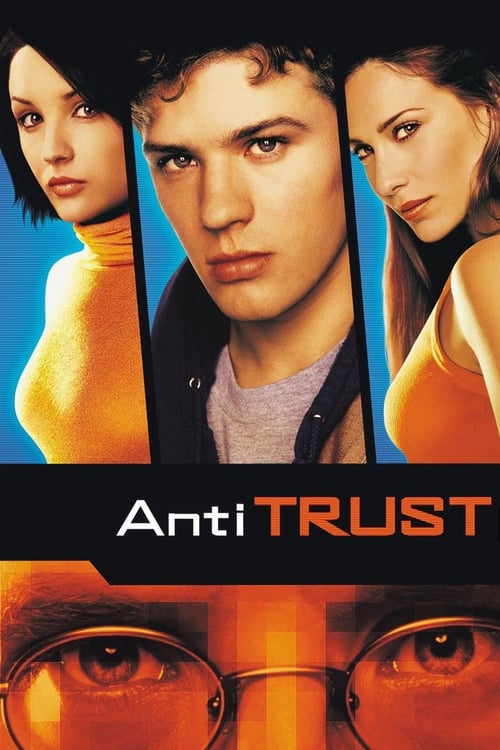
Antitrust
A computer programmer's dream job at a hot Portland-based firm turns nightmarish when he discovers his boss has a secret and ruthless means of dispatching anti-trust problems.
The film disappointed at the box office against its mid-range budget of $30.0M, earning $18.2M globally (-39% loss). While initial box office returns were modest, the film has gained appreciation for its innovative storytelling within the action genre.
2 wins & 4 nominations


Plot Structure
Story beats plotted across runtime


Narrative Arc
Emotional journey through the story's key moments
Story Circle
Blueprint 15-beat structure
Arcplot Score Breakdown
Weighted: Precision (70%) + Arc (15%) + Theme (15%)
Antitrust (2001) reveals deliberately positioned narrative architecture, characteristic of Peter Howitt's storytelling approach. This structural analysis examines how the film's 15-point plot structure maps to proven narrative frameworks across 1 hour and 48 minutes. With an Arcplot score of 6.9, the film balances conventional beats with creative variation.
Characters
Cast & narrative archetypes

Milo Hoffman
Gary Winston
Alice Poulson
Lisa Calighan
Teddy Chin
Bob Shrot
Lyle Barton
Main Cast & Characters
Milo Hoffman
Played by Ryan Phillippe
Idealistic young programmer recruited by tech giant NURV, who discovers his employer is stealing code and murdering competitors.
Gary Winston
Played by Tim Robbins
Charismatic billionaire CEO of NURV, a ruthless tech mogul who uses surveillance and murder to maintain his monopoly.
Alice Poulson
Played by Rachael Leigh Cook
Milo's girlfriend and fellow programmer who works at a startup, becomes a target when she gets too close to the truth.
Lisa Calighan
Played by Claire Forlani
Ambitious marketing executive at NURV who befriends Milo but harbors her own agenda within the company.
Teddy Chin
Played by Yee Jee Tso
Milo's best friend and fellow programmer at NURV who is murdered after discovering the company's code-stealing operation.
Bob Shrot
Played by Tygh Runyan
NURV's head of security, a menacing enforcer who carries out Winston's dirty work including surveillance and assassinations.
Lyle Barton
Played by Richard Roundtree
Veteran programmer at NURV who tries to warn Milo about the company's dark secrets before meeting a suspicious end.
Structural Analysis
The Status Quo at 1 minutes (1% through the runtime) establishes Mitch and his friends celebrate their startup Skullbocks' success at a party. They're young, idealistic programmers ready to change the world on their own terms.. Notably, this early placement immediately immerses viewers in the story world.
The inciting incident occurs at 12 minutes when Gary Winston, CEO of tech giant NURV, personally recruits Mitch with an irresistible offer: unlimited resources, cutting-edge technology, and the chance to work on Synapse, a revolutionary global communications platform.. At 11% through the film, this Disruption aligns precisely with traditional story structure. This beat shifts the emotional landscape, launching the protagonist into the central conflict.
The First Threshold at 26 minutes marks the transition into Act II, occurring at 24% of the runtime. This shows the protagonist's commitment to Mitch accepts Gary's offer and begins working at NURV. He leaves his friends and startup behind to enter the corporate world, choosing ambition and opportunity over independence., moving from reaction to action.
At 51 minutes, the Midpoint arrives at 48% of the runtime—precisely centered, creating perfect narrative symmetry. Structural examination shows that this crucial beat Teddy, Mitch's friend from the startup, is killed in a suspicious car accident just after hinting he discovered something disturbing about NURV. False defeat: What seemed like paradise now has a dark undercurrent. The stakes become life and death., fundamentally raising what's at risk. The emotional intensity shifts, dividing the narrative into clear before-and-after phases.
The Collapse moment at 78 minutes (72% through) represents the emotional nadir. Here, Alice is murdered by NURV's enforcer. Mitch discovers her body and realizes the company will kill anyone who threatens them. His mentor has become a monster, his dream job a nightmare, and someone he cared about is dead because of his investigation. Literal death and loss of innocence., reveals the protagonist at their lowest point. This beat's placement in the final quarter sets up the climactic reversal.
The Second Threshold at 84 minutes initiates the final act resolution at 78% of the runtime. Mitch synthesizes what Alice taught him about courage and what he learned about NURV's systems. He decides to use his programming skills and insider access to expose Gary and NURV. Teams up with his old startup friends who have the evidence. Breakthrough: Use Gary's own technology against him., demonstrating the transformation achieved throughout the journey.
Emotional Journey
Antitrust's emotional architecture traces a deliberate progression across 15 carefully calibrated beats.
Narrative Framework
This structural analysis employs proven narrative structure principles that track dramatic progression. By mapping Antitrust against these established plot points, we can identify how Peter Howitt utilizes or subverts traditional narrative conventions. The plot point approach reveals not only adherence to structural principles but also creative choices that distinguish Antitrust within the action genre.
Peter Howitt's Structural Approach
Among the 4 Peter Howitt films analyzed on Arcplot, the average structural score is 7.1, reflecting strong command of classical structure. Antitrust takes a more unconventional approach compared to the director's typical style. For comparative analysis, explore the complete Peter Howitt filmography.
Comparative Analysis
Additional action films include The Bad Guys, Puss in Boots and Venom: The Last Dance. For more Peter Howitt analyses, see Laws of Attraction, Johnny English and Sliding Doors.
Plot Points by Act
Act I
SetupStatus Quo
Mitch and his friends celebrate their startup Skullbocks' success at a party. They're young, idealistic programmers ready to change the world on their own terms.
Theme
Gary Winston tells Mitch: "In this world, the choice isn't between fame and obscurity. It's between getting paid or getting played." The film's central question: Can you maintain integrity in a world where power corrupts?
Worldbuilding
Introduction to the tech startup culture. Mitch and his friends work on their own project, representing idealism and independence. We meet Mitch's girlfriend Lisa and establish his values: creativity, collaboration, and doing things the right way.
Disruption
Gary Winston, CEO of tech giant NURV, personally recruits Mitch with an irresistible offer: unlimited resources, cutting-edge technology, and the chance to work on Synapse, a revolutionary global communications platform.
Resistance
Mitch debates the decision with his friends and Lisa. His friend Teddy is suspicious of NURV and Gary Winston. Mitch is torn between loyalty to his startup team and the opportunity of a lifetime. Lisa supports whatever he decides.
Act II
ConfrontationFirst Threshold
Mitch accepts Gary's offer and begins working at NURV. He leaves his friends and startup behind to enter the corporate world, choosing ambition and opportunity over independence.
Mirror World
Mitch meets Alice Poulson, a fellow programmer at NURV who becomes his ally and love interest. She represents the human connection within the corporate machine and will later embody the thematic counterpoint about truth and integrity.
Premise
The "promise of the premise" - Mitch experiences the excitement of working at NURV. Unlimited resources, brilliant colleagues, Gary's mentorship. He works on Synapse with incredible technology and sees himself as part of something revolutionary. The dream job in action.
Midpoint
Teddy, Mitch's friend from the startup, is killed in a suspicious car accident just after hinting he discovered something disturbing about NURV. False defeat: What seemed like paradise now has a dark undercurrent. The stakes become life and death.
Opposition
Mitch begins investigating and discovers NURV has been stealing code from competitors and may have murdered Teddy. Gary becomes increasingly controlling and paranoid. Mitch finds evidence of surveillance. Alice helps him uncover the conspiracy, but they must be careful. The pressure intensifies as Gary suspects Mitch's disloyalty.
Collapse
Alice is murdered by NURV's enforcer. Mitch discovers her body and realizes the company will kill anyone who threatens them. His mentor has become a monster, his dream job a nightmare, and someone he cared about is dead because of his investigation. Literal death and loss of innocence.
Crisis
Mitch processes Alice's death and the weight of what he's uncovered. He's alone, hunted by NURV's security, and has to decide whether to run or fight. Dark night of the soul: Can one person stand against a corporate empire?
Act III
ResolutionSecond Threshold
Mitch synthesizes what Alice taught him about courage and what he learned about NURV's systems. He decides to use his programming skills and insider access to expose Gary and NURV. Teams up with his old startup friends who have the evidence. Breakthrough: Use Gary's own technology against him.
Synthesis
The finale: Mitch infiltrates NURV headquarters, plants evidence, and uses the Synapse system to broadcast Gary's crimes to the world during a major product launch. Cat-and-mouse confrontation with Gary. FBI arrives. Gary is arrested. NURV's corruption is exposed publicly.
Transformation
Closing image mirrors the opening party: Mitch is back with his startup friends, working on Skullbocks. But he's transformed - no longer naive about corporate power, having learned the cost of integrity. He honors Alice and Teddy's memory by choosing the harder, ethical path.