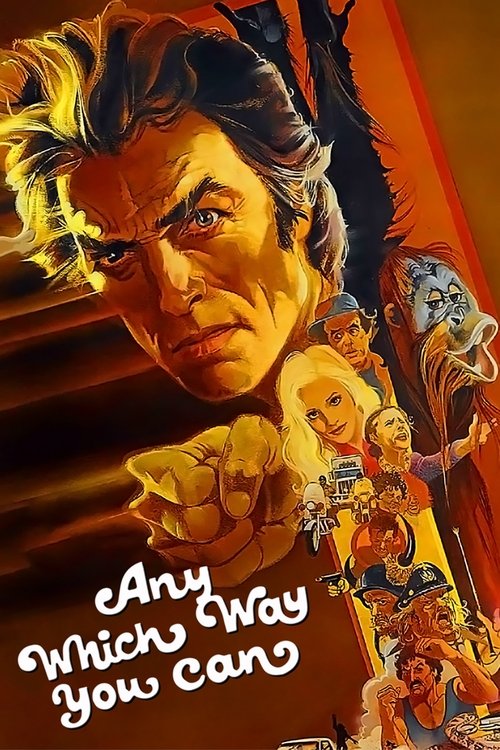
Any Which Way You Can
Philo takes part in a bare knuckle fight – as he does – to make more money than he can earn from his car repair business. He decides to retire, but when the Mafia come along and arrange another fight, he's pushed into it. A motorcycle gang and an orangutan called Clyde all add to the 'fun'.
Despite a respectable budget of $15.0M, Any Which Way You Can became a box office success, earning $70.7M worldwide—a 371% return.
2 wins & 2 nominations


Plot Structure
Story beats plotted across runtime


Narrative Arc
Emotional journey through the story's key moments
Story Circle
Blueprint 15-beat structure
Arcplot Score Breakdown
Weighted: Precision (70%) + Arc (15%) + Theme (15%)
Any Which Way You Can (1980) reveals carefully calibrated dramatic framework, characteristic of Buddy Van Horn's storytelling approach. This structural analysis examines how the film's 15-point plot structure maps to proven narrative frameworks across 1 hour and 55 minutes. With an Arcplot score of 6.9, the film balances conventional beats with creative variation.
Characters
Cast & narrative archetypes

Philo Beddoe
Lynn Halsey-Taylor
Orville Boggs
Ma Boggs
Jack Wilson
Clyde
Main Cast & Characters
Philo Beddoe
Played by Clint Eastwood
A truck driver and bare-knuckle boxer with an orangutan companion, competing in a high-stakes fight while navigating romance and rival bikers.
Lynn Halsey-Taylor
Played by Sondra Locke
A country singer and Philo's on-again, off-again love interest who struggles with commitment.
Orville Boggs
Played by Geoffrey Lewis
Philo's loyal best friend and manager who handles the logistics of his underground fights.
Ma Boggs
Played by Ruth Gordon
Orville's tough, foul-mouthed elderly mother who provides comic relief and unexpected wisdom.
Jack Wilson
Played by William Smith
A legendary bare-knuckle fighter from the East Coast who becomes Philo's ultimate opponent.
Clyde
Played by Manis the Orangutan
Philo's orangutan companion who provides comic relief and unexpected assistance throughout the film.
Structural Analysis
The Status Quo at 1 minutes (1% through the runtime) establishes Philo Beddoe lives peacefully in San Fernando Valley working as a truck driver and mechanic, accompanied by his orangutan Clyde and avoiding fights despite his bare-knuckle reputation.. Of particular interest, this early placement immediately immerses viewers in the story world.
The inciting incident occurs at 13 minutes when East Coast mobsters arrive and challenge Philo to fight Jack Wilson, the East Coast bare-knuckle champion, for a purse that could set him up for life. Philo refuses, wanting to leave his fighting days behind.. At 11% through the film, this Disruption aligns precisely with traditional story structure. This beat shifts the emotional landscape, launching the protagonist into the central conflict.
The First Threshold at 28 minutes marks the transition into Act II, occurring at 25% of the runtime. This reveals the protagonist's commitment to Philo reluctantly agrees to fight Jack Wilson after the mob makes an offer too good to refuse and promises this will be his last fight. He commits to training for the bout., moving from reaction to action.
At 58 minutes, the Midpoint arrives at 50% of the runtime—precisely centered, creating perfect narrative symmetry. Significantly, this crucial beat Philo meets Jack Wilson face-to-face for the first time. They share mutual respect, revealing Wilson is also being pressured by the mob. False victory: Philo feels confident and ready, but doesn't realize the mob is manipulating both fighters., fundamentally raising what's at risk. The emotional intensity shifts, dividing the narrative into clear before-and-after phases.
The Collapse moment at 85 minutes (74% through) represents the emotional nadir. Here, Lynn leaves Philo, convinced he'll never escape violence. The mob threatens his friends and family if he doesn't throw the fight. Philo realizes the fight has cost him what he truly wanted - a peaceful life with Lynn., illustrates the protagonist at their lowest point. This beat's placement in the final quarter sets up the climactic reversal.
The Second Threshold at 93 minutes initiates the final act resolution at 81% of the runtime. Philo realizes the answer: fight honestly on his own terms, refuse to be controlled by the mob or defined by others' expectations. He'll face Wilson with integrity and let the outcome prove who he is., demonstrating the transformation achieved throughout the journey.
Emotional Journey
Any Which Way You Can's emotional architecture traces a deliberate progression across 15 carefully calibrated beats.
Narrative Framework
This structural analysis employs proven narrative structure principles that track dramatic progression. By mapping Any Which Way You Can against these established plot points, we can identify how Buddy Van Horn utilizes or subverts traditional narrative conventions. The plot point approach reveals not only adherence to structural principles but also creative choices that distinguish Any Which Way You Can within the action genre.
Buddy Van Horn's Structural Approach
Among the 3 Buddy Van Horn films analyzed on Arcplot, the average structural score is 7.0, reflecting strong command of classical structure. Any Which Way You Can takes a more unconventional approach compared to the director's typical style. For comparative analysis, explore the complete Buddy Van Horn filmography.
Comparative Analysis
Additional action films include The Bad Guys, Puss in Boots and Venom: The Last Dance. For more Buddy Van Horn analyses, see Pink Cadillac, The Dead Pool.
Plot Points by Act
Act I
SetupStatus Quo
Philo Beddoe lives peacefully in San Fernando Valley working as a truck driver and mechanic, accompanied by his orangutan Clyde and avoiding fights despite his bare-knuckle reputation.
Theme
Orville tells Philo "Sometimes a man's gotta know when to walk away from a fight" - foreshadowing the central question of whether winning requires proving yourself or having nothing left to prove.
Worldbuilding
Introduction to Philo's peaceful life with girlfriend Lynn, his friendship with Orville, care for Clyde, and the unwanted attention from local troublemakers and Ma Boggs. The Black Widows motorcycle gang continues to harass them for revenge from the previous film.
Disruption
East Coast mobsters arrive and challenge Philo to fight Jack Wilson, the East Coast bare-knuckle champion, for a purse that could set him up for life. Philo refuses, wanting to leave his fighting days behind.
Resistance
Philo debates whether to take the fight. Orville and Ma encourage him to consider the money. Lynn pressures him to prove he's left violence behind. The mobsters increase pressure and stakes while Philo tries to maintain his new peaceful life.
Act II
ConfrontationFirst Threshold
Philo reluctantly agrees to fight Jack Wilson after the mob makes an offer too good to refuse and promises this will be his last fight. He commits to training for the bout.
Mirror World
Philo's relationship with Lynn deepens as she represents the peaceful domestic life he wants. She embodies the thematic tension - can he truly leave violence behind, or will he always be a fighter?
Premise
Philo trains for the fight while dealing with comic obstacles: the Black Widows gang seeking revenge, Clyde's antics, and the mob's increasingly aggressive promotional tactics. Road trip sequences with Orville and encounters with colorful characters showcase the film's comedic premise.
Midpoint
Philo meets Jack Wilson face-to-face for the first time. They share mutual respect, revealing Wilson is also being pressured by the mob. False victory: Philo feels confident and ready, but doesn't realize the mob is manipulating both fighters.
Opposition
The mob's true intentions emerge as they try to fix the fight. Lynn becomes increasingly distant, questioning whether Philo can ever change. The Black Widows escalate their revenge schemes. Wilson faces similar pressure from his handlers.
Collapse
Lynn leaves Philo, convinced he'll never escape violence. The mob threatens his friends and family if he doesn't throw the fight. Philo realizes the fight has cost him what he truly wanted - a peaceful life with Lynn.
Crisis
Philo contemplates backing out entirely. Orville and Ma counsel him. He processes the loss of Lynn and questions what he's fighting for - money, pride, or something deeper about self-respect and finishing what you start.
Act III
ResolutionSecond Threshold
Philo realizes the answer: fight honestly on his own terms, refuse to be controlled by the mob or defined by others' expectations. He'll face Wilson with integrity and let the outcome prove who he is.
Synthesis
The climactic bare-knuckle fight between Philo and Wilson. Both men fight honorably, defying the mob's fix. Brutal and respectful combat where they prove themselves to each other. Philo wins narrowly but both fighters earn mutual respect and freedom from their handlers.
Transformation
Philo returns home, genuinely retired from fighting, having proven he could win on his terms. Lynn returns, recognizing his growth. Philo, Clyde, and friends share a peaceful moment - he's finally earned the quiet life by facing violence one last time with integrity.