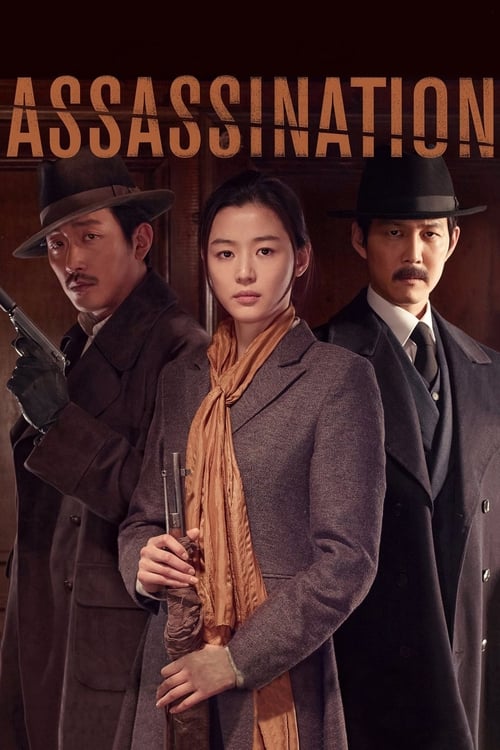
Assassination
In Japanese-occupied Korea, three freedom fighters are assigned a mission to assassinate a genocidal military leader and his top collaborator. But the plan goes completely awry amidst double-crossings, counter-assassinations, and a shocking revelation about one of the assassins' past.
The film earned $96.1M at the global box office.
16 wins & 51 nominations


Plot Structure
Story beats plotted across runtime


Narrative Arc
Emotional journey through the story's key moments
Story Circle
Blueprint 15-beat structure
Arcplot Score Breakdown
Weighted: Precision (70%) + Arc (15%) + Theme (15%)
Assassination (2015) exemplifies deliberately positioned narrative architecture, characteristic of Choi Dong-hoon's storytelling approach. This structural analysis examines how the film's 15-point plot structure maps to proven narrative frameworks across 2 hours and 20 minutes. With an Arcplot score of 6.8, the film balances conventional beats with creative variation.
Characters
Cast & narrative archetypes

Ahn Ok-yun / Mitsuko
Hawaii Pistol
Yeom Seok-jin
Soksapo
Kim Won-bong
Chu Sang-ok / Ahn Jung-geun
Kang In-guk
Kawaguchi Mamoru
Main Cast & Characters
Ahn Ok-yun / Mitsuko
Played by Gianna Jun
Korean independence fighter and expert sniper recruited from prison for an assassination mission against Japanese leadership
Hawaii Pistol
Played by Ha Jung-woo
Explosive expert and independence fighter who joins the assassination team with his unique combat skills
Yeom Seok-jin
Played by Lee Jung-jae
Hired assassin working for the Japanese who becomes conflicted about his mission and loyalties
Soksapo
Played by Oh Dal-su
Skilled assassin and Yeom Seok-jin's partner, loyal and ruthless in executing their contracts
Kim Won-bong
Played by Cho Jin-woong
Leader of the Korean independence movement who orchestrates the assassination plot from Shanghai
Chu Sang-ok / Ahn Jung-geun
Played by Choi Deok-moon
Independence fighter and sniper working alongside the team, dedicated to the resistance cause
Kang In-guk
Played by Lee Kyung-young
Korean traitor serving as a high-ranking Japanese collaborator and primary assassination target
Kawaguchi Mamoru
Played by Park Byung-eun
Japanese military commander and secondary target of the assassination mission
Structural Analysis
The Status Quo at 2 minutes (1% through the runtime) establishes 1933 Japanese-occupied Korea. Ahn Ok-yun, a skilled sniper in the independence movement, lives in hiding in Manchuria, demonstrating her sharpshooting abilities and quiet determination.. Structural examination shows that this early placement immediately immerses viewers in the story world.
The inciting incident occurs at 17 minutes when Captain Yeom Seok-jin, a trusted independence fighter, is revealed to be a double agent working for the Japanese. He betrays the movement, leading to the arrest and torture of resistance members. The mission seems doomed before it begins.. At 12% through the film, this Disruption aligns precisely with traditional story structure. This beat shifts the emotional landscape, launching the protagonist into the central conflict.
The First Threshold at 35 minutes marks the transition into Act II, occurring at 25% of the runtime. This illustrates the protagonist's commitment to The assassination team crosses into Seoul, entering enemy territory. Ok-yun makes the active choice to accept the mission despite knowing she may die, stating she will not rest until Korea is free. They are now committed to the assassination plot., moving from reaction to action.
At 71 minutes, the Midpoint arrives at 50% of the runtime—precisely centered, creating perfect narrative symmetry. Of particular interest, this crucial beat The first assassination attempt fails when Yeom Seok-jin's betrayal allows the targets to escape. The team is exposed, scattered, and hunted. What seemed like a carefully planned victory becomes a desperate fight for survival. The stakes are raised as innocents die., fundamentally raising what's at risk. The emotional intensity shifts, dividing the narrative into clear before-and-after phases.
The Collapse moment at 105 minutes (75% through) represents the emotional nadir. Here, Hwang Deok-sam is executed by Japanese forces after brutal torture. His death—a true patriot dying for the cause—represents the "whiff of death" and the seeming impossibility of victory. The mission appears lost, and Ok-yun faces complete despair., illustrates the protagonist at their lowest point. This beat's placement in the final quarter sets up the climactic reversal.
The Second Threshold at 112 minutes initiates the final act resolution at 80% of the runtime. Hawaii Pistol switches sides, revealing critical information about Yeom Seok-jin's location and plans. Ok-yun gains new resolve, understanding that her sister and all of Korea deserve freedom. She synthesizes her personal pain with the larger cause, becoming the "gun and bullet" from the stated theme., demonstrating the transformation achieved throughout the journey.
Emotional Journey
Assassination's emotional architecture traces a deliberate progression across 15 carefully calibrated beats.
Narrative Framework
This structural analysis employs proven narrative structure principles that track dramatic progression. By mapping Assassination against these established plot points, we can identify how Choi Dong-hoon utilizes or subverts traditional narrative conventions. The plot point approach reveals not only adherence to structural principles but also creative choices that distinguish Assassination within the action genre.
Choi Dong-hoon's Structural Approach
Among the 2 Choi Dong-hoon films analyzed on Arcplot, the average structural score is 6.8, demonstrating varied approaches to story architecture. Assassination exemplifies the director's characteristic narrative technique. For comparative analysis, explore the complete Choi Dong-hoon filmography.
Comparative Analysis
Additional action films include The Bad Guys, Puss in Boots and Venom: The Last Dance. For more Choi Dong-hoon analyses, see The Thieves.
Plot Points by Act
Act I
SetupStatus Quo
1933 Japanese-occupied Korea. Ahn Ok-yun, a skilled sniper in the independence movement, lives in hiding in Manchuria, demonstrating her sharpshooting abilities and quiet determination.
Theme
Commander Kim Koo states: "We must become guns and bullets for our country's independence." The theme of sacrifice and what one is willing to become for freedom is established.
Worldbuilding
Introduction to the Korean independence movement in Shanghai, the Japanese occupation's brutality, and the key players: resistance fighters, collaborators, and the twins separated at birth (one raised Korean, one Japanese). We meet Yeom Seok-jin, the arms dealer, and learn about the power structure.
Disruption
Captain Yeom Seok-jin, a trusted independence fighter, is revealed to be a double agent working for the Japanese. He betrays the movement, leading to the arrest and torture of resistance members. The mission seems doomed before it begins.
Resistance
Commander Kim Koo recruits the team: sniper Ahn Ok-yun is freed from prison, explosive expert Hwang Deok-sam, and new recruit Chu Sang-ok. Meanwhile, assassin Hawaii Pistol and sidekick Younggam are hired. The team debates the mission's feasibility and prepares, knowing betrayal lurks within their ranks.
Act II
ConfrontationFirst Threshold
The assassination team crosses into Seoul, entering enemy territory. Ok-yun makes the active choice to accept the mission despite knowing she may die, stating she will not rest until Korea is free. They are now committed to the assassination plot.
Mirror World
Ok-yun encounters her twin sister Mitsuko, now the wife of Japanese collaborator Kang In-guk, though neither knows of their connection. This relationship will become the thematic mirror exploring identity, loyalty, and the cost of colonial division.
Premise
The team executes the elaborate assassination plan in Seoul, navigating checkpoints, Japanese surveillance, and internal suspicions. Hawaii Pistol and Younggam work parallel missions. Cat-and-mouse action sequences showcase their skills while Yeom Seok-jin works to thwart them from within.
Midpoint
The first assassination attempt fails when Yeom Seok-jin's betrayal allows the targets to escape. The team is exposed, scattered, and hunted. What seemed like a carefully planned victory becomes a desperate fight for survival. The stakes are raised as innocents die.
Opposition
Japanese forces and collaborators close in on all fronts. Team members are captured and tortured. Ok-yun discovers the truth about her sister Mitsuko. Hawaii Pistol learns he was hired to kill Ok-yun, creating conflicting loyalties. Yeom Seok-jin's villainy deepens as his past crimes are revealed.
Collapse
Hwang Deok-sam is executed by Japanese forces after brutal torture. His death—a true patriot dying for the cause—represents the "whiff of death" and the seeming impossibility of victory. The mission appears lost, and Ok-yun faces complete despair.
Crisis
Ok-yun grieves and contemplates giving up. She processes the cost of resistance and what she has lost. Hawaii Pistol also grapples with his conscience, having been moved by the team's dedication. Both must decide what they're truly fighting for.
Act III
ResolutionSecond Threshold
Hawaii Pistol switches sides, revealing critical information about Yeom Seok-jin's location and plans. Ok-yun gains new resolve, understanding that her sister and all of Korea deserve freedom. She synthesizes her personal pain with the larger cause, becoming the "gun and bullet" from the stated theme.
Synthesis
The final confrontation unfolds across multiple locations. Ok-yun and Hawaii Pistol execute a new plan, pursuing both the Japanese targets and the traitor Yeom Seok-jin. Explosive action sequences culminate in personal reckonings: sister versus sister, patriot versus traitor, justice versus survival.
Transformation
Ok-yun has completed her mission, having sacrificed everything including her sister for Korea's future. Where she once lived in quiet hiding, she now stands as a symbol of resistance, transformed into the weapon her country needed. Liberation will come, paid for in blood.