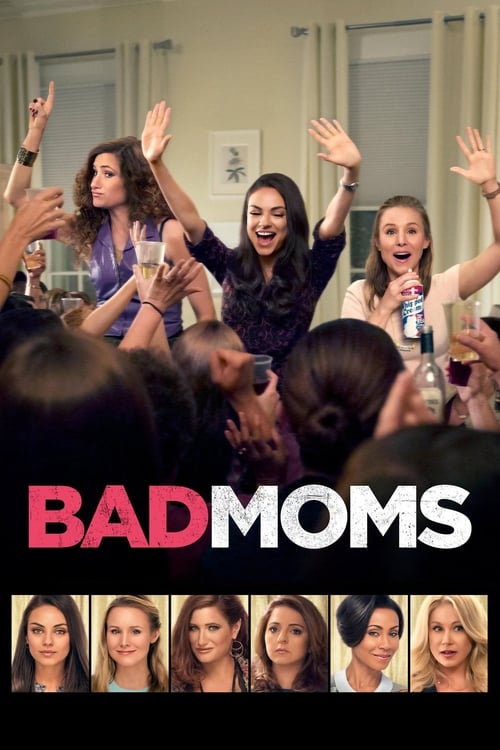
Bad Moms
Despite a moderate budget of $20.0M, Bad Moms became a box office phenomenon, earning $183.9M worldwide—a remarkable 820% return.
Plot Structure
Story beats plotted across runtime


Narrative Arc
Emotional journey through the story's key moments
Story Circle
Blueprint 15-beat structure
Characters
Cast & narrative archetypes

Amy Mitchell

Kiki

Carla

Gwendolyn James

Mike Mitchell

Jessie Harkness
Main Cast & Characters
Amy Mitchell
Played by Mila Kunis
An overworked mother who rebels against the pressure of perfection and leads a movement of moms to reclaim their lives.
Kiki
Played by Kristen Bell
An anxious, people-pleasing mother of four who breaks free from her controlling husband to embrace her independence.
Carla
Played by Kathryn Hahn
A brash, free-spirited single mom with no filter who encourages Amy and Kiki to let loose and live authentically.
Gwendolyn James
Played by Christina Applegate
The tyrannical PTA president who maintains perfect control over the school and other moms through manipulation and intimidation.
Mike Mitchell
Played by David Walton
Amy's unfaithful husband whose betrayal triggers her journey toward self-discovery and liberation.
Jessie Harkness
Played by Jay Hernandez
A widowed single father and love interest for Amy who provides emotional support and encouragement.
Structural Analysis
The Status Quo at 1 minutes (1% through the runtime) establishes Amy Mitchell rushes through her chaotic morning routine, managing her two kids, lazy husband, and demanding job - establishing her overwhelmed, overworked "perfect mom" persona that's actually falling apart.. Significantly, this early placement immediately immerses viewers in the story world.
The inciting incident occurs at 11 minutes when Amy comes home early and discovers her husband Mike having cybersex with a woman from an online game - the betrayal that shatters her carefully maintained perfect family facade.. At 10% through the film, this Disruption aligns precisely with traditional story structure. This beat shifts the emotional landscape, launching the protagonist into the central conflict.
The First Threshold at 24 minutes marks the transition into Act II, occurring at 20% of the runtime. This illustrates the protagonist's commitment to Amy walks out of the PTA meeting, declaring "I'm done!" and refuses to do any more bake sale items. She actively chooses to reject the perfect mom role and walks away from Gwendolyn's tyranny., moving from reaction to action.
At 50 minutes, the Midpoint arrives at 42% of the runtime—significantly early, compressing the first half. Structural examination shows that this crucial beat False victory: The bad moms movement goes viral, other moms join their rebellion, and Amy decides to run against Gwendolyn for PTA president. She seems to be winning both her freedom and the support of other moms., fundamentally raising what's at risk. The emotional intensity shifts, dividing the narrative into clear before-and-after phases.
The Collapse moment at 74 minutes (62% through) represents the emotional nadir. Here, Amy's daughter Jane has a breakdown before the school recital, crying that her life is ruined. Amy realizes her rebellion has hurt her kids. She quits the PTA race and her "bad mom" experiment feels like a complete failure., illustrates the protagonist at their lowest point. This beat's placement in the final quarter sets up the climactic reversal.
The Second Threshold at 79 minutes initiates the final act resolution at 66% of the runtime. Amy has the breakthrough realization: she doesn't need to be a perfect mom OR a bad mom - she just needs to be a REAL mom. She decides to attend the PTA meeting one last time to speak her truth, not to win but to be authentic., demonstrating the transformation achieved throughout the journey.
Emotional Journey
Bad Moms's emotional architecture traces a deliberate progression across 15 carefully calibrated beats.
Narrative Framework
This structural analysis employs proven narrative structure principles that track dramatic progression. By mapping Bad Moms against these established plot points, we can identify how the filmmaker utilizes or subverts traditional narrative conventions. The plot point approach reveals not only adherence to structural principles but also creative choices that distinguish Bad Moms within its genre.
Plot Points by Act
Act I
SetupStatus Quo
Amy Mitchell rushes through her chaotic morning routine, managing her two kids, lazy husband, and demanding job - establishing her overwhelmed, overworked "perfect mom" persona that's actually falling apart.
Theme
At the PTA meeting, Gwendolyn says "We're all just trying to be perfect mothers" - establishing the central thematic premise about the pressure of modern motherhood and perfectionism.
Worldbuilding
Setup of Amy's world: her demanding part-time job that's really full-time, her ungrateful kids, her man-child husband Mike, and the tyrannical PTA dominated by Gwendolyn James who enforces impossible standards.
Disruption
Amy comes home early and discovers her husband Mike having cybersex with a woman from an online game - the betrayal that shatters her carefully maintained perfect family facade.
Resistance
Amy debates how to respond to her crumbling life. She kicks Mike out but still tries to maintain her PTA duties and perfect mom image. She's overwhelmed at the bake sale and snaps at the impossible demands.
Act II
ConfrontationFirst Threshold
Amy walks out of the PTA meeting, declaring "I'm done!" and refuses to do any more bake sale items. She actively chooses to reject the perfect mom role and walks away from Gwendolyn's tyranny.
Mirror World
Amy bonds with Kiki and Carla at the bar - two moms who represent different extremes (over-controlled and wildly permissive). They become her support system and represent the film's exploration of motherhood alternatives.
Premise
The "bad moms" rebellion - Amy, Kiki, and Carla embrace imperfection. They party, stop doing everything for their kids, let loose at the grocery store, and generally break all the "good mom" rules. The fun and games of bad behavior.
Midpoint
False victory: The bad moms movement goes viral, other moms join their rebellion, and Amy decides to run against Gwendolyn for PTA president. She seems to be winning both her freedom and the support of other moms.
Opposition
Gwendolyn fights back viciously: she sabotages Amy's kids (getting Dylan kicked off soccer, manipulating Jane's audition), turns other moms against her, and exposes her parenting failures. Amy's home life deteriorates as her kids blame her.
Collapse
Amy's daughter Jane has a breakdown before the school recital, crying that her life is ruined. Amy realizes her rebellion has hurt her kids. She quits the PTA race and her "bad mom" experiment feels like a complete failure.
Crisis
Amy's dark night - she processes her failure, comforts Jane, and reflects on what truly matters. She has an honest conversation with her own mother who reveals she wasn't perfect either, giving Amy perspective.
Act III
ResolutionSecond Threshold
Amy has the breakthrough realization: she doesn't need to be a perfect mom OR a bad mom - she just needs to be a REAL mom. She decides to attend the PTA meeting one last time to speak her truth, not to win but to be authentic.
Synthesis
Amy gives an honest speech at the PTA meeting about being imperfect but trying your best. Other moms rally to her authenticity. Amy wins the election. She reconciles with her kids by being honest about her limitations and makes peace with being "good enough."
Transformation
Final image mirrors the opening chaos, but Amy handles it differently - with humor, self-acceptance, and reasonable boundaries. She's still imperfect but now embraces it. Her kids help more, she's dating, and she's free from the tyranny of perfection.