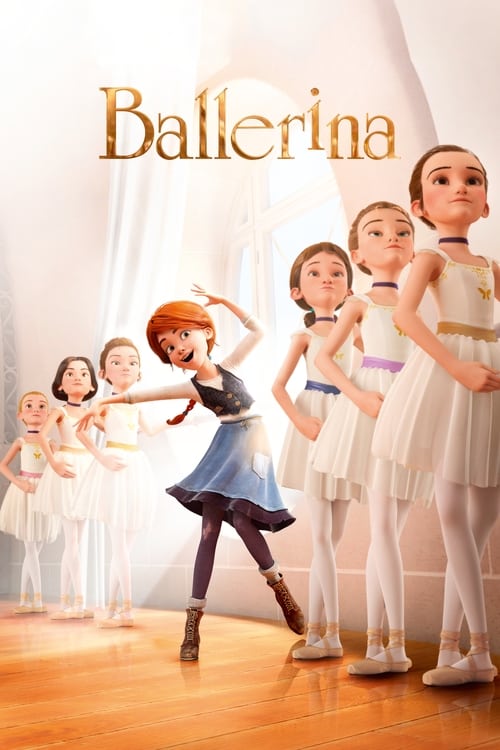
Ballerina
In 1879 Paris, a young orphan dreams of becoming a ballerina and flees her rural Brittany for Paris, where she passes for someone else and accedes to the position of pupil at the Grand Opera house.
Despite a moderate budget of $30.0M, Ballerina became a financial success, earning $109.6M worldwide—a 265% return.
1 win & 3 nominations


Plot Structure
Story beats plotted across runtime


Narrative Arc
Emotional journey through the story's key moments
Story Circle
Blueprint 15-beat structure
Arcplot Score Breakdown
Weighted: Precision (70%) + Arc (15%) + Theme (15%)
Ballerina (2016) exemplifies meticulously timed plot construction, characteristic of Eric Summer's storytelling approach. This structural analysis examines how the film's 15-point plot structure maps to proven narrative frameworks across 1 hour and 29 minutes. With an Arcplot score of 7.5, the film showcases strong structural fundamentals.
Characters
Cast & narrative archetypes

Félicie
Victor
Odette
Camille Le Haut
Regine Le Haut
Rudolph Nureyev
Main Cast & Characters
Félicie
Played by Elle Fanning
An orphan girl with dreams of becoming a ballerina who escapes to Paris to pursue her passion at the Paris Opera Ballet School.
Victor
Played by Dane DeHaan
Félicie's best friend and fellow orphan, an aspiring inventor who helps her escape and pursue her dreams.
Odette
Played by Carly Rae Jepsen
A former prima ballerina with a tragic past who becomes Félicie's mentor and cleaning woman at the Opera.
Camille Le Haut
Played by Maddie Ziegler
A wealthy, privileged ballet student and antagonist who competes with Félicie for the lead role in The Nutcracker.
Regine Le Haut
Played by Julie Khaner
Camille's controlling, status-obsessed mother who will do anything to ensure her daughter's success.
Rudolph Nureyev
Played by Tamir Kapelian
A talented young dancer and Félicie's love interest who partners with her at the ballet school.
Structural Analysis
The Status Quo at 1 minutes (1% through the runtime) establishes Félicie, an orphan girl in rural Brittany, dreams of becoming a ballerina while trapped in a dreary orphanage, practicing dance moves in secret with her inventor friend Victor.. Notably, this early placement immediately immerses viewers in the story world.
The inciting incident occurs at 10 minutes when Félicie and Victor successfully escape the orphanage using one of Victor's flying contraptions, embarking on their journey to Paris to pursue their dreams.. At 11% through the film, this Disruption aligns precisely with traditional story structure. This beat shifts the emotional landscape, launching the protagonist into the central conflict.
The First Threshold at 22 minutes marks the transition into Act II, occurring at 25% of the runtime. This illustrates the protagonist's commitment to Félicie makes the bold decision to steal the identity of Camille Le Haut, a wealthy girl who was accepted to the ballet school but doesn't want to attend. Félicie chooses deception to enter the world of ballet., moving from reaction to action.
At 44 minutes, the Midpoint arrives at 49% of the runtime—precisely centered, creating perfect narrative symmetry. The analysis reveals that this crucial beat Félicie earns a spot in the final competition to dance the lead role in "The Nutcracker" at the Paris Opera. This false victory raises the stakes—she's achieved more than she imagined, but the lie she's living becomes more dangerous., fundamentally raising what's at risk. The emotional intensity shifts, dividing the narrative into clear before-and-after phases.
The Collapse moment at 65 minutes (73% through) represents the emotional nadir. Here, Félicie's deception is exposed publicly at the Opera. She is humiliated and expelled from the school. Odette, injured because of the sabotage, can no longer help her. Félicie has lost everything: her place at school, her mentor, her friends' trust, and her dream. Her mother's music box is broken., illustrates the protagonist at their lowest point. This beat's placement in the final quarter sets up the climactic reversal.
The Second Threshold at 71 minutes initiates the final act resolution at 80% of the runtime. Odette and Victor help Félicie realize that her passion and growth were real, even if her method was wrong. Félicie understands she must dance for the love of it, not for victory or validation. She decides to fight for one last chance, combining her raw passion with the discipline Odette taught her., demonstrating the transformation achieved throughout the journey.
Emotional Journey
Ballerina's emotional architecture traces a deliberate progression across 15 carefully calibrated beats.
Narrative Framework
This structural analysis employs structural analysis methodology used to understand storytelling architecture. By mapping Ballerina against these established plot points, we can identify how Eric Summer utilizes or subverts traditional narrative conventions. The plot point approach reveals not only adherence to structural principles but also creative choices that distinguish Ballerina within the animation genre.
Comparative Analysis
Additional animation films include The Bad Guys, Puss in Boots and Violet Evergarden: Eternity and the Auto Memory Doll.
Plot Points by Act
Act I
SetupStatus Quo
Félicie, an orphan girl in rural Brittany, dreams of becoming a ballerina while trapped in a dreary orphanage, practicing dance moves in secret with her inventor friend Victor.
Theme
Victor tells Félicie: "If you never give up on your dreams, your dreams will never give up on you." This establishes the film's theme about persistence and believing in yourself despite obstacles.
Worldbuilding
We see the orphanage world: strict caretakers, Félicie's passion for dance despite having no training, Victor's inventions, their friendship, and their shared dream of escaping to Paris. Félicie has a music box with a ballerina that represents her mother and her dream.
Disruption
Félicie and Victor successfully escape the orphanage using one of Victor's flying contraptions, embarking on their journey to Paris to pursue their dreams.
Resistance
Félicie and Victor arrive in Paris during the construction of the Eiffel Tower. Félicie finds the Paris Opera Ballet School but realizes she has no training or connections. She meets Odette, a cleaning woman with a limp who once danced, and witnesses elite dancers. Félicie faces the reality that her dream requires more than just passion.
Act II
ConfrontationFirst Threshold
Félicie makes the bold decision to steal the identity of Camille Le Haut, a wealthy girl who was accepted to the ballet school but doesn't want to attend. Félicie chooses deception to enter the world of ballet.
Mirror World
Odette agrees to train Félicie in secret, becoming her mentor. Their relationship represents the thematic heart: Odette embodies sacrifice and lost dreams, while teaching Félicie that dance requires discipline, not just passion.
Premise
Félicie experiences the "fun and games" of ballet school: grueling training sessions with Odette, competing against talented dancers, developing a romance with Rudolph (a dancer at the Opera), navigating the competitive environment, and slowly improving her skills. The promise of the premise—a girl learning ballet in Paris—unfolds.
Midpoint
Félicie earns a spot in the final competition to dance the lead role in "The Nutcracker" at the Paris Opera. This false victory raises the stakes—she's achieved more than she imagined, but the lie she's living becomes more dangerous.
Opposition
Pressure intensifies: the real Camille and her manipulative mother discover the deception and threaten Félicie. Félicie becomes obsessed with winning, neglecting Victor and Odette. Her relationship with Rudolph becomes strained. Camille's mother sabotages Odette. Félicie's lies catch up with her as she loses sight of why she dances.
Collapse
Félicie's deception is exposed publicly at the Opera. She is humiliated and expelled from the school. Odette, injured because of the sabotage, can no longer help her. Félicie has lost everything: her place at school, her mentor, her friends' trust, and her dream. Her mother's music box is broken.
Crisis
Félicie hits rock bottom, believing she's lost her chance forever. She contemplates giving up and returning to Brittany. Victor is hurt by her neglect. She must face who she's become and what truly matters.
Act III
ResolutionSecond Threshold
Odette and Victor help Félicie realize that her passion and growth were real, even if her method was wrong. Félicie understands she must dance for the love of it, not for victory or validation. She decides to fight for one last chance, combining her raw passion with the discipline Odette taught her.
Synthesis
Félicie confronts Camille and her mother, earning a final audition through honest appeal to the Opera director. She performs from her heart, incorporating everything she's learned. The finale involves a dramatic chase and dance sequence atop the unfinished Statue of Liberty in Victor's workshop, where Félicie must prove herself authentically.
Transformation
Félicie dances the lead in "The Nutcracker" at the Paris Opera, having earned it through honesty and hard work. She is no longer the orphan girl pretending to be someone else—she is a real ballerina who found her place through perseverance. Victor watches proudly, their friendship restored.