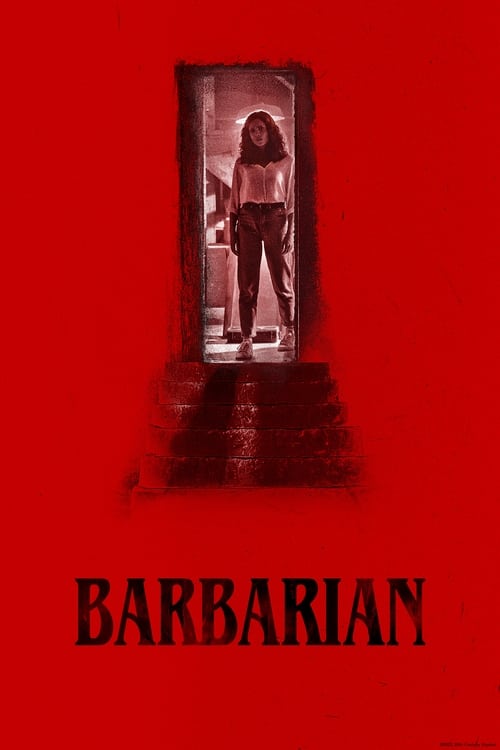
Barbarian
In town for a job interview, a young woman arrives at her Airbnb late at night only to find that it has been mistakenly double-booked and a strange man is already staying there. Against her better judgement, she decides to stay the night anyway.
Despite its small-scale budget of $4.5M, Barbarian became a massive hit, earning $45.4M worldwide—a remarkable 909% return. The film's unique voice connected with viewers, illustrating how strong storytelling can transcend budget limitations.
5 wins & 38 nominations


Plot Structure
Story beats plotted across runtime


Narrative Arc
Emotional journey through the story's key moments
Story Circle
Blueprint 15-beat structure
Arcplot Score Breakdown
Weighted: Precision (70%) + Arc (15%) + Theme (15%)
Barbarian (2022) exemplifies deliberately positioned dramatic framework, characteristic of Zach Cregger's storytelling approach. This structural analysis examines how the film's 15-point plot structure maps to proven narrative frameworks across 1 hour and 42 minutes. With an Arcplot score of 6.1, the film takes an unconventional approach to traditional narrative frameworks.
Characters
Cast & narrative archetypes

Tess Marshall
Keith Toshko
AJ Gilbride
The Mother
Frank
Main Cast & Characters
Tess Marshall
Played by Georgina Campbell
A woman who arrives at an Airbnb rental only to find it's been double-booked, leading her into a nightmarish discovery in the basement.
Keith Toshko
Played by Bill Skarsgård
The other guest who has also booked the same Airbnb, initially seeming helpful but creating unease through the uncertain situation.
AJ Gilbride
Played by Justin Long
A disgraced actor who owns the rental property and discovers the horrific truth about what lies beneath when he arrives to sell it.
The Mother
Played by Matthew Patrick Davis
A tragic, feral woman who has lived in the tunnels beneath the house, having been born from generations of captivity and abuse.
Frank
Played by Richard Brake
The original predator who built the tunnels and committed decades of kidnapping, rape, and imprisonment, seen in flashbacks.
Structural Analysis
The Status Quo at 1 minutes (1% through the runtime) establishes Tess arrives at a rental house in a decaying Detroit neighborhood on a dark, rainy night, immediately establishing unease as she discovers someone else has booked the same property.. Structural examination shows that this early placement immediately immerses viewers in the story world.
The inciting incident occurs at 13 minutes when Tess discovers a hidden door in the basement leading to a dark corridor, shattering the illusion of safety in the house and revealing something deeply wrong with the property.. At 13% through the film, this Disruption is delayed, allowing extended setup of the story world. This beat shifts the emotional landscape, launching the protagonist into the central conflict.
The First Threshold at 26 minutes marks the transition into Act II, occurring at 25% of the runtime. This demonstrates the protagonist's commitment to Tess descends into the hidden basement tunnels to find Keith, crossing from the ordinary world into literal underground horror. She commits to discovering what lies beneath., moving from reaction to action.
At 50 minutes, the Midpoint arrives at 49% of the runtime—precisely centered, creating perfect narrative symmetry. The analysis reveals that this crucial beat The film shifts perspective to AJ in California, learning he's been accused of sexual assault. This false defeat reframes everything—the true monster isn't just underground but represents male predation., fundamentally raising what's at risk. The emotional intensity shifts, dividing the narrative into clear before-and-after phases.
The Collapse moment at 76 minutes (75% through) represents the emotional nadir. Here, The Mother forces Tess and AJ to "nurse" from her, treating them as her babies. Keith is shown dead, and escape seems impossible—they are trapped in the cycle of the Mother's twisted maternal need., indicates the protagonist at their lowest point. This beat's placement in the final quarter sets up the climactic reversal.
The Second Threshold at 82 minutes initiates the final act resolution at 80% of the runtime. Tess and AJ escape the tunnels and flee. Tess realizes they must work together to survive, synthesizing her determination with the knowledge of what they're facing., demonstrating the transformation achieved throughout the journey.
Emotional Journey
Barbarian's emotional architecture traces a deliberate progression across 15 carefully calibrated beats.
Narrative Framework
This structural analysis employs proven narrative structure principles that track dramatic progression. By mapping Barbarian against these established plot points, we can identify how Zach Cregger utilizes or subverts traditional narrative conventions. The plot point approach reveals not only adherence to structural principles but also creative choices that distinguish Barbarian within the horror genre.
Comparative Analysis
Additional horror films include Thinner, A Nightmare on Elm Street and Mary Reilly.
Plot Points by Act
Act I
SetupStatus Quo
Tess arrives at a rental house in a decaying Detroit neighborhood on a dark, rainy night, immediately establishing unease as she discovers someone else has booked the same property.
Theme
Keith tells Tess she shouldn't trust him, a stranger, highlighting the film's central theme: the danger isn't always where you expect it, and appearances deceive about who the real threat is.
Worldbuilding
Tess reluctantly stays with Keith in the double-booked Airbnb. They share wine and conversation, building tentative trust. The abandoned Detroit neighborhood is established as dangerous and isolated.
Disruption
Tess discovers a hidden door in the basement leading to a dark corridor, shattering the illusion of safety in the house and revealing something deeply wrong with the property.
Resistance
Tess investigates the basement but doesn't explore deeply. Keith dismisses her concerns. She goes to her job interview and returns, debating whether to stay or leave the strange house.
Act II
ConfrontationFirst Threshold
Tess descends into the hidden basement tunnels to find Keith, crossing from the ordinary world into literal underground horror. She commits to discovering what lies beneath.
Mirror World
Tess discovers the nursery and torture chamber deep underground, revealing the house's true history of captivity and abuse—a dark mirror reflecting cycles of violence against women.
Premise
The horror premise unfolds: Tess navigates underground tunnels, discovers the imprisoned Keith, encounters the monstrous Mother, and barely escapes to the street—only to be ignored by everyone she tries to tell.
Midpoint
The film shifts perspective to AJ in California, learning he's been accused of sexual assault. This false defeat reframes everything—the true monster isn't just underground but represents male predation.
Opposition
AJ arrives to sell the property, discovers the tunnels himself, and becomes trapped. Flashbacks reveal Frank Brennan's decades of kidnapping and abuse that created the Mother through generations of incest.
Collapse
The Mother forces Tess and AJ to "nurse" from her, treating them as her babies. Keith is shown dead, and escape seems impossible—they are trapped in the cycle of the Mother's twisted maternal need.
Crisis
Tess and AJ are held captive underground. They must cooperate despite AJ's selfish nature. The full horror of their situation—trapped with a creature born from abuse—settles in.
Act III
ResolutionSecond Threshold
Tess and AJ escape the tunnels and flee. Tess realizes they must work together to survive, synthesizing her determination with the knowledge of what they're facing.
Synthesis
The chase across Detroit culminates at a water tower. The Mother pursues relentlessly. AJ reveals his true cowardly nature by throwing Tess off the tower to save himself, but the Mother kills him instead.
Transformation
Tess kills the Mother with a fatal gunshot, ending the cycle of abuse. She survives alone at dawn—transformed from a trusting woman into a hardened survivor who learned the real monsters wear human faces.