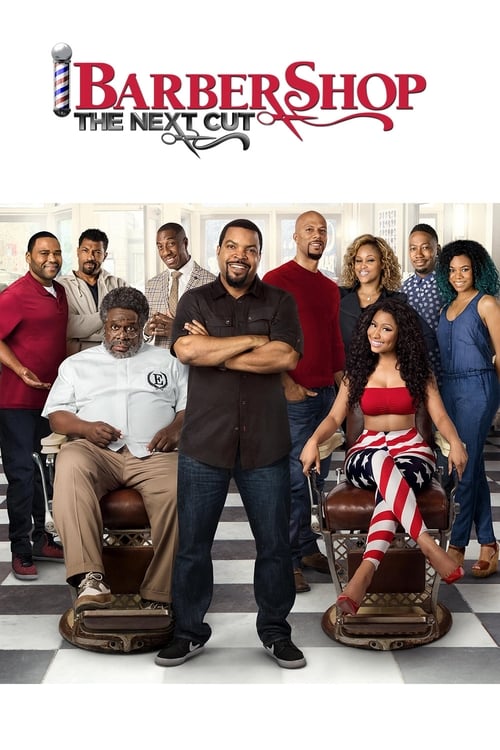
Barbershop: The Next Cut
To survive harsh economic times, Calvin and Angie have merged the barbershop and beauty salon into one business. The days of male bonding are gone as Eddie and the crew must now contend with sassy female co-workers and spirited clientele. As the battle of the sexes rages on, a different kind of conflict has taken over Chicago. Crime and gangs are on the rise, leaving Calvin worried about the fate of his son. Together, the friends come up with a bold plan to take back their beloved neighborhood.
Despite a respectable budget of $20.0M, Barbershop: The Next Cut became a box office success, earning $55.0M worldwide—a 175% return.
1 win & 3 nominations


Plot Structure
Story beats plotted across runtime


Narrative Arc
Emotional journey through the story's key moments
Story Circle
Blueprint 15-beat structure
Arcplot Score Breakdown
Weighted: Precision (70%) + Arc (15%) + Theme (15%)
Barbershop: The Next Cut (2016) showcases precise plot construction, characteristic of Malcolm D. Lee's storytelling approach. This structural analysis examines how the film's 15-point plot structure maps to proven narrative frameworks across 1 hour and 52 minutes. With an Arcplot score of 7.4, the film balances conventional beats with creative variation.
Characters
Cast & narrative archetypes

Calvin Palmer Jr.
Eddie
Rashad
Terri Jones
Jimmy James
Raja
Draya
Jerrod Carmichael
Main Cast & Characters
Calvin Palmer Jr.
Played by Ice Cube
Owner of the barbershop who struggles to keep his business and community safe amid rising gang violence.
Eddie
Played by Cedric the Entertainer
The wise elder barber who provides comic relief and sage advice to the younger generation.
Rashad
Played by Common
A talented barber dealing with marriage issues and street credibility concerns.
Terri Jones
Played by Eve
Owner of the beauty salon next door and Calvin's wife, strong-willed and caring.
Jimmy James
Played by Sean Patrick Thomas
A smooth-talking barber with a hustler mentality and romantic ambitions.
Raja
Played by Utkarsh Ambudkar
An Indian barber who brings a fresh perspective and seeks acceptance in the predominantly Black barbershop.
Draya
Played by Nicki Minaj
A confident, outspoken hairstylist in Terri's salon who doesn't hold back her opinions.
Jerrod Carmichael
Played by Jerrod Carmichael
A young barber trying to find his place in the barbershop community.
Structural Analysis
The Status Quo at 1 minutes (1% through the runtime) establishes Opening montage shows the vibrant Chicago South Side community and Calvin's barbershop as a hub of neighborhood life, laughter, and camaraderie. The barbershop is thriving as a place where people gather.. Significantly, this early placement immediately immerses viewers in the story world.
The inciting incident occurs at 13 minutes when A violent incident occurs near the barbershop - either a shooting or a close call that directly threatens the safety of the community and makes the gang violence impossible to ignore. The safe haven is no longer safe.. At 12% through the film, this Disruption aligns precisely with traditional story structure. This beat shifts the emotional landscape, launching the protagonist into the central conflict.
The First Threshold at 27 minutes marks the transition into Act II, occurring at 25% of the runtime. This illustrates the protagonist's commitment to Calvin decides the barbershop will actively work to create a ceasefire between gangs. He chooses to make the shop a safe zone and organizes a community peace initiative, committing to being part of the solution., moving from reaction to action.
At 55 minutes, the Midpoint arrives at 49% of the runtime—precisely centered, creating perfect narrative symmetry. Structural examination shows that this crucial beat False victory: A successful ceasefire event or community gathering where it seems like real progress is being made. The gangs appear to be listening, the community is united, and Calvin feels like the barbershop approach is working., fundamentally raising what's at risk. The emotional intensity shifts, dividing the narrative into clear before-and-after phases.
The Collapse moment at 82 minutes (74% through) represents the emotional nadir. Here, All is lost: A major act of violence shatters the peace (possibly involving someone close to the barbershop community or Calvin's son Jalen). The ceasefire collapses, and it appears all their efforts have failed. Whiff of death as the community faces its darkest moment., illustrates the protagonist at their lowest point. This beat's placement in the final quarter sets up the climactic reversal.
The Second Threshold at 89 minutes initiates the final act resolution at 79% of the runtime. Calvin realizes that giving up is not an option - the community needs the barbershop now more than ever. He synthesizes the lesson that real change requires persistence despite setbacks. The community rallies together with renewed purpose., demonstrating the transformation achieved throughout the journey.
Emotional Journey
Barbershop: The Next Cut's emotional architecture traces a deliberate progression across 15 carefully calibrated beats.
Narrative Framework
This structural analysis employs systematic plot point analysis that identifies crucial turning points. By mapping Barbershop: The Next Cut against these established plot points, we can identify how Malcolm D. Lee utilizes or subverts traditional narrative conventions. The plot point approach reveals not only adherence to structural principles but also creative choices that distinguish Barbershop: The Next Cut within the comedy genre.
Malcolm D. Lee's Structural Approach
Among the 9 Malcolm D. Lee films analyzed on Arcplot, the average structural score is 7.2, reflecting strong command of classical structure. Barbershop: The Next Cut represents one of the director's most structurally precise works. For comparative analysis, explore the complete Malcolm D. Lee filmography.
Comparative Analysis
Additional comedy films include The Bad Guys, Ella Enchanted and The Evening Star. For more Malcolm D. Lee analyses, see Night School, Space Jam: A New Legacy and Undercover Brother.
Plot Points by Act
Act I
SetupStatus Quo
Opening montage shows the vibrant Chicago South Side community and Calvin's barbershop as a hub of neighborhood life, laughter, and camaraderie. The barbershop is thriving as a place where people gather.
Theme
Eddie or another elder character discusses how the neighborhood is changing and that the community needs to "take care of its own" - establishing the central theme of community responsibility and protecting what matters.
Worldbuilding
Establishment of the barbershop family, Calvin's relationship with his son Jalen, the diverse personalities of the barbers and stylists, introduction of Angie's beauty shop next door, and the underlying tension of increasing gang violence in the neighborhood.
Disruption
A violent incident occurs near the barbershop - either a shooting or a close call that directly threatens the safety of the community and makes the gang violence impossible to ignore. The safe haven is no longer safe.
Resistance
Calvin debates what to do about the escalating violence. Discussions in the shop about whether to get involved or stay out of it. Calvin worries about his son's safety. Some push for action while others counsel staying in their lane.
Act II
ConfrontationFirst Threshold
Calvin decides the barbershop will actively work to create a ceasefire between gangs. He chooses to make the shop a safe zone and organizes a community peace initiative, committing to being part of the solution.
Mirror World
Development of the relationship subplot with Angie (or introduction/deepening of Calvin's relationship with Jennifer) that reinforces the theme - showing what it means to fight for love and community despite danger.
Premise
The fun and purpose of the premise: the barbershop as community organizer. Comedic and heartfelt moments as the diverse crew attempts to broker peace, host community events, counsel young people, and navigate the challenges of activism while cutting hair.
Midpoint
False victory: A successful ceasefire event or community gathering where it seems like real progress is being made. The gangs appear to be listening, the community is united, and Calvin feels like the barbershop approach is working.
Opposition
The peace effort faces serious obstacles. Gang members resist change, outside forces threaten the barbershop, personal conflicts emerge among the staff, and Calvin's family faces increased danger. The stakes escalate as violence threatens to return.
Collapse
All is lost: A major act of violence shatters the peace (possibly involving someone close to the barbershop community or Calvin's son Jalen). The ceasefire collapses, and it appears all their efforts have failed. Whiff of death as the community faces its darkest moment.
Crisis
Calvin and the community process the tragedy and loss. Dark night of the soul where Calvin questions whether the barbershop can make any difference at all, whether he's put his family at risk for nothing, and whether hope is possible.
Act III
ResolutionSecond Threshold
Calvin realizes that giving up is not an option - the community needs the barbershop now more than ever. He synthesizes the lesson that real change requires persistence despite setbacks. The community rallies together with renewed purpose.
Synthesis
The finale: Calvin and the barbershop lead a major community action - possibly a march, rally, or confrontation with the forces threatening the neighborhood. The diverse voices unite, the community stands together, and they reclaim their neighborhood as a place of hope.
Transformation
Closing image mirrors the opening but shows transformation: The barbershop is still a gathering place, but now it represents active community engagement rather than passive sanctuary. Calvin and his community have become agents of change, and the neighborhood shows signs of healing.