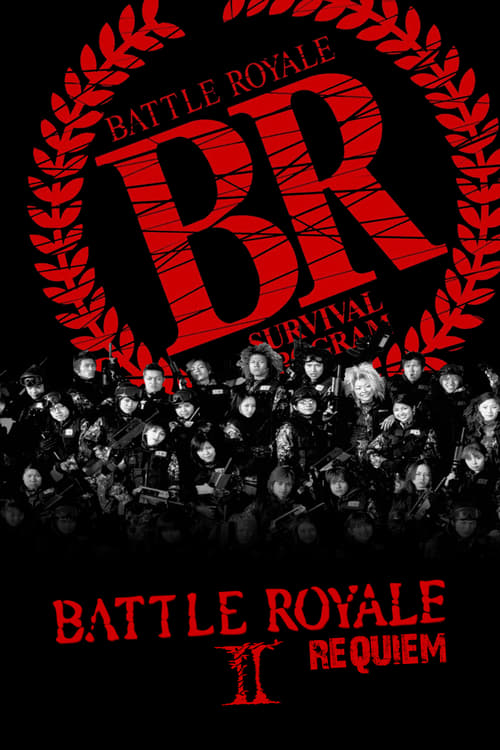
Battle Royale II: Requiem
It's three years after the events of the original Battle Royale, and Shuya Nanahara is now an internationally-known terrorist determined to bring down the government. His terrorist group, Wild Seven, stages an attack that levels several buildings in Tokyo on Christmas Day, killing 8000 people. In order for the government to study the benefits of "teamwork", the new students work in pairs, with their collars electronically linked so that if one of them is killed, the other dies as well. They must kill Nanahara in three days - or die.
Working with a tight budget of $9.1M, the film achieved a modest success with $14.9M in global revenue (+64% profit margin).


Plot Structure
Story beats plotted across runtime


Narrative Arc
Emotional journey through the story's key moments
Story Circle
Blueprint 15-beat structure
Arcplot Score Breakdown
Weighted: Precision (70%) + Arc (15%) + Theme (15%)
Battle Royale II: Requiem (2003) exemplifies deliberately positioned narrative design, characteristic of Kenta Fukasaku's storytelling approach. This structural analysis examines how the film's 15-point plot structure maps to proven narrative frameworks across 2 hours and 35 minutes. With an Arcplot score of 6.6, the film balances conventional beats with creative variation.
Characters
Cast & narrative archetypes

Shuya Nanahara
Takuma Aoi
Shiori Kitano
Nao Asakura
Riki Takeuchi
Mayu
Main Cast & Characters
Shuya Nanahara
Played by Tatsuya Fujiwara
Survivor of the first Battle Royale who becomes a terrorist leader fighting against the BR Act, leading Wild Seven resistance group.
Takuma Aoi
Played by Shugo Oshinari
Reluctant student forced into Battle Royale II, struggles with violence but develops into a capable fighter and moral center of his class.
Shiori Kitano
Played by Ai Maeda
Daughter of the previous film's teacher, serves as instructor for the new Battle Royale class with a personal vendetta.
Nao Asakura
Played by Ayana Sakai
Strong-willed female student who becomes a key fighter, forms close bond with Takuma during their mission.
Riki Takeuchi
Played by Riki Takeuchi
Military commander overseeing the Battle Royale II operation, ruthless enforcer of the government's anti-terrorism program.
Mayu
Played by Yuma Ishigaki
Member of Wild Seven resistance, loyal to Shuya's cause and fights alongside him against government forces.
Structural Analysis
The Status Quo at 2 minutes (1% through the runtime) establishes Rebellious students in Shikanotoride Junior High mock and reject authority, showing the state of youth violence that has led to the BR Act. Their defiance and aggression establishes the chaotic world these teenagers inhabit.. Significantly, this early placement immediately immerses viewers in the story world.
The inciting incident occurs at 19 minutes when The students are suddenly gassed, abducted, and wake up on a military transport heading to the island. They realize they have been forced into Battle Royale II against their will. The collars are locked around their necks and their ordinary lives are violently ripped away.. At 13% through the film, this Disruption is delayed, allowing extended setup of the story world. This beat shifts the emotional landscape, launching the protagonist into the central conflict.
The First Threshold at 39 minutes marks the transition into Act II, occurring at 25% of the runtime. This illustrates the protagonist's commitment to The students storm the beach in a catastrophic D-Day style assault. They are immediately ambushed by Nanahara's Wild Seven resistance fighters with heavy weaponry. Students are slaughtered en masse. The survivors commit to fighting for survival in this warzone, crossing into Act 2., moving from reaction to action.
At 78 minutes, the Midpoint arrives at 50% of the runtime—precisely centered, creating perfect narrative symmetry. Structural examination shows that this crucial beat A major battle or betrayal reveals the truth: the students and Wild Seven are both pawns. The government has been manipulating both sides. What seemed like a mission to stop terrorism is actually state-sponsored murder of youth. The stakes are raised and false assumptions shatter., fundamentally raising what's at risk. The emotional intensity shifts, dividing the narrative into clear before-and-after phases.
The Collapse moment at 116 minutes (75% through) represents the emotional nadir. Here, Shuya Nanahara is mortally wounded or a massive casualty event decimates both students and resistance fighters. The death toll becomes overwhelming. Hope seems lost as the military's superior firepower proves unstoppable. The "whiff of death" is literal as bodies pile up., reveals the protagonist at their lowest point. This beat's placement in the final quarter sets up the climactic reversal.
The Second Threshold at 124 minutes initiates the final act resolution at 80% of the runtime. The remaining students choose to fight alongside Wild Seven, not for victory, but to expose the government's crimes and break the cycle of violence. They synthesize what they've learned about the true enemy and find purpose in sacrifice for the next generation., demonstrating the transformation achieved throughout the journey.
Emotional Journey
Battle Royale II: Requiem's emotional architecture traces a deliberate progression across 15 carefully calibrated beats.
Narrative Framework
This structural analysis employs structural analysis methodology used to understand storytelling architecture. By mapping Battle Royale II: Requiem against these established plot points, we can identify how Kenta Fukasaku utilizes or subverts traditional narrative conventions. The plot point approach reveals not only adherence to structural principles but also creative choices that distinguish Battle Royale II: Requiem within the action genre.
Comparative Analysis
Additional action films include The Bad Guys, Puss in Boots and Venom: The Last Dance.
Plot Points by Act
Act I
SetupStatus Quo
Rebellious students in Shikanotoride Junior High mock and reject authority, showing the state of youth violence that has led to the BR Act. Their defiance and aggression establishes the chaotic world these teenagers inhabit.
Theme
A teacher or official states the justification for Battle Royale II, emphasizing that terrorism must be fought and that the sins of the father are visited upon the children - introducing the cyclical nature of violence and whether it can be broken.
Worldbuilding
Introduction to the new BR-II program and the class of delinquent students. Establishment of the explosive collars, the buddy system pairing, and revelation that their mission is to hunt down and kill Shuya Nanahara, the survivor from the first Battle Royale who has become a terrorist leader.
Disruption
The students are suddenly gassed, abducted, and wake up on a military transport heading to the island. They realize they have been forced into Battle Royale II against their will. The collars are locked around their necks and their ordinary lives are violently ripped away.
Resistance
Riki Takeuchi, the teacher, explains the rules: they must kill Nanahara within 72 hours or all their collars will explode. Students debate, panic, and resist. The landing craft approaches the island amid growing terror and the first deaths occur from students trying to escape.
Act II
ConfrontationFirst Threshold
The students storm the beach in a catastrophic D-Day style assault. They are immediately ambushed by Nanahara's Wild Seven resistance fighters with heavy weaponry. Students are slaughtered en masse. The survivors commit to fighting for survival in this warzone, crossing into Act 2.
Mirror World
Surviving students encounter members of Wild Seven resistance, including Shuya Nanahara. Instead of the terrorist monster they expected, they meet young people fighting against government oppression. This relationship becomes the thematic heart: are they enemies or allies against a corrupt system?
Premise
The premise of youth forced to fight in an anti-terrorism war plays out. Students navigate the war-torn island, some joining Wild Seven, others remaining loyal to their mission. Battles, betrayals, and temporary alliances form as both sides maneuver in the urban warfare environment.
Midpoint
A major battle or betrayal reveals the truth: the students and Wild Seven are both pawns. The government has been manipulating both sides. What seemed like a mission to stop terrorism is actually state-sponsored murder of youth. The stakes are raised and false assumptions shatter.
Opposition
The military intensifies its assault on the island. Students and Wild Seven fighters die in increasing numbers. Internal conflicts arise about whether to fight back or surrender. The government forces close in from all sides, determined to eliminate everyone and cover up the truth.
Collapse
Shuya Nanahara is mortally wounded or a massive casualty event decimates both students and resistance fighters. The death toll becomes overwhelming. Hope seems lost as the military's superior firepower proves unstoppable. The "whiff of death" is literal as bodies pile up.
Crisis
Surviving students process the horror and loss. In the darkness following the collapse, they must decide whether to surrender to the government forces or make a final stand for something meaningful, even if it means certain death.
Act III
ResolutionSecond Threshold
The remaining students choose to fight alongside Wild Seven, not for victory, but to expose the government's crimes and break the cycle of violence. They synthesize what they've learned about the true enemy and find purpose in sacrifice for the next generation.
Synthesis
The final assault. Students and Wild Seven execute a desperate plan to broadcast the truth about BR-II to the world or strike a symbolic blow against the government. The finale is a bloody confrontation where the youth fight not to survive, but to testify to their existence and resistance.
Transformation
The closing image shows the devastating cost of the cycle of violence. Whether through a sole survivor or the memory of the fallen, the transformation is not triumph but tragic awareness - the youth have become what they fought, and the system continues.