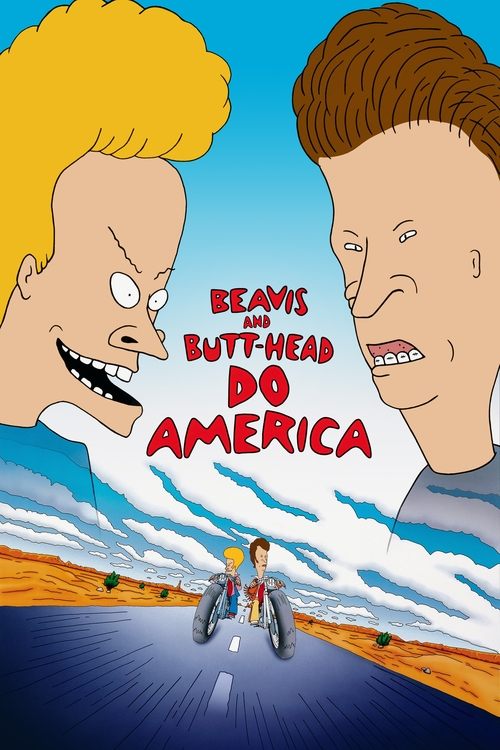
Beavis and Butt-Head Do America
Slacker duo Beavis and Butt-Head wake to discover their TV has been stolen. Their search for a new one takes them on a clueless adventure across America, during which they manage to accidentally become America's most wanted.
Despite its limited budget of $12.0M, Beavis and Butt-Head Do America became a solid performer, earning $63.1M worldwide—a 426% return. The film's compelling narrative engaged audiences, showing that strong storytelling can transcend budget limitations.
1 win & 4 nominations


Plot Structure
Story beats plotted across runtime


Narrative Arc
Emotional journey through the story's key moments
Story Circle
Blueprint 15-beat structure
Arcplot Score Breakdown
Weighted: Precision (70%) + Arc (15%) + Theme (15%)
Beavis and Butt-Head Do America (1996) showcases deliberately positioned narrative architecture, characteristic of Mike Judge's storytelling approach. This structural analysis examines how the film's 15-point plot structure maps to proven narrative frameworks across 1 hour and 21 minutes. With an Arcplot score of 7.2, the film balances conventional beats with creative variation.
Characters
Cast & narrative archetypes

Beavis
Butt-Head
Muddy Grimes
Dallas Grimes
Agent Flemming
Agent Bork
Tom Anderson
Main Cast & Characters
Beavis
Played by Mike Judge
A hyperactive, dim-witted teenager with pyromaniacal tendencies who embarks on a cross-country journey with his friend.
Butt-Head
Played by Mike Judge
A lazy, cynical teenager who leads his friend Beavis on misadventures with his crude humor and low intelligence.
Muddy Grimes
Played by Bruce Willis
A criminal who hires the duo to kill his wife, setting the main plot in motion through mistaken identity.
Dallas Grimes
Played by Demi Moore
Muddy's wife who unknowingly uses Beavis and Butt-Head as unwitting mules to transport a biological weapon.
Agent Flemming
Played by Robert Stack
An overzealous ATF agent who becomes obsessed with tracking down the duo, believing them to be domestic terrorists.
Agent Bork
Played by Eric Bogosian
Agent Flemming's more level-headed partner who tries to bring reason to the investigation.
Tom Anderson
Played by Mike Judge
Beavis and Butt-Head's elderly neighbor who encounters them during their travels across America.
Structural Analysis
The Status Quo at 1 minutes (1% through the runtime) establishes Beavis and Butt-Head sit on their couch watching TV, laughing at music videos in their typical brain-dead state. Their world consists entirely of TV, minimal awareness, and crude commentary.. Of particular interest, this early placement immediately immerses viewers in the story world.
The inciting incident occurs at 9 minutes when Muddy shows them a photo of his wife Dallas and offers payment. The boys misinterpret this as an opportunity to "score" and eagerly accept, completely misunderstanding they've been hired as assassins.. At 12% through the film, this Disruption aligns precisely with traditional story structure. This beat shifts the emotional landscape, launching the protagonist into the central conflict.
The First Threshold at 20 minutes marks the transition into Act II, occurring at 24% of the runtime. This indicates the protagonist's commitment to Beavis and Butt-Head board a bus to Las Vegas, actively choosing to leave Highland for the first time. This irreversible decision launches them into the wider world and their cross-country adventure., moving from reaction to action.
At 41 minutes, the Midpoint arrives at 50% of the runtime—precisely centered, creating perfect narrative symmetry. Structural examination shows that this crucial beat False victory: The boys arrive at the Las Vegas hotel and find Dallas's room. They believe they're about to "score," but this seeming success actually puts them deeper in danger as multiple parties converge., fundamentally raising what's at risk. The emotional intensity shifts, dividing the narrative into clear before-and-after phases.
The Collapse moment at 60 minutes (74% through) represents the emotional nadir. Here, Beavis and Butt-Head are cornered by federal agents at the Hoover Dam. Facing armed agents who believe they're terrorists, they're moments from being killed. The "whiff of death" is literal - they're about to be shot., demonstrates the protagonist at their lowest point. This beat's placement in the final quarter sets up the climactic reversal.
The Second Threshold at 64 minutes initiates the final act resolution at 79% of the runtime. Agent Hurly realizes Beavis and Butt-Head are just idiots, not terrorists. The misunderstanding clears, allowing resolution. The boys are recognized for inadvertently recovering the weapon and receive a commendation., demonstrating the transformation achieved throughout the journey.
Emotional Journey
Beavis and Butt-Head Do America's emotional architecture traces a deliberate progression across 15 carefully calibrated beats.
Narrative Framework
This structural analysis employs systematic plot point analysis that identifies crucial turning points. By mapping Beavis and Butt-Head Do America against these established plot points, we can identify how Mike Judge utilizes or subverts traditional narrative conventions. The plot point approach reveals not only adherence to structural principles but also creative choices that distinguish Beavis and Butt-Head Do America within the animation genre.
Mike Judge's Structural Approach
Among the 3 Mike Judge films analyzed on Arcplot, the average structural score is 7.4, reflecting strong command of classical structure. Beavis and Butt-Head Do America takes a more unconventional approach compared to the director's typical style. For comparative analysis, explore the complete Mike Judge filmography.
Comparative Analysis
Additional animation films include The Bad Guys, Puss in Boots and Violet Evergarden: Eternity and the Auto Memory Doll. For more Mike Judge analyses, see Extract, Office Space.
Plot Points by Act
Act I
SetupStatus Quo
Beavis and Butt-Head sit on their couch watching TV, laughing at music videos in their typical brain-dead state. Their world consists entirely of TV, minimal awareness, and crude commentary.
Theme
The duo discovers their TV has been stolen. Butt-Head remarks "We're never gonna score now" - establishing the film's ironic theme about misguided quests and misunderstanding what truly matters.
Worldbuilding
The boys wander Highland searching for a TV, showcasing their idiocy and crude worldview. They end up at a seedy motel where Muddy Grimes mistakes them for hired killers and offers them money to "do" his wife in Las Vegas.
Disruption
Muddy shows them a photo of his wife Dallas and offers payment. The boys misinterpret this as an opportunity to "score" and eagerly accept, completely misunderstanding they've been hired as assassins.
Resistance
The boys hitchhike toward Vegas, encountering various characters. Meanwhile, Dallas (unaware of the hit) is recruited by ATF agents as an unwitting mule to transport a biological weapon, setting up parallel storylines.
Act II
ConfrontationFirst Threshold
Beavis and Butt-Head board a bus to Las Vegas, actively choosing to leave Highland for the first time. This irreversible decision launches them into the wider world and their cross-country adventure.
Mirror World
The boys meet Dallas on the plane to Vegas. She represents everything they desire but cannot comprehend. Her subplot carries the theme of misunderstanding and misplaced intentions.
Premise
The "promise of the premise" - Beavis and Butt-Head unleashed on America. Road trip chaos, hallucination sequences, encounters with tourists, and escalating misadventures while federal agents pursue them as terrorist threats.
Midpoint
False victory: The boys arrive at the Las Vegas hotel and find Dallas's room. They believe they're about to "score," but this seeming success actually puts them deeper in danger as multiple parties converge.
Opposition
Complications intensify: Dallas inadvertently hides the bioweapon unit in Beavis's pants; federal agents close in; Muddy pursues them; the boys remain obliviously focused on their original misguided goal as threats multiply.
Collapse
Beavis and Butt-Head are cornered by federal agents at the Hoover Dam. Facing armed agents who believe they're terrorists, they're moments from being killed. The "whiff of death" is literal - they're about to be shot.
Crisis
The standoff continues as agents prepare to eliminate the perceived threat. In darkness before resolution, the boys' ignorance paradoxically becomes their salvation as the truth slowly emerges.
Act III
ResolutionSecond Threshold
Agent Hurly realizes Beavis and Butt-Head are just idiots, not terrorists. The misunderstanding clears, allowing resolution. The boys are recognized for inadvertently recovering the weapon and receive a commendation.
Synthesis
White House ceremony where the boys are awarded by President Clinton. They receive monetary compensation and return home to Highland as accidental heroes, having survived their adventure through sheer stupidity.
Transformation
Beavis and Butt-Head sit on their couch with a new TV bought with reward money, watching music videos and laughing. The closing image mirrors the opening but they've gained nothing - perfect anti-arc for comedic effect.