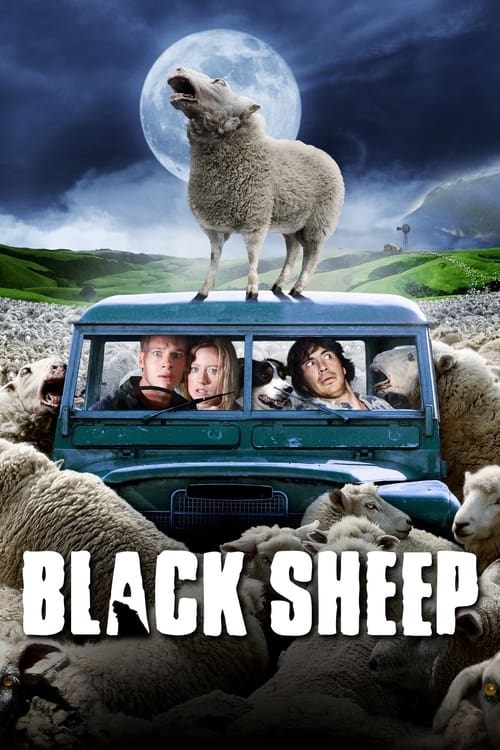
Black Sheep
After a childhood prank by his brother Angus causes Henry to develop a phobia of sheep, he must step up to the onslaught of a genetically-mutated man-eating flock with the help of his friend and a young environmentalist.
The film earned $5.0M at the global box office.
5 wins & 5 nominations


Plot Structure
Story beats plotted across runtime


Narrative Arc
Emotional journey through the story's key moments
Story Circle
Blueprint 15-beat structure
Arcplot Score Breakdown
Weighted: Precision (70%) + Arc (15%) + Theme (15%)
Black Sheep (2006) exhibits precise narrative architecture, characteristic of Jonathan King's storytelling approach. This structural analysis examines how the film's 15-point plot structure maps to proven narrative frameworks across 1 hour and 26 minutes. With an Arcplot score of 7.0, the film balances conventional beats with creative variation.
Characters
Cast & narrative archetypes

Henry Oldfield
Angus Oldfield
Experience
Tucker
Grant
Main Cast & Characters
Henry Oldfield
Played by Nathan Meister
A young man who returns to his family's sheep farm to confront his childhood trauma and oviphobia, only to face genetically-engineered killer sheep.
Angus Oldfield
Played by Peter Feeney
Henry's ruthless older brother who runs the family farm and conducts unethical genetic experiments on sheep to create the perfect specimen.
Experience
Played by Danielle Mason
An idealistic environmental activist who initially opposes the farm's practices but teams up with Henry to survive the sheep apocalypse.
Tucker
Played by Tammy Davis
Henry's loyal friend and farm manager who provides comic relief and local knowledge while helping navigate the crisis.
Grant
Played by Oliver Driver
Experience's activist partner who gets infected early and becomes a human-sheep hybrid, serving as a cautionary example of the experiments' dangers.
Structural Analysis
The Status Quo at 1 minutes (1% through the runtime) establishes Young Henry witnesses his brother Angus traumatize him with a dead sheep, establishing his oviphobia (fear of sheep) and showing the family farm as a place of childhood trauma rather than comfort.. Notably, this early placement immediately immerses viewers in the story world.
The inciting incident occurs at 11 minutes when Two animal rights activists, Experience and Tucker, break into Angus's laboratory and accidentally release a genetically modified lamb specimen, which escapes into the wild and bites Tucker, beginning the outbreak.. At 12% through the film, this Disruption aligns precisely with traditional story structure. This beat shifts the emotional landscape, launching the protagonist into the central conflict.
The First Threshold at 21 minutes marks the transition into Act II, occurring at 25% of the runtime. This illustrates the protagonist's commitment to Henry makes the active choice to help Experience survive and investigate what's happening, abandoning his plan to simply sell and leave. They venture into the countryside together as sheep attacks escalate., moving from reaction to action.
At 42 minutes, the Midpoint arrives at 49% of the runtime—precisely centered, creating perfect narrative symmetry. Of particular interest, this crucial beat False defeat: Henry and Experience discover the scale of the infection - the mutant sheep are spreading rapidly, and those bitten are transforming into sheep-human hybrids. They realize Angus plans to unveil his "discovery" at a public event, which will cause catastrophe., fundamentally raising what's at risk. The emotional intensity shifts, dividing the narrative into clear before-and-after phases.
The Collapse moment at 64 minutes (74% through) represents the emotional nadir. Here, All seems lost when the sheep overrun the farm during Angus's presentation. Mass transformation begins. Tucker fully becomes a were-sheep. Henry is surrounded by his worst fear made real, and it appears too late to stop the outbreak., reveals the protagonist at their lowest point. This beat's placement in the final quarter sets up the climactic reversal.
The Second Threshold at 68 minutes initiates the final act resolution at 79% of the runtime. Henry synthesizes his knowledge: they discover that the genetic experiment can be reversed. He chooses to face his fear directly, confronting both the sheep and his brother Angus to stop the outbreak at its source., demonstrating the transformation achieved throughout the journey.
Emotional Journey
Black Sheep's emotional architecture traces a deliberate progression across 15 carefully calibrated beats.
Narrative Framework
This structural analysis employs structural analysis methodology used to understand storytelling architecture. By mapping Black Sheep against these established plot points, we can identify how Jonathan King utilizes or subverts traditional narrative conventions. The plot point approach reveals not only adherence to structural principles but also creative choices that distinguish Black Sheep within the horror genre.
Comparative Analysis
Additional horror films include Thinner, A Nightmare on Elm Street and Mary Reilly.
Plot Points by Act
Act I
SetupStatus Quo
Young Henry witnesses his brother Angus traumatize him with a dead sheep, establishing his oviphobia (fear of sheep) and showing the family farm as a place of childhood trauma rather than comfort.
Theme
Experience, a hippie activist, states the theme: "We have to face our fears." The film explores confronting past trauma and the consequences of tampering with nature.
Worldbuilding
Adult Henry returns to the family sheep farm in New Zealand to sell his share to his brother Angus. We learn Angus has turned the farm into a genetic engineering facility. Henry's therapist has helped him manage his sheep phobia, and he plans to leave for good.
Disruption
Two animal rights activists, Experience and Tucker, break into Angus's laboratory and accidentally release a genetically modified lamb specimen, which escapes into the wild and bites Tucker, beginning the outbreak.
Resistance
Henry tries to avoid the chaos and leave the farm, but encounters Experience fleeing from the infected sheep. He resists getting involved, wanting only to complete the sale and escape. The mutant sheep begin attacking and transforming victims.
Act II
ConfrontationFirst Threshold
Henry makes the active choice to help Experience survive and investigate what's happening, abandoning his plan to simply sell and leave. They venture into the countryside together as sheep attacks escalate.
Mirror World
Henry and Experience form an unlikely partnership. She represents environmental consciousness and facing problems head-on, contrasting with his avoidance. Their relationship will teach Henry to confront rather than flee.
Premise
The "fun and games" of the horror-comedy premise: mutant killer sheep terrorizing the countryside. Henry and Experience flee from increasingly absurd and gory sheep attacks while trying to reach safety and warn others. Tucker begins transforming into a were-sheep.
Midpoint
False defeat: Henry and Experience discover the scale of the infection - the mutant sheep are spreading rapidly, and those bitten are transforming into sheep-human hybrids. They realize Angus plans to unveil his "discovery" at a public event, which will cause catastrophe.
Opposition
Stakes escalate as the infection spreads. Angus's presentation event approaches. Henry must overcome his fear of sheep to fight them. His brother's ruthless ambition and the growing horde of were-sheep close in. Henry's avoidance strategy no longer works.
Collapse
All seems lost when the sheep overrun the farm during Angus's presentation. Mass transformation begins. Tucker fully becomes a were-sheep. Henry is surrounded by his worst fear made real, and it appears too late to stop the outbreak.
Crisis
Henry's dark night of the soul. He must choose between fleeing his fear once again or finally facing it. The infection seems unstoppable. He processes the death of his father and the betrayal of his brother.
Act III
ResolutionSecond Threshold
Henry synthesizes his knowledge: they discover that the genetic experiment can be reversed. He chooses to face his fear directly, confronting both the sheep and his brother Angus to stop the outbreak at its source.
Synthesis
The finale: Henry confronts Angus and the mutant sheep horde. He uses his knowledge of the farm and newfound courage to destroy the genetic samples and stop the infection. Epic battle between humans and were-sheep culminates in Henry facing his ultimate fear.
Transformation
Final image mirrors the opening: Henry is back on the farm with sheep, but transformed. Instead of running in fear, he stands calmly among them, having conquered his phobia by facing it directly. The farm is now his, reclaimed from his brother.