Bolt
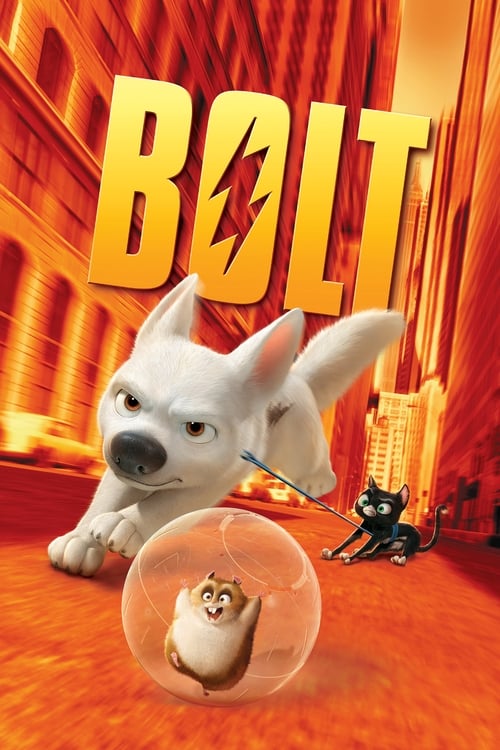
Bolt is the star of the biggest show in Hollywood. The only problem is, he thinks it's real. After he's accidentally shipped to New York City and separated from Penny, his beloved co-star and owner, Bolt must harness all his "super powers" to find a way home.
Despite a blockbuster budget of $150.0M, Bolt became a financial success, earning $310.0M worldwide—a 107% return. This commercial performance validated the ambitious narrative scope, proving that audiences embrace unique voice even at blockbuster scale.
Nominated for 1 Oscar. 1 win & 32 nominations


Plot Structure
Story beats plotted across runtime


Narrative Arc
Emotional journey through the story's key moments
Story Circle
Blueprint 15-beat structure
Arcplot Score Breakdown
Weighted: Precision (70%) + Arc (15%) + Theme (15%)
Bolt (2008) reveals strategically placed narrative architecture, characteristic of Chris Williams's storytelling approach. This structural analysis examines how the film's 15-point plot structure maps to proven narrative frameworks across 1 hour and 38 minutes. With an Arcplot score of 6.4, the film takes an unconventional approach to traditional narrative frameworks.
Characters
Cast & narrative archetypes

Bolt
Mittens
Rhino
Penny
Main Cast & Characters
Bolt
Played by John Travolta
A white German Shepherd who believes his TV show superpowers are real and embarks on a cross-country journey to save his owner Penny.
Mittens
Played by Susie Essman
A street-smart alley cat who becomes Bolt's reluctant guide to the real world and teaches him what it means to be a normal dog.
Rhino
Played by Mark Walton
An enthusiastic, TV-obsessed hamster in a plastic ball who idolizes Bolt and joins him on his adventure as his biggest fan.
Penny
Played by Miley Cyrus
Bolt's loving owner and co-star on the TV show who is devastated when Bolt goes missing and desperately searches for him.
Structural Analysis
The Status Quo at 1 minutes (1% through the runtime) establishes Bolt as an adorable puppy is adopted by young Penny, establishing their loving bond before the artificial TV world takes over.. The analysis reveals that this early placement immediately immerses viewers in the story world.
The inciting incident occurs at 12 minutes when Bolt, believing Penny has been kidnapped for real, accidentally gets shipped to New York in a box, ejecting him from his controlled TV world into reality.. At 13% through the film, this Disruption is delayed, allowing extended setup of the story world. This beat shifts the emotional landscape, launching the protagonist into the central conflict.
The First Threshold at 25 minutes marks the transition into Act II, occurring at 25% of the runtime. This demonstrates the protagonist's commitment to Bolt actively chooses to embark on the cross-country journey with Mittens as his "guide," leaving New York behind to find Penny, fully committed to the quest., moving from reaction to action.
At 49 minutes, the Midpoint arrives at 50% of the runtime—precisely centered, creating perfect narrative symmetry. Significantly, this crucial beat Bolt witnesses Penny on TV with a replacement dog, a false defeat that makes him believe he's been replaced and that his relationship with Penny wasn't special., fundamentally raising what's at risk. The emotional intensity shifts, dividing the narrative into clear before-and-after phases.
The Collapse moment at 74 minutes (75% through) represents the emotional nadir. Here, Mittens confronts Bolt with the truth—he's just an actor, not a superhero. Bolt's entire identity dies. He collapses emotionally, losing all hope and purpose., reveals the protagonist at their lowest point. This beat's placement in the final quarter sets up the climactic reversal.
The Second Threshold at 78 minutes initiates the final act resolution at 79% of the runtime. Bolt realizes Penny truly loves him for who he is, not for superpowers. He doesn't need to be special—just himself. He races to the studio to find her., demonstrating the transformation achieved throughout the journey.
Emotional Journey
Bolt's emotional architecture traces a deliberate progression across 15 carefully calibrated beats.
Narrative Framework
This structural analysis employs a 15-point narrative structure framework that maps key story moments. By mapping Bolt against these established plot points, we can identify how Chris Williams utilizes or subverts traditional narrative conventions. The plot point approach reveals not only adherence to structural principles but also creative choices that distinguish Bolt within the animation genre.
Chris Williams's Structural Approach
Among the 3 Chris Williams films analyzed on Arcplot, the average structural score is 7.2, reflecting strong command of classical structure. Bolt takes a more unconventional approach compared to the director's typical style. For comparative analysis, explore the complete Chris Williams filmography.
Comparative Analysis
Additional animation films include The Bad Guys, Puss in Boots and Violet Evergarden: Eternity and the Auto Memory Doll. For more Chris Williams analyses, see The Sea Beast, Big Hero 6.
Plot Points by Act
Act I
SetupStatus Quo
Bolt as an adorable puppy is adopted by young Penny, establishing their loving bond before the artificial TV world takes over.
Theme
The director insists Bolt must believe it's real for the show to work, establishing the central lie that authentic love requires extraordinary powers.
Worldbuilding
Bolt's manufactured world on the TV set where he believes he has superpowers and must constantly save Penny from the "green-eyed man." His entire reality is a performance.
Disruption
Bolt, believing Penny has been kidnapped for real, accidentally gets shipped to New York in a box, ejecting him from his controlled TV world into reality.
Resistance
Bolt struggles to understand why his powers don't work, encounters cynical alley cat Mittens, and forces her to guide him back to Hollywood. He resists accepting reality.
Act II
ConfrontationFirst Threshold
Bolt actively chooses to embark on the cross-country journey with Mittens as his "guide," leaving New York behind to find Penny, fully committed to the quest.
Mirror World
Rhino the hamster joins as Bolt's super-fan, while Mittens begins teaching Bolt how to be a normal dog—the thematic counterpoint of authenticity vs. performance.
Premise
The road trip comedy delivers on the premise: Bolt slowly learns real dog behaviors (begging, fetching, enjoying simple pleasures) while bonding genuinely with Mittens and Rhino.
Midpoint
Bolt witnesses Penny on TV with a replacement dog, a false defeat that makes him believe he's been replaced and that his relationship with Penny wasn't special.
Opposition
Bolt becomes depressed and withdrawn. His flaws (pride, delusion) catch up as Mittens tries to convince him he's a regular dog. Tension builds as they near Hollywood.
Collapse
Mittens confronts Bolt with the truth—he's just an actor, not a superhero. Bolt's entire identity dies. He collapses emotionally, losing all hope and purpose.
Crisis
Bolt wanders alone in despair, processing the death of his false identity. Mittens and Rhino are gone. He's just a regular dog with no special powers.
Act III
ResolutionSecond Threshold
Bolt realizes Penny truly loves him for who he is, not for superpowers. He doesn't need to be special—just himself. He races to the studio to find her.
Synthesis
Bolt uses real-dog abilities (his powerful bark, determination, genuine love) to rescue Penny from the burning studio set, proving ordinary love is the real superpower.
Transformation
Bolt and Penny play together in their new rural home, living authentically. No cameras, no superpowers, no performance—just genuine connection. True happiness.