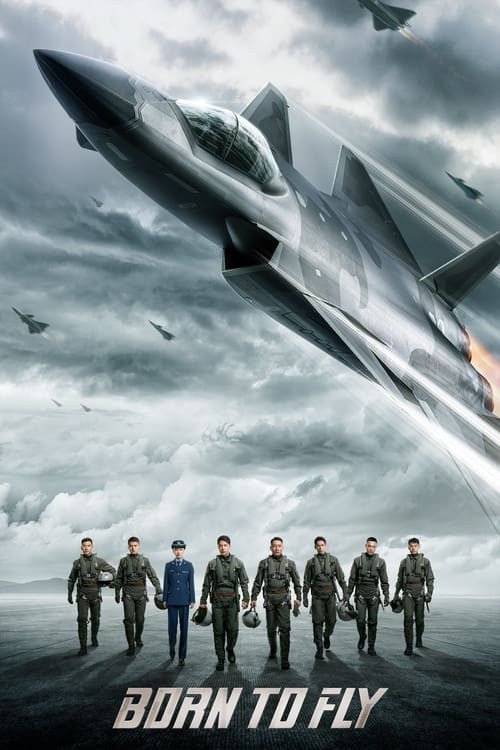
Born to Fly
A talented trainee pilot is given the opportunity to virtually test the latest fighter jet, which pushes him to his limits.
The film earned $80.5M at the global box office.


Plot Structure
Story beats plotted across runtime


Narrative Arc
Emotional journey through the story's key moments
Story Circle
Blueprint 15-beat structure
Arcplot Score Breakdown
Weighted: Precision (70%) + Arc (15%) + Theme (15%)
Born to Fly (2023) demonstrates precise plot construction, characteristic of Liu Xiaoshi's storytelling approach. This structural analysis examines how the film's 15-point plot structure maps to proven narrative frameworks across 2 hours and 7 minutes. With an Arcplot score of 7.3, the film balances conventional beats with creative variation.
Characters
Cast & narrative archetypes

Lei Yu
Zhang Ting
Yue Tianlin
Deng Fang
Shen Tian
Main Cast & Characters
Lei Yu
Played by Wang Yibo
A talented young test pilot who must prove himself among elite aviators while pushing the boundaries of experimental aircraft.
Zhang Ting
Played by Hu Jun
Experienced senior test pilot and squadron leader who mentors younger pilots while dealing with the risks of testing cutting-edge technology.
Yue Tianlin
Played by Yu Shi
Chief test pilot and veteran aviator who leads the test flight program with unwavering dedication to advancing Chinese aviation.
Deng Fang
Played by Zhou Zhuocheng
Fellow test pilot and Lei Yu's friend who provides support and camaraderie through dangerous missions.
Shen Tian
Played by Yu适
Engineer and technical specialist who works closely with pilots to develop and refine aircraft systems.
Structural Analysis
The Status Quo at 2 minutes (1% through the runtime) establishes Lei Yu is an experienced test pilot conducting routine flight tests, confident in his abilities and established reputation within the test flight brigade.. Of particular interest, this early placement immediately immerses viewers in the story world.
The inciting incident occurs at 16 minutes when A catastrophic test flight accident occurs—either Lei Yu experiences a near-fatal incident or witnesses a fellow pilot's crash, exposing the deadly risks and the urgent need for a new generation fighter jet.. At 13% through the film, this Disruption is delayed, allowing extended setup of the story world. This beat shifts the emotional landscape, launching the protagonist into the central conflict.
The First Threshold at 32 minutes marks the transition into Act II, occurring at 25% of the runtime. This illustrates the protagonist's commitment to Lei Yu makes the active choice to join the elite team testing the new fighter jet prototype, committing himself to the dangerous mission despite his fears and the known risks., moving from reaction to action.
At 64 minutes, the Midpoint arrives at 50% of the runtime—precisely centered, creating perfect narrative symmetry. Structural examination shows that this crucial beat A major breakthrough occurs—a successful test flight demonstrates the aircraft's revolutionary capabilities, and the team believes they're on track for deployment. False victory: they think they've solved the main challenges, but haven't confronted the ultimate test., fundamentally raising what's at risk. The emotional intensity shifts, dividing the narrative into clear before-and-after phases.
The Collapse moment at 95 minutes (75% through) represents the emotional nadir. Here, A critical test flight goes catastrophically wrong—either Lei Yu crashes and nearly dies, or a teammate is killed, representing the "whiff of death." The program appears doomed, and Lei Yu is broken physically or emotionally., illustrates the protagonist at their lowest point. This beat's placement in the final quarter sets up the climactic reversal.
The Second Threshold at 102 minutes initiates the final act resolution at 80% of the runtime. Lei Yu receives crucial insight—either technical data revealing the solution, or an emotional breakthrough from his mirror world relationship—that allows him to synthesize his experience with new understanding. He sees how to succeed where others failed., demonstrating the transformation achieved throughout the journey.
Emotional Journey
Born to Fly's emotional architecture traces a deliberate progression across 15 carefully calibrated beats.
Narrative Framework
This structural analysis employs a 15-point narrative structure framework that maps key story moments. By mapping Born to Fly against these established plot points, we can identify how Liu Xiaoshi utilizes or subverts traditional narrative conventions. The plot point approach reveals not only adherence to structural principles but also creative choices that distinguish Born to Fly within the action genre.
Comparative Analysis
Additional action films include The Bad Guys, Puss in Boots and Venom: The Last Dance.
Plot Points by Act
Act I
SetupStatus Quo
Lei Yu is an experienced test pilot conducting routine flight tests, confident in his abilities and established reputation within the test flight brigade.
Theme
A senior officer or mentor figure states that true excellence in aviation isn't about individual glory, but about serving something greater—the advancement of the nation's aerospace capabilities and the safety of future pilots.
Worldbuilding
Introduction to the test flight brigade, the high-stakes world of experimental aviation, the team dynamics, Lei Yu's relationships with fellow pilots, and the demanding nature of testing cutting-edge aircraft technology.
Disruption
A catastrophic test flight accident occurs—either Lei Yu experiences a near-fatal incident or witnesses a fellow pilot's crash, exposing the deadly risks and the urgent need for a new generation fighter jet.
Resistance
Lei Yu grapples with fear and doubt following the accident. He debates whether to continue as a test pilot, receives guidance from mentors, and learns about the ambitious new aircraft project that could prevent future tragedies.
Act II
ConfrontationFirst Threshold
Lei Yu makes the active choice to join the elite team testing the new fighter jet prototype, committing himself to the dangerous mission despite his fears and the known risks.
Mirror World
Lei Yu develops a deeper connection with a fellow pilot, engineer, or love interest who embodies the thematic values of sacrifice and collective purpose, challenging his individualistic approach.
Premise
The "fun and games" of test pilot life—intense training sequences, pushing the experimental aircraft to its limits, camaraderie among the team, technical problem-solving, and thrilling aerial sequences that showcase the promise of the new technology.
Midpoint
A major breakthrough occurs—a successful test flight demonstrates the aircraft's revolutionary capabilities, and the team believes they're on track for deployment. False victory: they think they've solved the main challenges, but haven't confronted the ultimate test.
Opposition
Escalating technical problems emerge with the aircraft. Political pressure mounts for faster deployment. The team faces internal conflicts, Lei Yu's old habits and flaws resurface, and the margin for error shrinks as they approach final testing phases.
Collapse
A critical test flight goes catastrophically wrong—either Lei Yu crashes and nearly dies, or a teammate is killed, representing the "whiff of death." The program appears doomed, and Lei Yu is broken physically or emotionally.
Crisis
Lei Yu faces his dark night of the soul, confronting his deepest fears about failure, death, and inadequacy. He processes the loss and questions whether the sacrifice is worth it.
Act III
ResolutionSecond Threshold
Lei Yu receives crucial insight—either technical data revealing the solution, or an emotional breakthrough from his mirror world relationship—that allows him to synthesize his experience with new understanding. He sees how to succeed where others failed.
Synthesis
The finale: Lei Yu pilots the corrected aircraft in the ultimate test flight, applying everything he's learned. He faces extreme danger, executes near-impossible maneuvers, and proves both the aircraft and himself, securing the program's success.
Transformation
Lei Yu lands successfully, transformed from an individualistic pilot seeking personal glory into a selfless test pilot who understands his role in the larger mission. The closing image mirrors the opening but shows his evolution—no longer flying for himself, but for those who will come after.