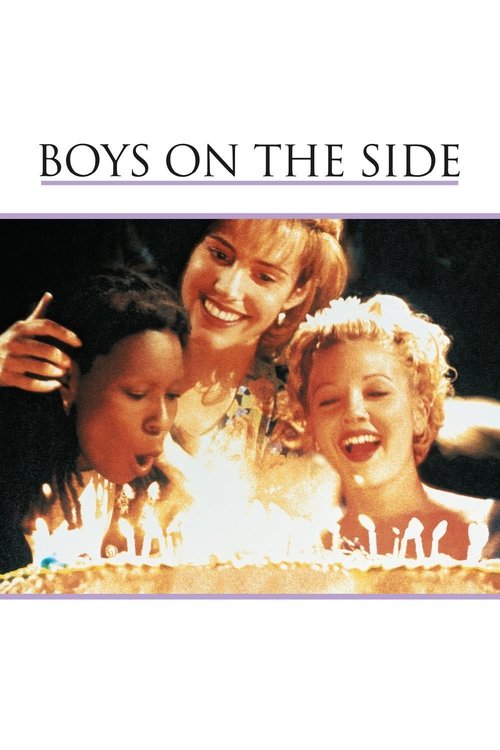
Boys on the Side
After breaking up with her girlfriend, a nightclub singer, Jane, answers a personal ad from Robin, a real estate agent with AIDS, seeking a cross-country travel partner. On their journey from New York City to Los Angeles, the two stop by Pittsburgh to pick up Jane's friend Holly, who is trying to escape an abusive relationship. With three distinct personalities, the women must overcome their differences to help one another.
Working with a mid-range budget of $21.0M, the film achieved a steady performer with $23.4M in global revenue (+12% profit margin).
1 win & 2 nominations


Plot Structure
Story beats plotted across runtime


Narrative Arc
Emotional journey through the story's key moments
Story Circle
Blueprint 15-beat structure
Arcplot Score Breakdown
Weighted: Precision (70%) + Arc (15%) + Theme (15%)
Boys on the Side (1995) exhibits meticulously timed story structure, characteristic of Herbert Ross's storytelling approach. This structural analysis examines how the film's 15-point plot structure maps to proven narrative frameworks across 1 hour and 55 minutes. With an Arcplot score of 7.4, the film balances conventional beats with creative variation.
Characters
Cast & narrative archetypes

Jane DeLuca
Robin Nickerson
Holly Pulchik
Abe Lincoln
Main Cast & Characters
Jane DeLuca
Played by Whoopi Goldberg
A tough, independent singer fleeing New York who becomes the glue holding three women together on a cross-country journey.
Robin Nickerson
Played by Mary-Louise Parker
A pregnant real estate agent escaping an abusive relationship who finds strength and friendship on the road.
Holly Pulchik
Played by Drew Barrymore
A free-spirited, optimistic woman living with AIDS who learns to face reality while finding deep connection with friends.
Abe Lincoln
Played by Matthew McConaughey
A kind, patient police officer who falls in love with Robin and offers stability and acceptance.
Structural Analysis
The Status Quo at 1 minutes (1% through the runtime) establishes Jane performs at a nightclub in New York, struggling to make ends meet as a lounge singer. She's lonely, talented but unrecognized, living a solitary existence in the city.. Of particular interest, this early placement immediately immerses viewers in the story world.
The inciting incident occurs at 13 minutes when Jane agrees to drive Robin cross-country to California. This seemingly simple arrangement disrupts both their isolated existences and sets the journey in motion.. At 11% through the film, this Disruption aligns precisely with traditional story structure. This beat shifts the emotional landscape, launching the protagonist into the central conflict.
The First Threshold at 28 minutes marks the transition into Act II, occurring at 24% of the runtime. This reveals the protagonist's commitment to Holly kills her abusive boyfriend in self-defense at a rest stop. The three women must now actively choose to protect each other and flee together, transforming from strangers into accomplices., moving from reaction to action.
At 57 minutes, the Midpoint arrives at 49% of the runtime—precisely centered, creating perfect narrative symmetry. Structural examination shows that this crucial beat Robin tells Abe about her HIV status and he accepts her completely, proposing marriage. It's a moment of false victory - true love seems to conquer all, but the reality of Robin's illness looms., fundamentally raising what's at risk. The emotional intensity shifts, dividing the narrative into clear before-and-after phases.
The Collapse moment at 84 minutes (73% through) represents the emotional nadir. Here, Robin collapses and is hospitalized with a severe AIDS-related illness. The literal "whiff of death" - the women must confront that Robin is dying and their time together is limited., indicates the protagonist at their lowest point. This beat's placement in the final quarter sets up the climactic reversal.
The Second Threshold at 92 minutes initiates the final act resolution at 80% of the runtime. The women choose to be present for Robin's final days. Holly accepts responsibility for her past. Jane opens her heart despite knowing she'll lose Robin. They synthesize strength from their bond., demonstrating the transformation achieved throughout the journey.
Emotional Journey
Boys on the Side's emotional architecture traces a deliberate progression across 15 carefully calibrated beats.
Narrative Framework
This structural analysis employs a 15-point narrative structure framework that maps key story moments. By mapping Boys on the Side against these established plot points, we can identify how Herbert Ross utilizes or subverts traditional narrative conventions. The plot point approach reveals not only adherence to structural principles but also creative choices that distinguish Boys on the Side within the comedy genre.
Herbert Ross's Structural Approach
Among the 8 Herbert Ross films analyzed on Arcplot, the average structural score is 7.3, reflecting strong command of classical structure. Boys on the Side represents one of the director's most structurally precise works. For comparative analysis, explore the complete Herbert Ross filmography.
Comparative Analysis
Additional comedy films include The Bad Guys, Ella Enchanted and The Evening Star. For more Herbert Ross analyses, see Funny Lady, The Secret of My Success and Undercover Blues.
Plot Points by Act
Act I
SetupStatus Quo
Jane performs at a nightclub in New York, struggling to make ends meet as a lounge singer. She's lonely, talented but unrecognized, living a solitary existence in the city.
Theme
A conversation about connection and chosen family: "Sometimes the family you make is stronger than the one you're born into." The theme of found sisterhood and supporting each other through crisis is established.
Worldbuilding
Jane's life in NYC is established - her career struggles, loneliness, and desire for change. Robin, a real estate agent, is introduced dealing with her abusive boyfriend and discovering she's HIV-positive. Holly is shown as a free-spirited wild child leaving behind troubles.
Disruption
Jane agrees to drive Robin cross-country to California. This seemingly simple arrangement disrupts both their isolated existences and sets the journey in motion.
Resistance
The road trip begins awkwardly. Jane and Robin are strangers navigating each other's personalities. They pick up Holly as a hitchhiker. Robin debates whether to reveal her HIV status. The three women resist true connection.
Act II
ConfrontationFirst Threshold
Holly kills her abusive boyfriend in self-defense at a rest stop. The three women must now actively choose to protect each other and flee together, transforming from strangers into accomplices.
Mirror World
The women arrive in Tucson and meet Abe, a kind police detective who becomes Robin's love interest. He represents the possibility of acceptance, love, and family even in the face of terminal illness.
Premise
The three women build a life together in Tucson. They find jobs, create a home, and form a genuine sisterhood. Robin and Abe fall in love. Holly tries to mature. Jane finds purpose in caring for her friends. This is the "found family" the audience came to see.
Midpoint
Robin tells Abe about her HIV status and he accepts her completely, proposing marriage. It's a moment of false victory - true love seems to conquer all, but the reality of Robin's illness looms.
Opposition
Robin's health deteriorates significantly. The police investigation into Holly's past intensifies. Jane struggles with her own fear of abandonment and loss. The reality of AIDS and mortality closes in on their makeshift family.
Collapse
Robin collapses and is hospitalized with a severe AIDS-related illness. The literal "whiff of death" - the women must confront that Robin is dying and their time together is limited.
Crisis
In the hospital, the women face their darkest fears. Jane and Holly process the impending loss of Robin. They must decide whether to stay and face the pain or run away from it.
Act III
ResolutionSecond Threshold
The women choose to be present for Robin's final days. Holly accepts responsibility for her past. Jane opens her heart despite knowing she'll lose Robin. They synthesize strength from their bond.
Synthesis
The women care for Robin in her final days. Holly faces legal consequences with her friends' support. Jane and Holly prepare to continue living, honoring Robin's memory. Robin dies peacefully surrounded by love.
Transformation
Jane and Holly, now forever bonded as sisters, continue their lives transformed by Robin's love and sacrifice. They are no longer alone - the family they chose has changed them permanently.