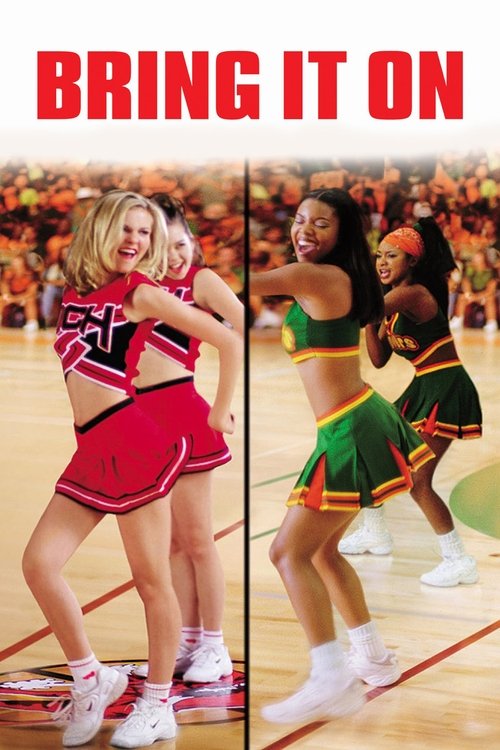
Bring It On
The Toro cheerleading squad from Rancho Carne High School in San Diego has got spirit, spunk, sass and a killer routine that's sure to land them the national championship trophy for the sixth year in a row. But for newly-elected team captain Torrance, the Toros' road to total cheer glory takes a shady turn when she discovers that their perfectly-choreographed routines were in fact stolen.
Despite a moderate budget of $28.0M, Bring It On became a box office success, earning $90.4M worldwide—a 223% return.
2 wins & 7 nominations


Plot Structure
Story beats plotted across runtime


Narrative Arc
Emotional journey through the story's key moments
Story Circle
Blueprint 15-beat structure
Arcplot Score Breakdown
Weighted: Precision (70%) + Arc (15%) + Theme (15%)
Bring It On (2000) demonstrates deliberately positioned narrative architecture, characteristic of Peyton Reed's storytelling approach. This structural analysis examines how the film's 15-point plot structure maps to proven narrative frameworks across 1 hour and 39 minutes. With an Arcplot score of 7.4, the film balances conventional beats with creative variation.
Characters
Cast & narrative archetypes

Torrance Shipman
Isis
Cliff Pantone
Missy Pantone
Aaron
Courtney
Whitney
Main Cast & Characters
Torrance Shipman
Played by Kirsten Dunst
Newly appointed captain of the Rancho Carne Toros cheerleading squad who discovers her team's routines were stolen and must lead them to create original cheers for nationals.
Isis
Played by Gabrielle Union
Captain of the East Compton Clovers, the team whose routines were stolen, who challenges Torrance to compete fairly at nationals.
Cliff Pantone
Played by Jesse Bradford
A laid-back guitarist who becomes Torrance's love interest and challenges her cheerleading worldview.
Missy Pantone
Played by Eliza Dushku
Cliff's twin sister and skilled gymnast who transfers to Rancho Carne and exposes the stolen routines.
Aaron
Played by Richard Hillman
Torrance's college boyfriend who cheats on her while away at school.
Courtney
Played by Clare Kramer
Torrance's best friend and fellow cheerleader on the Toros squad.
Whitney
Played by Nicole Bilderback
A bitchy, entitled cheerleader on the Toros who resents Torrance's leadership.
Structural Analysis
The Status Quo at 1 minutes (1% through the runtime) establishes Torrance dreams of being Toros cheerleading captain, performing a perfect routine. Establishes her world of competitive cheerleading at Rancho Carne High School where she's been a dutiful team member waiting for her moment.. Structural examination shows that this early placement immediately immerses viewers in the story world.
The inciting incident occurs at 12 minutes when New member Missy reveals that the Toros' championship routines were stolen from the East Compton Clovers, an inner-city squad. Everything Torrance believed about her team's five-year winning streak is based on a lie.. At 12% through the film, this Disruption aligns precisely with traditional story structure. This beat shifts the emotional landscape, launching the protagonist into the central conflict.
The First Threshold at 23 minutes marks the transition into Act II, occurring at 23% of the runtime. This reveals the protagonist's commitment to Torrance makes the active choice to create an entirely original routine. She hires a professional choreographer (Sparky Polastri) to help them win legitimately. This is her decision to do things the right way, even though it's harder., moving from reaction to action.
At 48 minutes, the Midpoint arrives at 49% of the runtime—precisely centered, creating perfect narrative symmetry. The analysis reveals that this crucial beat False defeat: At regionals, the Toros discover another team performing their exact "original" routine. Sparky sold them the same choreography he sold to multiple squads. Their path to legitimate victory has failed, and they're back to having nothing unique. The stakes are raised., fundamentally raising what's at risk. The emotional intensity shifts, dividing the narrative into clear before-and-after phases.
The Collapse moment at 70 minutes (70% through) represents the emotional nadir. Here, Torrance's relationship with Aaron dies, and her dream of redemption seems impossible. The team has no money for new choreography and no time to create something original themselves. The "whiff of death": her innocence about her perfect cheerleading world is completely gone., indicates the protagonist at their lowest point. This beat's placement in the final quarter sets up the climactic reversal.
The Second Threshold at 77 minutes initiates the final act resolution at 78% of the runtime. Synthesis and realization: Torrance recognizes they must create their own routine using everything they've learned. They combine their technical skills (Act 1) with the authenticity and integrity they've discovered (Act 2 theme). They choose to compete honestly, win or lose., demonstrating the transformation achieved throughout the journey.
Emotional Journey
Bring It On's emotional architecture traces a deliberate progression across 15 carefully calibrated beats.
Narrative Framework
This structural analysis employs proven narrative structure principles that track dramatic progression. By mapping Bring It On against these established plot points, we can identify how Peyton Reed utilizes or subverts traditional narrative conventions. The plot point approach reveals not only adherence to structural principles but also creative choices that distinguish Bring It On within the comedy genre.
Peyton Reed's Structural Approach
Among the 7 Peyton Reed films analyzed on Arcplot, the average structural score is 7.3, reflecting strong command of classical structure. Bring It On represents one of the director's most structurally precise works. For comparative analysis, explore the complete Peyton Reed filmography.
Comparative Analysis
Additional comedy films include The Bad Guys, Ella Enchanted and The Evening Star. For more Peyton Reed analyses, see Ant-Man and the Wasp: Quantumania, Ant-Man and the Wasp and Yes Man.
Plot Points by Act
Act I
SetupStatus Quo
Torrance dreams of being Toros cheerleading captain, performing a perfect routine. Establishes her world of competitive cheerleading at Rancho Carne High School where she's been a dutiful team member waiting for her moment.
Theme
Missy tells Torrance, "You're being way too cheerful about this." The film's central question: What does it mean to truly win? Is blind enthusiasm and surface perfection enough, or does real victory require integrity and originality?
Worldbuilding
Torrance becomes captain of the Toros. We meet the squad dynamics, see their elite status, meet her boyfriend Aaron and best friend Whitney. The team auditions new members after Carver breaks her leg, establishing their competitive dominance and Torrance's leadership challenge.
Disruption
New member Missy reveals that the Toros' championship routines were stolen from the East Compton Clovers, an inner-city squad. Everything Torrance believed about her team's five-year winning streak is based on a lie.
Resistance
Torrance debates what to do. She visits the Clovers and meets their captain Isis, who confronts her about the theft. Torrance struggles with whether to tell her team, faces resistance from Whitney who wants to keep using the routines, and grapples with her responsibility as the new captain.
Act II
ConfrontationFirst Threshold
Torrance makes the active choice to create an entirely original routine. She hires a professional choreographer (Sparky Polastri) to help them win legitimately. This is her decision to do things the right way, even though it's harder.
Mirror World
Cliff, Missy's brother, becomes Torrance's love interest and thematic mirror. He challenges her superficial world, questions cheerleading's value, and represents authenticity versus performance. Their relationship will teach her about being genuine.
Premise
The promise of the premise: watching the Toros learn and struggle with new routines. Sparky choreographs a routine, they practice intensely, Torrance's relationship with Cliff develops, and they prepare for regionals. The fun of cheerleading competition and high school romance.
Midpoint
False defeat: At regionals, the Toros discover another team performing their exact "original" routine. Sparky sold them the same choreography he sold to multiple squads. Their path to legitimate victory has failed, and they're back to having nothing unique. The stakes are raised.
Opposition
Pressure intensifies. Torrance tries desperate measures: the team attempts to raise money for new choreography through a car wash, Aaron cheats on Torrance, the squad nearly falls apart from internal conflict. Meanwhile, the Clovers struggle to afford nationals. Everything gets harder for both teams.
Collapse
Torrance's relationship with Aaron dies, and her dream of redemption seems impossible. The team has no money for new choreography and no time to create something original themselves. The "whiff of death": her innocence about her perfect cheerleading world is completely gone.
Crisis
Torrance processes her lowest point. She questions whether they should even go to nationals. The team shares their darkest moment together, confronting whether they can create something truly original on their own, without money or outside help.
Act III
ResolutionSecond Threshold
Synthesis and realization: Torrance recognizes they must create their own routine using everything they've learned. They combine their technical skills (Act 1) with the authenticity and integrity they've discovered (Act 2 theme). They choose to compete honestly, win or lose.
Synthesis
The finale at nationals in Daytona. The Toros perform their original routine with genuine spirit and unity. The Clovers perform brilliantly. Both teams execute their vision. The competition resolves with the Clovers winning first place and the Toros taking second—but both teams achieve moral victory.
Transformation
Torrance and the Toros celebrate second place with genuine joy and pride. Unlike the opening dream of perfect superficial victory, this is real accomplishment earned through integrity. Torrance has transformed from someone who valued winning above all to someone who values doing things right.