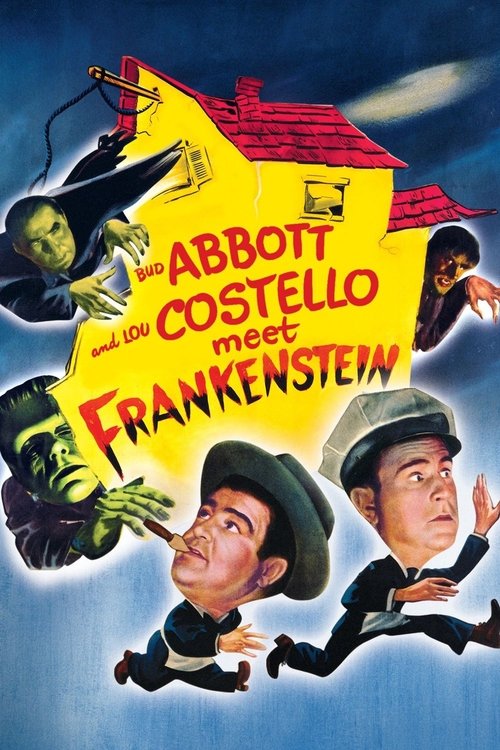
Bud Abbott and Lou Costello Meet Frankenstein
The Wolf Man tries to warn a dimwitted porter that Dracula wants his brain for Frankenstein monster's body.
Despite its extremely modest budget of $800K, Bud Abbott and Lou Costello Meet Frankenstein became a massive hit, earning $4.8M worldwide—a remarkable 502% return. The film's compelling narrative attracted moviegoers, illustrating how strong storytelling can transcend budget limitations.
4 wins & 2 nominations


Plot Structure
Story beats plotted across runtime


Narrative Arc
Emotional journey through the story's key moments
Story Circle
Blueprint 15-beat structure
Arcplot Score Breakdown
Weighted: Precision (70%) + Arc (15%) + Theme (15%)
Bud Abbott and Lou Costello Meet Frankenstein (1948) showcases precise narrative design, characteristic of Charles Barton's storytelling approach. This structural analysis examines how the film's 15-point plot structure maps to proven narrative frameworks across 1 hour and 23 minutes. With an Arcplot score of 7.1, the film balances conventional beats with creative variation.
Characters
Cast & narrative archetypes

Wilbur Grey
Chick Young
Dracula
Sandra Mornay
Lawrence Talbot
Frankenstein's Monster
Joan Raymond
Main Cast & Characters
Wilbur Grey
Played by Lou Costello
Timid freight handler who becomes the reluctant hero, constantly terrified of the monsters hunting him.
Chick Young
Played by Bud Abbott
Wilbur's skeptical partner and protector who doesn't believe in monsters until it's too late.
Dracula
Played by Bela Lugosi
The suave vampire mastermind orchestrating a plot to transplant Wilbur's brain into Frankenstein's monster.
Sandra Mornay
Played by Lenore Aubert
Beautiful scientist and Dracula's accomplice who seduces men to further the vampire's sinister plans.
Lawrence Talbot
Played by Lon Chaney Jr.
The tragic Wolf Man who tries to warn and protect others from the monsters he knows too well.
Frankenstein's Monster
Played by Glenn Strange
The reanimated creature being prepared to receive Wilbur's simple, pliable brain.
Joan Raymond
Played by Jane Randolph
Wilbur's insurance agent girlfriend who gets caught up in the supernatural mayhem.
Structural Analysis
The Status Quo at 1 minutes (1% through the runtime) establishes Chick and Wilbur work as baggage clerks at a Florida railway station, living their ordinary lives of comic mishaps and working-class routine.. Of particular interest, this early placement immediately immerses viewers in the story world.
The inciting incident occurs at 10 minutes when The crates containing Dracula and Frankenstein's Monster arrive at the station, and Dracula awakens. The monsters are now loose, disrupting the ordinary world with real supernatural danger.. At 12% through the film, this Disruption aligns precisely with traditional story structure. This beat shifts the emotional landscape, launching the protagonist into the central conflict.
The First Threshold at 21 minutes marks the transition into Act II, occurring at 25% of the runtime. This indicates the protagonist's commitment to Chick and Wilbur actively choose to attend the masquerade ball at Sandra's castle despite warnings, crossing into the world of the monsters. This decision puts them directly in Dracula's lair., moving from reaction to action.
At 42 minutes, the Midpoint arrives at 50% of the runtime—precisely centered, creating perfect narrative symmetry. Significantly, this crucial beat Wilbur is kidnapped and strapped to the operating table for the brain transplant. What seemed like harmless comedy horror becomes genuinely life-threatening. False defeat: the stakes become deadly real., fundamentally raising what's at risk. The emotional intensity shifts, dividing the narrative into clear before-and-after phases.
The Collapse moment at 62 minutes (75% through) represents the emotional nadir. Here, Wilbur is about to be operated on, the Monster is revived and active, Dracula seems unstoppable, and even their allies can't help (Talbot transforms into the Wolf Man). All hope seems lost in the castle's dungeon., reveals the protagonist at their lowest point. This beat's placement in the final quarter sets up the climactic reversal.
The Second Threshold at 66 minutes initiates the final act resolution at 80% of the runtime. Chick finally sees the monsters and believes. The Wolf Man breaks free to fight Dracula. Our heroes gain the knowledge and belief needed to fight back, synthesizing comedy courage with real action., demonstrating the transformation achieved throughout the journey.
Emotional Journey
Bud Abbott and Lou Costello Meet Frankenstein's emotional architecture traces a deliberate progression across 15 carefully calibrated beats.
Narrative Framework
This structural analysis employs proven narrative structure principles that track dramatic progression. By mapping Bud Abbott and Lou Costello Meet Frankenstein against these established plot points, we can identify how Charles Barton utilizes or subverts traditional narrative conventions. The plot point approach reveals not only adherence to structural principles but also creative choices that distinguish Bud Abbott and Lou Costello Meet Frankenstein within the horror genre.
Comparative Analysis
Additional horror films include Thinner, A Nightmare on Elm Street and Mary Reilly.
Plot Points by Act
Act I
SetupStatus Quo
Chick and Wilbur work as baggage clerks at a Florida railway station, living their ordinary lives of comic mishaps and working-class routine.
Theme
McDougal warns Wilbur about the danger of the crates, saying "You don't know what you're dealing with" - establishing the theme of being unaware of real danger versus imagined fears.
Worldbuilding
The world is established: Chick and Wilbur's working relationship, the mysterious crates from the House of Horrors, McDougal's warnings, and the skeptical dynamic between Chick who believes nothing and Wilbur who's frightened of everything.
Disruption
The crates containing Dracula and Frankenstein's Monster arrive at the station, and Dracula awakens. The monsters are now loose, disrupting the ordinary world with real supernatural danger.
Resistance
Wilbur encounters the monsters but can't prove it to Chick. They debate whether to deliver the crates to McDougal's House of Horrors. Sandra Mornay (secretly Dracula's servant) appears and manipulates them, while they resist believing the danger is real.
Act II
ConfrontationFirst Threshold
Chick and Wilbur actively choose to attend the masquerade ball at Sandra's castle despite warnings, crossing into the world of the monsters. This decision puts them directly in Dracula's lair.
Mirror World
Joan Raymond, the insurance investigator, and Dr. Stevens represent the rational world that must believe the unbelievable. Their romance subplot mirrors the theme: sometimes you must trust what seems impossible.
Premise
The "fun and games" of the premise: Wilbur encounters monsters who disappear before Chick sees them, classic comedy horror routines with Dracula, the Monster, and the Wolf Man, all while Sandra plots to transplant Wilbur's brain into the Monster.
Midpoint
Wilbur is kidnapped and strapped to the operating table for the brain transplant. What seemed like harmless comedy horror becomes genuinely life-threatening. False defeat: the stakes become deadly real.
Opposition
Dracula's plan advances while our heroes struggle. The Wolf Man (Lawrence Talbot) tries to help but transforms at the wrong moments. Chick still doesn't believe, making things harder. The monsters close in from all sides.
Collapse
Wilbur is about to be operated on, the Monster is revived and active, Dracula seems unstoppable, and even their allies can't help (Talbot transforms into the Wolf Man). All hope seems lost in the castle's dungeon.
Crisis
The darkest moment as Wilbur faces his death on the operating table, Chick finally realizes the danger is real but seems powerless, and the monsters are in full control of the castle.
Act III
ResolutionSecond Threshold
Chick finally sees the monsters and believes. The Wolf Man breaks free to fight Dracula. Our heroes gain the knowledge and belief needed to fight back, synthesizing comedy courage with real action.
Synthesis
The finale: chaos in the castle as the Wolf Man battles Dracula, the Monster runs amok, Chick and Wilbur use their comedic skills to survive and escape, leading to the monsters' destruction as Dracula and the Monster fall into the ocean and the castle burns.
Transformation
Chick and Wilbur escape on a boat, seemingly safe. Wilbur has faced real danger and survived. But then the Invisible Man appears for the final gag - some things never change, keeping the comedy alive even after transformation.