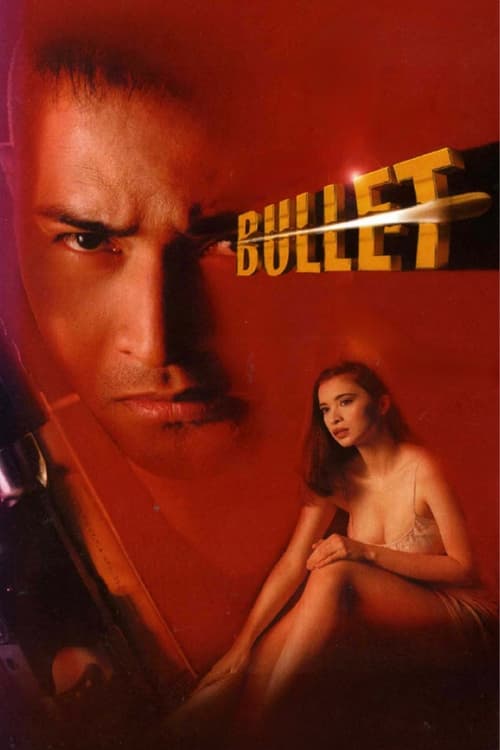
Bullet
Bullet, a skilled marksman, accidentally films gangsters beating up a kidnap victim. He and his cousins witness a gangland murder, putting them in danger.
Despite its small-scale budget of $1.0M, Bullet became a runaway success, earning $100.0M worldwide—a remarkable 9900% return. The film's fresh perspective engaged audiences, illustrating how strong storytelling can transcend budget limitations.
Plot Structure
Story beats plotted across runtime


Narrative Arc
Emotional journey through the story's key moments
Story Circle
Blueprint 15-beat structure
Arcplot Score Breakdown
Weighted: Precision (70%) + Arc (15%) + Theme (15%)
Bullet (1999) exemplifies deliberately positioned narrative design, characteristic of Cesar Montano's storytelling approach. This structural analysis examines how the film's 15-point plot structure maps to proven narrative frameworks across 2 hours. With an Arcplot score of 7.3, the film balances conventional beats with creative variation.
Structural Analysis
The Status Quo at 1 minutes (1% through the runtime) establishes Bullet is released from prison, immediately returning to his life of addiction and violence in Brooklyn, establishing his self-destructive world.. Notably, this early placement immediately immerses viewers in the story world.
The inciting incident occurs at 15 minutes when Bullet encounters Tank, his former prison rival who is now a powerful drug dealer, reigniting their violent conflict and threatening Bullet's fragile existence.. At 13% through the film, this Disruption is delayed, allowing extended setup of the story world. This beat shifts the emotional landscape, launching the protagonist into the central conflict.
The First Threshold at 30 minutes marks the transition into Act II, occurring at 25% of the runtime. This shows the protagonist's commitment to Bullet actively chooses to engage with Tank and the street war, committing himself to a path of violence rather than attempting to rebuild his life., moving from reaction to action.
At 60 minutes, the Midpoint arrives at 50% of the runtime—precisely centered, creating perfect narrative symmetry. Of particular interest, this crucial beat A major violent confrontation occurs where Bullet appears to gain the upper hand against Tank's crew, but the false victory only raises the stakes and ensures brutal retaliation., fundamentally raising what's at risk. The emotional intensity shifts, dividing the narrative into clear before-and-after phases.
The Collapse moment at 90 minutes (75% through) represents the emotional nadir. Here, A close friend or family member dies, or Bullet faces a devastating betrayal or loss that represents the death of any hope for redemption or escape from his violent life., shows the protagonist at their lowest point. This beat's placement in the final quarter sets up the climactic reversal.
The Second Threshold at 96 minutes initiates the final act resolution at 80% of the runtime. Bullet accepts the inevitable final confrontation with Tank, synthesizing his street skills with a clarity about the consequences, choosing to face his fate directly., demonstrating the transformation achieved throughout the journey.
Emotional Journey
Bullet's emotional architecture traces a deliberate progression across 15 carefully calibrated beats.
Narrative Framework
This structural analysis employs systematic plot point analysis that identifies crucial turning points. By mapping Bullet against these established plot points, we can identify how Cesar Montano utilizes or subverts traditional narrative conventions. The plot point approach reveals not only adherence to structural principles but also creative choices that distinguish Bullet within the action genre.
Comparative Analysis
Additional action films include The Bad Guys, Puss in Boots and Venom: The Last Dance.
Plot Points by Act
Act I
SetupStatus Quo
Bullet is released from prison, immediately returning to his life of addiction and violence in Brooklyn, establishing his self-destructive world.
Theme
A family member or friend comments on the cyclical nature of violence and addiction, suggesting that Bullet's choices will determine whether he breaks free or succumbs to his demons.
Worldbuilding
Introduction to Bullet's dysfunctional family, his Brooklyn neighborhood, his history of addiction, and the street-level criminal world he inhabits.
Disruption
Bullet encounters Tank, his former prison rival who is now a powerful drug dealer, reigniting their violent conflict and threatening Bullet's fragile existence.
Resistance
Bullet struggles with whether to confront Tank or avoid him, while his addiction deepens and family members attempt to reach him, showing the internal debate between escape and confrontation.
Act II
ConfrontationFirst Threshold
Bullet actively chooses to engage with Tank and the street war, committing himself to a path of violence rather than attempting to rebuild his life.
Mirror World
Bullet's relationship with his younger brother Ruby or another family member highlights the thematic contrast between choosing self-destruction versus choosing life and family.
Premise
The escalating street war between Bullet and Tank plays out with violent confrontations, drug deals, and displays of the gritty urban criminal lifestyle the film promises.
Midpoint
A major violent confrontation occurs where Bullet appears to gain the upper hand against Tank's crew, but the false victory only raises the stakes and ensures brutal retaliation.
Opposition
Tank's forces close in on Bullet, his addiction worsens, family relationships deteriorate, and the violence escalates beyond control as consequences mount.
Collapse
A close friend or family member dies, or Bullet faces a devastating betrayal or loss that represents the death of any hope for redemption or escape from his violent life.
Crisis
Bullet confronts the emptiness of his existence, processing the loss and recognizing the toll of his choices, facing his darkest moment of despair.
Act III
ResolutionSecond Threshold
Bullet accepts the inevitable final confrontation with Tank, synthesizing his street skills with a clarity about the consequences, choosing to face his fate directly.
Synthesis
The final violent showdown between Bullet and Tank plays out, resolving the central conflict through the brutal logic of the street life both characters inhabit.
Transformation
The closing image shows the tragic outcome of Bullet's choices, mirroring the opening but revealing the ultimate cost of the violent, addicted life he could not escape.