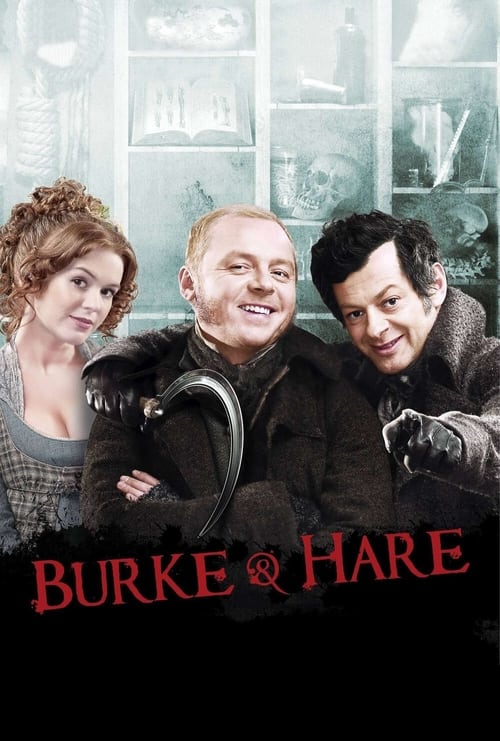
Burke & Hare
Two 19th-century opportunists become serial killers so that they can maintain their profitable business supplying cadavers to an anatomist.
The film financial setback against its limited budget of $10.0M, earning $4.8M globally (-52% loss). While initial box office returns were modest, the film has gained appreciation for its distinctive approach within the comedy genre.


Plot Structure
Story beats plotted across runtime


Narrative Arc
Emotional journey through the story's key moments
Story Circle
Blueprint 15-beat structure
Arcplot Score Breakdown
Weighted: Precision (70%) + Arc (15%) + Theme (15%)
Burke & Hare (2010) reveals precise narrative architecture, characteristic of John Landis's storytelling approach. This structural analysis examines how the film's 15-point plot structure maps to proven narrative frameworks across 1 hour and 31 minutes. With an Arcplot score of 6.5, the film balances conventional beats with creative variation.
Characters
Cast & narrative archetypes

William Burke
William Hare
Ginny Hawkins
Lucky
Dr. Robert Knox
Captain McLintock
Main Cast & Characters
William Burke
Played by Simon Pegg
An Irish immigrant who becomes a serial killer supplying corpses to anatomy schools in 1828 Edinburgh.
William Hare
Played by Andy Serkis
Burke's partner in crime, a cunning opportunist who helps run the murderous corpse-selling scheme.
Ginny Hawkins
Played by Isla Fisher
An aspiring actress and Burke's romantic interest who dreams of performing on stage.
Lucky
Played by Jessica Hynes
Hare's wife and boarding house owner, a tough pragmatic woman who knows about the murders.
Dr. Robert Knox
Played by Tom Wilkinson
An ambitious anatomist who pays for fresh corpses without asking questions about their origin.
Captain McLintock
Played by Ronnie Corbett
A militia captain investigating the suspicious deaths and determined to catch the killers.
Structural Analysis
The Status Quo at 1 minutes (1% through the runtime) establishes 1828 Edinburgh: Burke and Hare are shown as down-on-their-luck Irish immigrants, struggling to make ends meet with failed business schemes while their wives run a seedy boarding house.. Of particular interest, this early placement immediately immerses viewers in the story world.
The inciting incident occurs at 11 minutes when An elderly lodger named Donald dies owing rent. Rather than lose the money, Burke and Hare sell his body to Dr. Knox, who pays them handsomely and expresses interest in more specimens.. At 12% through the film, this Disruption aligns precisely with traditional story structure. This beat shifts the emotional landscape, launching the protagonist into the central conflict.
The First Threshold at 23 minutes marks the transition into Act II, occurring at 25% of the runtime. This indicates the protagonist's commitment to Burke and Hare commit their first murder, suffocating a sick lodger to sell to Knox. They cross an irreversible moral line, choosing to become killers rather than remain poor., moving from reaction to action.
At 46 minutes, the Midpoint arrives at 50% of the runtime—precisely centered, creating perfect narrative symmetry. Notably, this crucial beat False victory: Burke secures funding for Ginny's play and she agrees to let him be her patron. Meanwhile, their murder business is thriving. Both men appear to have achieved their dreams through their dark enterprise., fundamentally raising what's at risk. The emotional intensity shifts, dividing the narrative into clear before-and-after phases.
The Collapse moment at 68 minutes (75% through) represents the emotional nadir. Here, Burke and Hare's final victim, Mary Docherty, is discovered at the boarding house. They are arrested, their crimes exposed. Ginny learns the truth about how Burke funded her play, destroying their relationship., reveals the protagonist at their lowest point. This beat's placement in the final quarter sets up the climactic reversal.
The Second Threshold at 73 minutes initiates the final act resolution at 80% of the runtime. Hare agrees to testify against Burke in exchange for immunity. Burke accepts his fate with dark resignation, understanding this was always the inevitable end of their moral corruption., demonstrating the transformation achieved throughout the journey.
Emotional Journey
Burke & Hare's emotional architecture traces a deliberate progression across 15 carefully calibrated beats.
Narrative Framework
This structural analysis employs proven narrative structure principles that track dramatic progression. By mapping Burke & Hare against these established plot points, we can identify how John Landis utilizes or subverts traditional narrative conventions. The plot point approach reveals not only adherence to structural principles but also creative choices that distinguish Burke & Hare within the comedy genre.
John Landis's Structural Approach
Among the 13 John Landis films analyzed on Arcplot, the average structural score is 7.1, reflecting strong command of classical structure. Burke & Hare takes a more unconventional approach compared to the director's typical style. For comparative analysis, explore the complete John Landis filmography.
Comparative Analysis
Additional comedy films include The Bad Guys, Ella Enchanted and The Evening Star. For more John Landis analyses, see Spies Like Us, The Blues Brothers and ¡Three Amigos!.
Plot Points by Act
Act I
SetupStatus Quo
1828 Edinburgh: Burke and Hare are shown as down-on-their-luck Irish immigrants, struggling to make ends meet with failed business schemes while their wives run a seedy boarding house.
Theme
Dr. Knox lectures that science requires sacrifice and that progress demands we set aside squeamishness - foreshadowing the moral compromises Burke and Hare will make in pursuit of their dreams.
Worldbuilding
Edinburgh's grim reality is established: rival anatomists Knox and Monro compete for cadavers, grave robbers work the trade, and Burke and Hare fail at selling shoes and cheese. Their poverty and desperation are firmly established.
Disruption
An elderly lodger named Donald dies owing rent. Rather than lose the money, Burke and Hare sell his body to Dr. Knox, who pays them handsomely and expresses interest in more specimens.
Resistance
Burke and Hare debate their new opportunity. They try grave robbing but find it difficult and dangerous. Dr. Knox serves as an unwitting guide, explaining the value of fresh bodies and encouraging their enterprise without asking questions.
Act II
ConfrontationFirst Threshold
Burke and Hare commit their first murder, suffocating a sick lodger to sell to Knox. They cross an irreversible moral line, choosing to become killers rather than remain poor.
Mirror World
Burke meets and becomes smitten with Ginny Hawkins, an aspiring actress who dreams of staging an all-female production of Macbeth. She represents art, beauty, and legitimate ambition - everything Burke secretly desires.
Premise
The dark comedy premise plays out: Burke and Hare become efficient killers, targeting society's forgotten. Burke courts Ginny and funds her play, living a double life. Money flows, they upgrade their lifestyle, and everything seems to be working.
Midpoint
False victory: Burke secures funding for Ginny's play and she agrees to let him be her patron. Meanwhile, their murder business is thriving. Both men appear to have achieved their dreams through their dark enterprise.
Opposition
Complications mount: their wives grow suspicious of the money, the militia investigates disappearances, Dr. Monro schemes against Knox, and Burke struggles to keep his criminal life separate from his romance with Ginny. Bodies become harder to hide.
Collapse
Burke and Hare's final victim, Mary Docherty, is discovered at the boarding house. They are arrested, their crimes exposed. Ginny learns the truth about how Burke funded her play, destroying their relationship.
Crisis
In jail, Burke faces the consequences. Hare is offered immunity if he testifies against Burke. The partnership that defined their criminal enterprise crumbles as self-preservation takes over.
Act III
ResolutionSecond Threshold
Hare agrees to testify against Burke in exchange for immunity. Burke accepts his fate with dark resignation, understanding this was always the inevitable end of their moral corruption.
Synthesis
Burke is tried and sentenced to death. In a final irony, his body is donated to medical science - he becomes a specimen like those he provided. Ginny's play opens successfully. The various fates of all characters are revealed.
Transformation
Burke's skeleton is displayed at Edinburgh Medical School (where it remains to this day). The man who sold bodies for science becomes an eternal exhibit - a darkly comic transformation from seller to specimen.