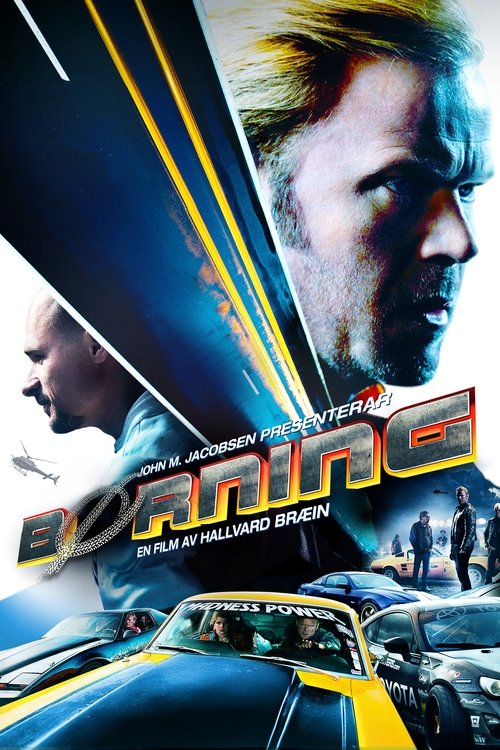
Burning
For all who remember Cannonball Run. Here is a modern twist on the subject. The longest, wildest and funniest car race, ever. From Oslo to the North Cape. The only rule is getting there first!
The film financial setback against its respectable budget of $25.0M, earning $6.0M globally (-76% loss). While initial box office returns were modest, the film has gained appreciation for its fresh perspective within the action genre.


Plot Structure
Story beats plotted across runtime


Narrative Arc
Emotional journey through the story's key moments
Story Circle
Blueprint 15-beat structure
Arcplot Score Breakdown
Weighted: Precision (70%) + Arc (15%) + Theme (15%)
Burning (2014) reveals precise plot construction, characteristic of Hallvard Bræin's storytelling approach. This structural analysis examines how the film's 15-point plot structure maps to proven narrative frameworks across 1 hour and 33 minutes. With an Arcplot score of 7.1, the film balances conventional beats with creative variation.
Structural Analysis
The Status Quo at 1 minutes (1% through the runtime) establishes Jong-su works a menial promotional job in Seoul, handing out flyers and living a directionless life as an aspiring writer, isolated and disconnected from society.. Significantly, this early placement immediately immerses viewers in the story world.
The inciting incident occurs at 11 minutes when Hae-mi asks Jong-su to watch her cat while she travels to Africa, creating an intimate connection and awakening his dormant feelings and desires.. At 12% through the film, this Disruption aligns precisely with traditional story structure. This beat shifts the emotional landscape, launching the protagonist into the central conflict.
The First Threshold at 23 minutes marks the transition into Act II, occurring at 25% of the runtime. This demonstrates the protagonist's commitment to Hae-mi returns from Africa with Ben, a wealthy and enigmatic man, creating a love triangle that thrusts Jong-su into a world of jealousy, class consciousness, and psychological uncertainty., moving from reaction to action.
At 47 minutes, the Midpoint arrives at 50% of the runtime—precisely centered, creating perfect narrative symmetry. The analysis reveals that this crucial beat Ben reveals his hobby of burning abandoned greenhouses, calling them "useless" and saying they disappear as if they never existed. Jong-su senses a sinister undertone, raising the stakes and transforming his anxiety into dread., fundamentally raising what's at risk. The emotional intensity shifts, dividing the narrative into clear before-and-after phases.
The Collapse moment at 70 minutes (75% through) represents the emotional nadir. Here, Jong-su finds Hae-mi's watch and makeup in Ben's bathroom, and discovers a greenhouse near his farm has been burned. All signs point to Ben having killed Hae-mi, yet there is no concrete proof—only devastating uncertainty., indicates the protagonist at their lowest point. This beat's placement in the final quarter sets up the climactic reversal.
The Second Threshold at 75 minutes initiates the final act resolution at 80% of the runtime. Jong-su decides to take justice into his own hands, crossing a moral threshold. He prepares to confront Ben directly, accepting that he must become something other than who he was to resolve this., demonstrating the transformation achieved throughout the journey.
Emotional Journey
Burning's emotional architecture traces a deliberate progression across 15 carefully calibrated beats.
Narrative Framework
This structural analysis employs a 15-point narrative structure framework that maps key story moments. By mapping Burning against these established plot points, we can identify how Hallvard Bræin utilizes or subverts traditional narrative conventions. The plot point approach reveals not only adherence to structural principles but also creative choices that distinguish Burning within the action genre.
Comparative Analysis
Additional action films include The Ministry of Ungentlemanly Warfare, The Bad Guys and Lake Placid.
Plot Points by Act
Act I
SetupStatus Quo
Jong-su works a menial promotional job in Seoul, handing out flyers and living a directionless life as an aspiring writer, isolated and disconnected from society.
Theme
Hae-mi tells Jong-su about the Bushmen of the Kalahari who have two kinds of hunger: the "Little Hunger" and the "Great Hunger," suggesting the film's exploration of spiritual and material emptiness.
Worldbuilding
Establishment of Jong-su's isolated world near the North Korean border, his strained relationship with his father, his aspirations as a writer, and his reconnection with Hae-mi from childhood.
Disruption
Hae-mi asks Jong-su to watch her cat while she travels to Africa, creating an intimate connection and awakening his dormant feelings and desires.
Resistance
Jong-su cares for Hae-mi's cat and apartment, fantasizing about their relationship. He anticipates her return, moving from his passive existence toward engagement with another person.
Act II
ConfrontationFirst Threshold
Hae-mi returns from Africa with Ben, a wealthy and enigmatic man, creating a love triangle that thrusts Jong-su into a world of jealousy, class consciousness, and psychological uncertainty.
Mirror World
The three characters spend time together at Jong-su's family farm. Hae-mi performs a pantomime of eating a tangerine and talks about disappearing, establishing her as the emotional mirror reflecting Jong-su's inner emptiness.
Premise
Jong-su navigates the uncomfortable triangle with Hae-mi and Ben, observing Ben's wealth and mysterious behavior, growing increasingly obsessed and suspicious while struggling with class resentment.
Midpoint
Ben reveals his hobby of burning abandoned greenhouses, calling them "useless" and saying they disappear as if they never existed. Jong-su senses a sinister undertone, raising the stakes and transforming his anxiety into dread.
Opposition
Hae-mi vanishes without a trace. Jong-su searches desperately for her, investigating Ben while becoming consumed by suspicion that Ben murdered her. His obsession intensifies as he finds no evidence.
Collapse
Jong-su finds Hae-mi's watch and makeup in Ben's bathroom, and discovers a greenhouse near his farm has been burned. All signs point to Ben having killed Hae-mi, yet there is no concrete proof—only devastating uncertainty.
Crisis
Jong-su sits in darkness with his grief and rage, unable to get justice or closure. He confronts the void of Hae-mi's disappearance and the impossibility of proving Ben's guilt.
Act III
ResolutionSecond Threshold
Jong-su decides to take justice into his own hands, crossing a moral threshold. He prepares to confront Ben directly, accepting that he must become something other than who he was to resolve this.
Synthesis
Jong-su lures Ben to a remote location and murders him, stabbing him repeatedly and burning his body in his car. He transforms from passive observer to active agent, achieving catharsis through violence.
Transformation
Jong-su drives away from the burning car, his face illuminated by flames. He has become what he despised—violent, decisive, transformed by rage and class resentment into someone unrecognizable from the passive young man at the start.