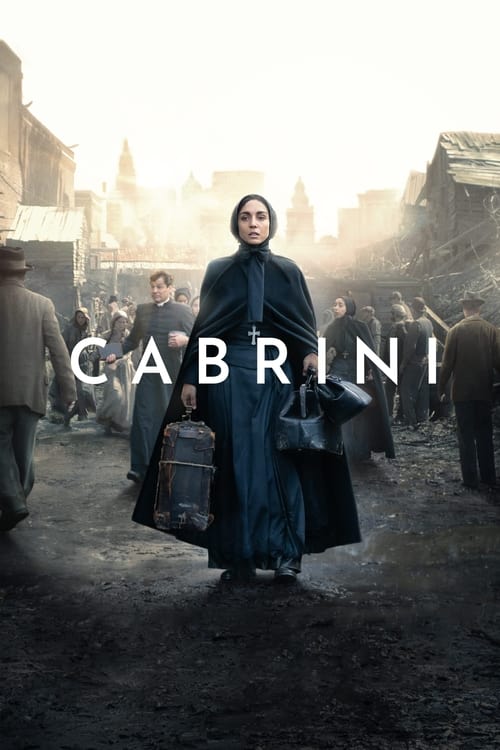
Cabrini
After witnessing disease and poverty in the slums of New York, Italian immigrant Francesca Cabrini embarks on a daring journey to persuade the hostile mayor to provide housing and healthcare for hundreds of orphaned children.
The film commercial failure against its mid-range budget of $50.0M, earning $20.6M globally (-59% loss). While initial box office returns were modest, the film has gained appreciation for its unique voice within the biography genre.
4 wins & 11 nominations


Plot Structure
Story beats plotted across runtime


Narrative Arc
Emotional journey through the story's key moments
Story Circle
Blueprint 15-beat structure
Characters
Cast & narrative archetypes

Francesca Cabrini
Mayor Gould
Vittoria
Calloway Disosway
Paolo
Archbishop Corrigan
Main Cast & Characters
Francesca Cabrini
Played by Cristiana Dell'Onda
Italian missionary nun who arrives in New York to serve orphans, faces opposition but builds hospitals and orphanages through unwavering determination.
Mayor Gould
Played by John Lithgow
New York City mayor who initially opposes Cabrini's work and tries to prevent her mission to help Italian immigrants.
Vittoria
Played by Romana Maggiora Vergano
One of Cabrini's fellow missionary sisters who supports her mission and works alongside her in New York.
Calloway Disosway
Played by David Morse
A wealthy New York businessman who becomes an ally and benefactor to Cabrini's charitable works.
Paolo
Played by Giampiero Judica
An Italian immigrant orphan boy who becomes one of the children Cabrini seeks to help and protect.
Archbishop Corrigan
Played by Federico Ielapi
New York Archbishop who is skeptical of Cabrini's mission and presents institutional resistance to her work.
Structural Analysis
The Status Quo at 1 minutes (1% through the runtime) establishes Francesca Cabrini arrives in New York Harbor in 1889, surveying the crowded immigrant city from the ship. She carries herself with determination despite her frail health, establishing her as a woman of faith and purpose entering an unwelcoming world.. Structural examination shows that this early placement immediately immerses viewers in the story world.
The inciting incident occurs at 17 minutes when The Archbishop formally denies Cabrini permission to establish her mission and orders her to return to Italy. This official rejection threatens to end her dream before it begins, forcing her to choose between obedience and conviction.. At 12% through the film, this Disruption aligns precisely with traditional story structure. This beat shifts the emotional landscape, launching the protagonist into the central conflict.
The First Threshold at 36 minutes marks the transition into Act II, occurring at 25% of the runtime. This demonstrates the protagonist's commitment to Cabrini makes the active choice to defy the Archbishop and stay in New York. She declares, "Then we'll do it without his blessing," committing herself and her sisters to building the mission against all odds. This is her point of no return., moving from reaction to action.
At 71 minutes, the Midpoint arrives at 50% of the runtime—precisely centered, creating perfect narrative symmetry. Of particular interest, this crucial beat False victory: Cabrini successfully opens Columbus Hospital, her crowning achievement. The community celebrates, the press praises her, and even skeptics acknowledge her success. But the victory masks underlying threats: she's made powerful enemies and her health is deteriorating., fundamentally raising what's at risk. The emotional intensity shifts, dividing the narrative into clear before-and-after phases.
The Collapse moment at 107 minutes (75% through) represents the emotional nadir. Here, Cabrini collapses from exhaustion and illness during a critical confrontation. As she loses consciousness, she receives word that the city is forcibly closing the hospital and orphanage. Her life's work appears lost, and she may not survive—a literal and metaphorical "whiff of death."., illustrates the protagonist at their lowest point. This beat's placement in the final quarter sets up the climactic reversal.
The Second Threshold at 114 minutes initiates the final act resolution at 80% of the runtime. Cabrini receives news that the immigrant community—the very people she served—has risen up to defend her institutions. Their solidarity and testimony to her impact gives her new understanding: she was never alone. The synthesis of her faith and their collective action provides the path forward., demonstrating the transformation achieved throughout the journey.
Emotional Journey
Cabrini's emotional architecture traces a deliberate progression across 15 carefully calibrated beats.
Narrative Framework
This structural analysis employs systematic plot point analysis that identifies crucial turning points. By mapping Cabrini against these established plot points, we can identify how Alejandro Monteverde utilizes or subverts traditional narrative conventions. The plot point approach reveals not only adherence to structural principles but also creative choices that distinguish Cabrini within the biography genre.
Alejandro Monteverde's Structural Approach
Among the 4 Alejandro Monteverde films analyzed on Arcplot, the average structural score is 7.2, reflecting strong command of classical structure. Cabrini exemplifies the director's characteristic narrative technique. For comparative analysis, explore the complete Alejandro Monteverde filmography.
Comparative Analysis
Additional biography films include After Thomas, Taking Woodstock and The Fire Inside. For more Alejandro Monteverde analyses, see Sound of Freedom, Little Boy and Bella.
Plot Points by Act
Act I
SetupStatus Quo
Francesca Cabrini arrives in New York Harbor in 1889, surveying the crowded immigrant city from the ship. She carries herself with determination despite her frail health, establishing her as a woman of faith and purpose entering an unwelcoming world.
Theme
Archbishop Corrigan dismisses Cabrini, telling her "You're just one woman. What can you possibly do?" This states the central theme: the power of one person's conviction against institutional indifference and the question of whether faith and determination can overcome systemic barriers.
Worldbuilding
Cabrini explores the deplorable conditions of Italian immigrants in Five Points. She witnesses child labor, disease, poverty, and the Church's refusal to help "undesirable" immigrants. The section establishes the hostile world of prejudice, church politics, and urban decay she must navigate.
Disruption
The Archbishop formally denies Cabrini permission to establish her mission and orders her to return to Italy. This official rejection threatens to end her dream before it begins, forcing her to choose between obedience and conviction.
Resistance
Cabrini debates whether to defy church authority. She prays, questions her calling, and meets Vittoria, a local woman who becomes her ally. Together they explore possibilities: finding property, gathering support, understanding the political landscape. Cabrini resists the enormity of the task but slowly formulates a plan.
Act II
ConfrontationFirst Threshold
Cabrini makes the active choice to defy the Archbishop and stay in New York. She declares, "Then we'll do it without his blessing," committing herself and her sisters to building the mission against all odds. This is her point of no return.
Mirror World
Cabrini develops a deeper relationship with the immigrant children she's helping, particularly orphans who represent her true mission. Their innocence and suffering embody the theme: they are powerless individuals who need one person to care.
Premise
The "fun and games" of building her charitable empire: Cabrini secures an abandoned building, renovates it into an orphanage, outsmarts corrupt politicians, negotiates with businessmen, and wins over the community. She demonstrates her tactical brilliance and unshakable faith, gaining momentum.
Midpoint
False victory: Cabrini successfully opens Columbus Hospital, her crowning achievement. The community celebrates, the press praises her, and even skeptics acknowledge her success. But the victory masks underlying threats: she's made powerful enemies and her health is deteriorating.
Opposition
Enemies close in: corrupt politicians try to shut down her hospital, the Archbishop threatens excommunication, financial backers withdraw support, and anti-Italian sentiment intensifies. Cabrini's health worsens. Every gain is met with greater resistance. Her methods and defiance of authority alienate even some allies.
Collapse
Cabrini collapses from exhaustion and illness during a critical confrontation. As she loses consciousness, she receives word that the city is forcibly closing the hospital and orphanage. Her life's work appears lost, and she may not survive—a literal and metaphorical "whiff of death."
Crisis
Bedridden and defeated, Cabrini confronts her mortality and questions whether her defiance was hubris. She processes loss and doubt in her dark night of the soul, wondering if one person truly can make a difference against such overwhelming opposition.
Act III
ResolutionSecond Threshold
Cabrini receives news that the immigrant community—the very people she served—has risen up to defend her institutions. Their solidarity and testimony to her impact gives her new understanding: she was never alone. The synthesis of her faith and their collective action provides the path forward.
Synthesis
The finale: Cabrini, empowered by community support, confronts her adversaries with both spiritual authority and political savvy. She secures permanent protection for her institutions, wins over the Archbishop, and expands her mission. The people she served become her greatest advocates.
Transformation
Final image mirrors the opening: Cabrini stands overlooking New York Harbor, but now the city is dotted with her schools, hospitals, and orphanages. The question "What can one woman do?" is answered. She has transformed from an outsider into a builder of institutions that will outlast her.