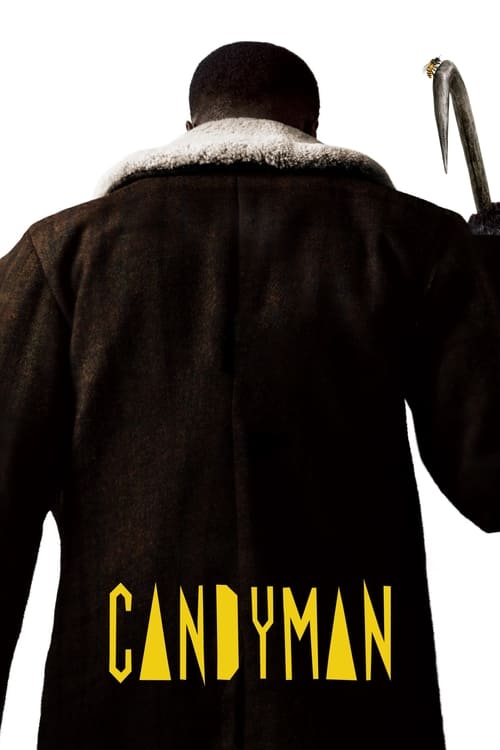
Candyman
A Chicago artist's sanity starts to unravel, unleashing a terrifying wave of violence when he begins to explore the macabre history of the Candyman.
Despite a moderate budget of $25.0M, Candyman became a box office success, earning $77.4M worldwide—a 210% return.
10 wins & 24 nominations


Plot Structure
Story beats plotted across runtime


Narrative Arc
Emotional journey through the story's key moments
Story Circle
Blueprint 15-beat structure
Arcplot Score Breakdown
Weighted: Precision (70%) + Arc (15%) + Theme (15%)
Candyman (2021) showcases deliberately positioned narrative design, characteristic of Nia DaCosta's storytelling approach. This structural analysis examines how the film's 15-point plot structure maps to proven narrative frameworks across 1 hour and 31 minutes. With an Arcplot score of 7.2, the film balances conventional beats with creative variation.
Structural Analysis
The Status Quo at 1 minutes (1% through the runtime) establishes Anthony McCoy, a visual artist, lives comfortably in a gentrified Chicago neighborhood with his girlfriend Brianna, an art gallery director. His career is stagnating as he searches for inspiration.. Notably, this early placement immediately immerses viewers in the story world.
The inciting incident occurs at 9 minutes when Anthony visits the now-demolished Cabrini-Green site and meets William Burke, a laundromat owner who tells him the "true" story of Candyman - Sherman Fields, a man with a hook who was murdered by police for a crime he didn't commit.. At 10% through the film, this Disruption aligns precisely with traditional story structure. This beat shifts the emotional landscape, launching the protagonist into the central conflict.
The First Threshold at 22 minutes marks the transition into Act II, occurring at 24% of the runtime. This reveals the protagonist's commitment to Anthony's art installation "Say His Name" debuts at Brianna's gallery, featuring mirrors and the Candyman legend. This actively invites the curse into the present, merging his artistic ambition with the supernatural horror., moving from reaction to action.
At 44 minutes, the Midpoint arrives at 48% of the runtime—precisely centered, creating perfect narrative symmetry. Of particular interest, this crucial beat Anthony discovers that he is the baby from the original Candyman film - he was kidnapped by Helen Lyle. His entire identity and past are revealed to be tied to the Candyman legend. The personal becomes inextricable from the myth., fundamentally raising what's at risk. The emotional intensity shifts, dividing the narrative into clear before-and-after phases.
The Collapse moment at 66 minutes (72% through) represents the emotional nadir. Here, Burke captures Anthony and cuts off his infected arm with a hook, preparing to transform him into the new Candyman. Anthony loses consciousness as Burke explains that Candyman is not one man but a legacy of Black men destroyed by white violence., indicates the protagonist at their lowest point. This beat's placement in the final quarter sets up the climactic reversal.
The Second Threshold at 71 minutes initiates the final act resolution at 78% of the runtime. Brianna finds Anthony transformed into Candyman - covered in bee stings, his consciousness fading. Police arrive and, seeing a Black man with a hook, immediately shoot him multiple times without hesitation, perpetuating the cycle of violence., demonstrating the transformation achieved throughout the journey.
Emotional Journey
Candyman's emotional architecture traces a deliberate progression across 15 carefully calibrated beats.
Narrative Framework
This structural analysis employs proven narrative structure principles that track dramatic progression. By mapping Candyman against these established plot points, we can identify how Nia DaCosta utilizes or subverts traditional narrative conventions. The plot point approach reveals not only adherence to structural principles but also creative choices that distinguish Candyman within the horror genre.
Nia DaCosta's Structural Approach
Among the 2 Nia DaCosta films analyzed on Arcplot, the average structural score is 7.1, reflecting strong command of classical structure. Candyman represents one of the director's most structurally precise works. For comparative analysis, explore the complete Nia DaCosta filmography.
Comparative Analysis
Additional horror films include Thinner, A Nightmare on Elm Street and Mary Reilly. For more Nia DaCosta analyses, see The Marvels.
Plot Points by Act
Act I
SetupStatus Quo
Anthony McCoy, a visual artist, lives comfortably in a gentrified Chicago neighborhood with his girlfriend Brianna, an art gallery director. His career is stagnating as he searches for inspiration.
Theme
At a dinner party, the legend of Candyman is discussed: "Candyman was about how we are the source of horror in our own lives." The theme of systemic violence, trauma, and the creation of monsters is introduced.
Worldbuilding
Establishing Anthony and Brianna's relationship, the gentrified Cabrini-Green area, Anthony's creative block, and Brianna's gallery world. The erasure of Black history in the neighborhood is shown through luxury condos built over the projects.
Disruption
Anthony visits the now-demolished Cabrini-Green site and meets William Burke, a laundromat owner who tells him the "true" story of Candyman - Sherman Fields, a man with a hook who was murdered by police for a crime he didn't commit.
Resistance
Anthony becomes obsessed with the Candyman legend, using it as inspiration for his art. He creates mirror installations and investigates the history. Brianna is concerned about his obsession. Anthony is stung by a bee at Cabrini-Green, and the wound begins to fester.
Act II
ConfrontationFirst Threshold
Anthony's art installation "Say His Name" debuts at Brianna's gallery, featuring mirrors and the Candyman legend. This actively invites the curse into the present, merging his artistic ambition with the supernatural horror.
Mirror World
The Candyman legend manifests when an art critic and her girlfriend say his name in the mirror at the gallery bathroom. They are brutally murdered, establishing the supernatural threat is real and active.
Premise
Anthony's art becomes famous due to the murders, but his bee sting worsens grotesquely. More people die after saying Candyman's name. Anthony investigates deeper into the history while his physical and mental state deteriorates. The horror of cyclical violence against Black men is explored.
Midpoint
Anthony discovers that he is the baby from the original Candyman film - he was kidnapped by Helen Lyle. His entire identity and past are revealed to be tied to the Candyman legend. The personal becomes inextricable from the myth.
Opposition
Anthony's arm infection spreads horrifically, revealing a hive-like structure beneath his skin. Brianna tries to help him, but he becomes increasingly unstable. Police investigate the murders. Anthony returns to Burke, who reveals himself as the grown-up child from Sherman Fields' story.
Collapse
Burke captures Anthony and cuts off his infected arm with a hook, preparing to transform him into the new Candyman. Anthony loses consciousness as Burke explains that Candyman is not one man but a legacy of Black men destroyed by white violence.
Crisis
Brianna searches desperately for Anthony. She goes to Burke's hideout and discovers the horrifying truth about the Candyman mythos and Burke's plan. Anthony is gone, transformed into something other than himself.
Act III
ResolutionSecond Threshold
Brianna finds Anthony transformed into Candyman - covered in bee stings, his consciousness fading. Police arrive and, seeing a Black man with a hook, immediately shoot him multiple times without hesitation, perpetuating the cycle of violence.
Synthesis
Brianna is taken to a police station where a white officer tries to intimidate her. In the bathroom mirror, she invokes Candyman. Anthony, now fully transformed into the vengeful spirit, appears and kills the officers, enacting supernatural justice for centuries of violence.
Transformation
Brianna looks into the mirror at the transformed Anthony-Candyman. Burke's voiceover explains: "Tell everyone." The legend is reborn, weaponized as a tool of resistance. Anthony is gone, but Candyman - the collective trauma and rage - lives on.