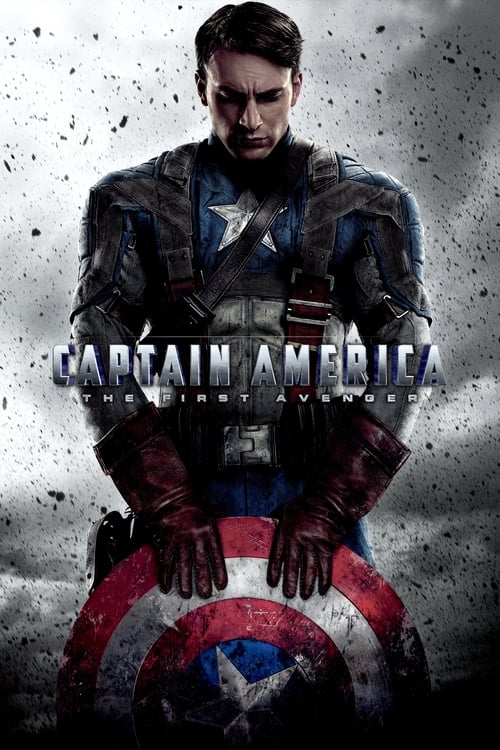
Captain America: The First Avenger
Steve Rogers, a rejected military soldier, transforms into Captain America after taking a dose of a "Super-Soldier serum". But being Captain America comes at a price as he attempts to take down a warmonger and a terrorist organiza...
Despite a substantial budget of $140.0M, Captain America: The First Avenger became a box office success, earning $370.6M worldwide—a 165% return.
4 wins & 50 nominations


Plot Structure
Story beats plotted across runtime


Narrative Arc
Emotional journey through the story's key moments
Story Circle
Blueprint 15-beat structure
Characters
Cast & narrative archetypes

Steve Rogers / Captain America
Johann Schmidt / Red Skull
Peggy Carter
Bucky Barnes
Dr. Abraham Erskine
Howard Stark
Colonel Chester Phillips
Main Cast & Characters
Steve Rogers / Captain America
Played by Chris Evans
A frail but determined young man from Brooklyn who becomes America's first super-soldier and symbol of hope during WWII.
Johann Schmidt / Red Skull
Played by Hugo Weaving
The ruthless head of HYDRA and Hitler's weapons division, transformed by an imperfect super-soldier serum into a megalomaniac seeking godlike power.
Peggy Carter
Played by Hayley Atwell
A British intelligence officer and SSR agent who believes in Steve Rogers before and after his transformation.
Bucky Barnes
Played by Sebastian Stan
Steve's loyal best friend from Brooklyn who serves in the 107th Infantry and becomes his first great loss.
Dr. Abraham Erskine
Played by Stanley Tucci
The kind German scientist who created the super-soldier serum and sees the good heart within Steve Rogers.
Howard Stark
Played by Dominic Cooper
A brilliant inventor and industrialist who provides technological support to the war effort and becomes Steve's ally.
Colonel Chester Phillips
Played by Tommy Lee Jones
The tough, skeptical military commander of the SSR who initially doubts Steve but comes to respect him.
Structural Analysis
The Status Quo at 1 minutes (1% through the runtime) establishes Steve Rogers, a weak and sickly man, gets beaten up in an alley. Despite his physical limitations, he refuses to back down, establishing his core character: courage without strength.. Notably, this early placement immediately immerses viewers in the story world.
The inciting incident occurs at 15 minutes when Dr. Erskine recruits Steve for Project Rebirth after witnessing his courage and moral character. Steve is given the opportunity he's been desperately seeking: a chance to serve his country.. At 12% through the film, this Disruption aligns precisely with traditional story structure. This beat shifts the emotional landscape, launching the protagonist into the central conflict.
The First Threshold at 31 minutes marks the transition into Act II, occurring at 25% of the runtime. This demonstrates the protagonist's commitment to Steve chooses to undergo the Super Soldier transformation, knowing he might die. He emerges as Captain America, physically transformed but retaining his good heart. This is the irreversible moment—there's no going back., moving from reaction to action.
At 63 minutes, the Midpoint arrives at 50% of the runtime—precisely centered, creating perfect narrative symmetry. Structural examination shows that this crucial beat Steve learns Bucky's unit has been captured. Defying orders, he undertakes a solo rescue mission behind enemy lines. He successfully infiltrates the HYDRA base, frees 400 men including Bucky, and confronts Red Skull for the first time. False victory: Steve becomes a true hero, but Red Skull escapes with greater plans., fundamentally raising what's at risk. The emotional intensity shifts, dividing the narrative into clear before-and-after phases.
The Collapse moment at 94 minutes (76% through) represents the emotional nadir. Here, Bucky falls from the train into a snowy ravine and dies. Steve's best friend, the person who always believed in him, is gone. The "whiff of death" is literal—Steve has gained everything physically but lost what matters most personally., reveals the protagonist at their lowest point. This beat's placement in the final quarter sets up the climactic reversal.
The Second Threshold at 100 minutes initiates the final act resolution at 81% of the runtime. Steve discovers Red Skull plans to bomb major US cities within hours. The intelligence about HYDRA's final base location gives Steve clarity and new resolve. He will honor Bucky's sacrifice by stopping Red Skull, whatever the cost. He synthesizes his old determination with his new abilities., demonstrating the transformation achieved throughout the journey.
Emotional Journey
Captain America: The First Avenger's emotional architecture traces a deliberate progression across 15 carefully calibrated beats.
Narrative Framework
This structural analysis employs proven narrative structure principles that track dramatic progression. By mapping Captain America: The First Avenger against these established plot points, we can identify how Joe Johnston utilizes or subverts traditional narrative conventions. The plot point approach reveals not only adherence to structural principles but also creative choices that distinguish Captain America: The First Avenger within the action genre.
Joe Johnston's Structural Approach
Among the 9 Joe Johnston films analyzed on Arcplot, the average structural score is 6.9, demonstrating varied approaches to story architecture. Captain America: The First Avenger exemplifies the director's characteristic narrative technique. For comparative analysis, explore the complete Joe Johnston filmography.
Comparative Analysis
Additional action films include The Bad Guys, Puss in Boots and Venom: The Last Dance. For more Joe Johnston analyses, see Jumanji, The Pagemaster and The Wolfman.
Plot Points by Act
Act I
SetupStatus Quo
Steve Rogers, a weak and sickly man, gets beaten up in an alley. Despite his physical limitations, he refuses to back down, establishing his core character: courage without strength.
Theme
Dr. Erskine tells Steve, "A strong man who has known power all his life may lose respect for that power, but a weak man knows the value of strength and knows compassion." The theme of inner strength versus physical power is established.
Worldbuilding
WWII-era Brooklyn and Europe. Steve repeatedly tries to enlist but is rejected due to his frail body. His best friend Bucky is shipping out. Meanwhile, Red Skull acquires the Tesseract in Norway. The world needs heroes.
Disruption
Dr. Erskine recruits Steve for Project Rebirth after witnessing his courage and moral character. Steve is given the opportunity he's been desperately seeking: a chance to serve his country.
Resistance
Steve trains at Camp Lehigh under Colonel Phillips (skeptical) and Agent Carter (intrigued). He proves his worth not through physical strength but through intelligence and heart (jumping on the dummy grenade). Dr. Erskine mentors him about staying true to himself.
Act II
ConfrontationFirst Threshold
Steve chooses to undergo the Super Soldier transformation, knowing he might die. He emerges as Captain America, physically transformed but retaining his good heart. This is the irreversible moment—there's no going back.
Mirror World
Peggy Carter becomes Steve's romantic interest and thematic mirror. She sees him for who he truly is, not just his exterior. Their relationship develops as Steve grapples with his new identity and purpose.
Premise
The "fun and games" of being Captain America—but not as expected. Steve becomes a propaganda tool selling war bonds in a star-spangled costume rather than a real soldier. He performs for crowds and does USO shows, feeling like a dancing monkey. When he finally goes overseas, the troops mock him.
Midpoint
Steve learns Bucky's unit has been captured. Defying orders, he undertakes a solo rescue mission behind enemy lines. He successfully infiltrates the HYDRA base, frees 400 men including Bucky, and confronts Red Skull for the first time. False victory: Steve becomes a true hero, but Red Skull escapes with greater plans.
Opposition
Steve leads the Howling Commandos on missions against HYDRA bases across Europe. He and his team are winning battles, growing closer to Peggy, and systematically dismantling Red Skull's operations. But Red Skull is preparing his final weapon, and the stakes are rising. Steve is becoming the hero he wanted to be, but the cost is mounting.
Collapse
Bucky falls from the train into a snowy ravine and dies. Steve's best friend, the person who always believed in him, is gone. The "whiff of death" is literal—Steve has gained everything physically but lost what matters most personally.
Crisis
Steve sits alone in the devastated bar, grieving Bucky. He questions everything—was it worth it? Peggy comforts him, reminding him of what they're fighting for. Steve processes his grief and remembers Dr. Erskine's words about staying a good man.
Act III
ResolutionSecond Threshold
Steve discovers Red Skull plans to bomb major US cities within hours. The intelligence about HYDRA's final base location gives Steve clarity and new resolve. He will honor Bucky's sacrifice by stopping Red Skull, whatever the cost. He synthesizes his old determination with his new abilities.
Synthesis
Steve leads the assault on Red Skull's base. He fights through HYDRA forces, confronts Red Skull on the Valkyrie bomber, and defeats him (Red Skull is consumed by the Tesseract). With the plane loaded with bombs heading for New York, Steve makes the ultimate sacrifice—he crashes the plane into the Arctic ice to save millions, knowing he won't survive.
Transformation
Steve wakes up 70 years later in a modern world. The closing image mirrors the opening: he's still a man out of place and time, but transformed. He was the weak kid who wanted to serve; now he's the hero who gave everything. "I had a date," he tells Fury—he lost his chance at a normal life but saved the world.