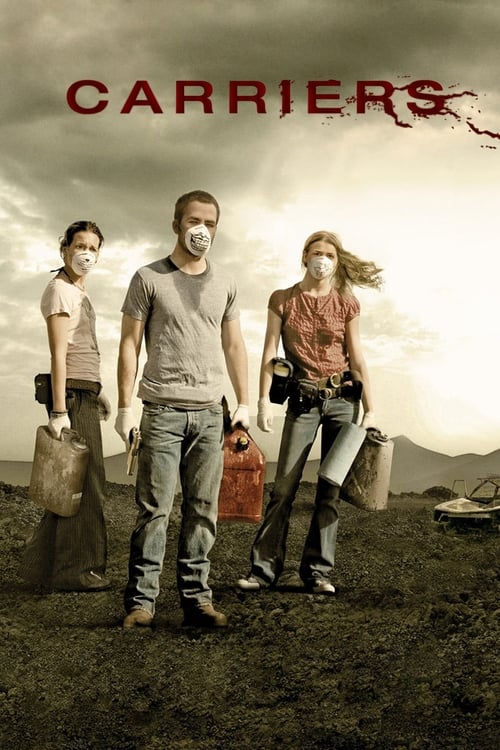
Carriers
A deadly virus has spread across the globe. Contagion is everywhere, no one is safe, and no one can be trusted. Four friends race through the back roads of the American West on their way to a secluded utopian beach in the Gulf of Mexico where they could peacefully wait out the pandemic. Their plans take a grim turn when their car breaks down on an isolated road starting a chain of events that will seal their fates.
The film earned $5.8M at the global box office.


Plot Structure
Story beats plotted across runtime


Narrative Arc
Emotional journey through the story's key moments
Story Circle
Blueprint 15-beat structure
Arcplot Score Breakdown
Weighted: Precision (70%) + Arc (15%) + Theme (15%)
Carriers (2009) reveals carefully calibrated dramatic framework, characteristic of Àlex Pastor's storytelling approach. This structural analysis examines how the film's 15-point plot structure maps to proven narrative frameworks across 1 hour and 24 minutes. With an Arcplot score of 7.4, the film balances conventional beats with creative variation.
Characters
Cast & narrative archetypes

Brian
Danny
Bobby
Kate
Main Cast & Characters
Brian
Played by Chris Pine
Pragmatic leader of the group who makes increasingly ruthless decisions to ensure survival during a viral pandemic.
Danny
Played by Lou Taylor Pucci
Brian's younger brother, more compassionate and morally conflicted about their survival tactics.
Bobby
Played by Piper Perabo
Brian's girlfriend who struggles with loyalty to Brian versus her own moral compass.
Kate
Played by Emily VanCamp
Danny's girlfriend, initially carefree but forced to confront harsh survival realities.
Structural Analysis
The Status Quo at 1 minutes (1% through the runtime) establishes Four young survivors drive through a desolate, pandemic-ravaged America with strict rules: avoid the infected, stay together, and don't get attached. Brothers Brian and Danny, Brian's girlfriend Bobby, and Danny's friend Kate appear to have their survival system down.. Structural examination shows that this early placement immediately immerses viewers in the story world.
The inciting incident occurs at 10 minutes when The group encounters Frank, a man in a hazmat suit, desperately seeking help for his infected young daughter Jodie. Their car has broken down on the road. This encounter forces the group to confront their rules immediately and externally threatens their carefully controlled world.. At 12% through the film, this Disruption aligns precisely with traditional story structure. This beat shifts the emotional landscape, launching the protagonist into the central conflict.
The First Threshold at 19 minutes marks the transition into Act II, occurring at 23% of the runtime. This indicates the protagonist's commitment to The group makes the active choice to take Frank and Jodie with them, breaking their own rule about avoiding the infected. They secure Jodie in the back, separated by plastic, and continue their journey. This decision sets the moral complications of Act 2 in motion., moving from reaction to action.
At 41 minutes, the Midpoint arrives at 49% of the runtime—precisely centered, creating perfect narrative symmetry. Notably, this crucial beat At a school being used as a quarantine facility, the group abandons Frank and the dying Jodie, leaving them behind to save themselves. This is a false victory - they've freed themselves from the burden, but at a devastating moral cost. Brian has won the argument, and the group has crossed a line they can't uncross., fundamentally raising what's at risk. The emotional intensity shifts, dividing the narrative into clear before-and-after phases.
The Collapse moment at 63 minutes (75% through) represents the emotional nadir. Here, Brian discovers that his brother Danny has been infected. The rules Brian created must now be applied to his own brother. This is the "whiff of death" - the person Brian loves most is now condemned by the very system Brian enforced. Everything he's done to survive is now turned against what he actually cares about., shows the protagonist at their lowest point. This beat's placement in the final quarter sets up the climactic reversal.
The Second Threshold at 68 minutes initiates the final act resolution at 81% of the runtime. Brian makes the choice to stay with Danny rather than abandon him as he abandoned Frank and Jodie. He finally chooses human connection over survival. This synthesis of the theme - understanding that survival without humanity is meaningless - comes too late to save Danny but represents Brian's transformation., demonstrating the transformation achieved throughout the journey.
Emotional Journey
Carriers's emotional architecture traces a deliberate progression across 15 carefully calibrated beats.
Narrative Framework
This structural analysis employs proven narrative structure principles that track dramatic progression. By mapping Carriers against these established plot points, we can identify how Àlex Pastor utilizes or subverts traditional narrative conventions. The plot point approach reveals not only adherence to structural principles but also creative choices that distinguish Carriers within the action genre.
Comparative Analysis
Additional action films include The Bad Guys, Puss in Boots and Venom: The Last Dance.
Plot Points by Act
Act I
SetupStatus Quo
Four young survivors drive through a desolate, pandemic-ravaged America with strict rules: avoid the infected, stay together, and don't get attached. Brothers Brian and Danny, Brian's girlfriend Bobby, and Danny's friend Kate appear to have their survival system down.
Theme
Danny tells Brian, "We're still people, we can't just leave them." Brian responds, "Yes we can." The film's central question is established: What does it cost to survive when survival means abandoning your humanity?
Worldbuilding
The group's dynamics and strict survival rules are established. We learn they're headed to a beach house from their childhood, seeking refuge. Flashbacks reveal their pre-pandemic lives and relationships. The rules Brian has imposed create tension, especially with the compassionate Danny.
Disruption
The group encounters Frank, a man in a hazmat suit, desperately seeking help for his infected young daughter Jodie. Their car has broken down on the road. This encounter forces the group to confront their rules immediately and externally threatens their carefully controlled world.
Resistance
Debate ensues about whether to help Frank and Jodie. Brian insists on abandoning them, but Danny and Kate advocate for helping. They compromise: Frank and Jodie can ride in the back of their vehicle, isolated, in exchange for Frank's working vehicle. The group prepares to switch cars while maintaining distance from the infected child.
Act II
ConfrontationFirst Threshold
The group makes the active choice to take Frank and Jodie with them, breaking their own rule about avoiding the infected. They secure Jodie in the back, separated by plastic, and continue their journey. This decision sets the moral complications of Act 2 in motion.
Mirror World
Frank and his daughter represent the thematic mirror - a father's desperate love versus Brian's cold pragmatism. Frank embodies the humanity and parental devotion that the group, especially Brian, is trying to suppress in order to survive. The relationship forces them to confront what they're becoming.
Premise
The group navigates the pandemic wasteland with their unwanted passengers. They search for gas, supplies, and safety. Tensions rise between Brian's ruthless pragmatism and Danny's remaining compassion. They encounter abandoned locations, evidence of societal collapse, and make increasingly difficult decisions. The presence of Frank and dying Jodie creates constant moral pressure.
Midpoint
At a school being used as a quarantine facility, the group abandons Frank and the dying Jodie, leaving them behind to save themselves. This is a false victory - they've freed themselves from the burden, but at a devastating moral cost. Brian has won the argument, and the group has crossed a line they can't uncross.
Opposition
The consequences of their choices mount. The group's unity fractures as guilt and paranoia increase. They face more obstacles: hostile survivors, dwindling supplies, and the constant threat of infection. Danny becomes increasingly disillusioned with Brian's leadership. Bobby shows symptoms, creating new tension. Their humanity continues to erode with each survival decision.
Collapse
Brian discovers that his brother Danny has been infected. The rules Brian created must now be applied to his own brother. This is the "whiff of death" - the person Brian loves most is now condemned by the very system Brian enforced. Everything he's done to survive is now turned against what he actually cares about.
Crisis
Brian must process the unbearable reality. He faces the choice: follow his own rules and abandon Danny, or break them and stay with his dying brother. The group dissolves. Kate leaves with Bobby. Brian sits with the truth of what his survival philosophy has cost him - he's alive but has lost everything that made life worth living.
Act III
ResolutionSecond Threshold
Brian makes the choice to stay with Danny rather than abandon him as he abandoned Frank and Jodie. He finally chooses human connection over survival. This synthesis of the theme - understanding that survival without humanity is meaningless - comes too late to save Danny but represents Brian's transformation.
Synthesis
Brian stays with Danny until he dies, breaking all his own rules. He buries his brother with care and dignity. Alone now, Brian continues to the childhood beach house - the destination they'd been seeking all along. He arrives at the empty beach, the journey complete but hollow. He's survived, but at the cost of everyone he loved.
Transformation
Brian sits alone on the beach, having reached the destination but lost everything that mattered along the way. The closing image mirrors the opening - a survivor in a desolate world - but now he's utterly alone, the last man standing in a victory that feels like total defeat. The cost of survival was his humanity and everyone he loved.