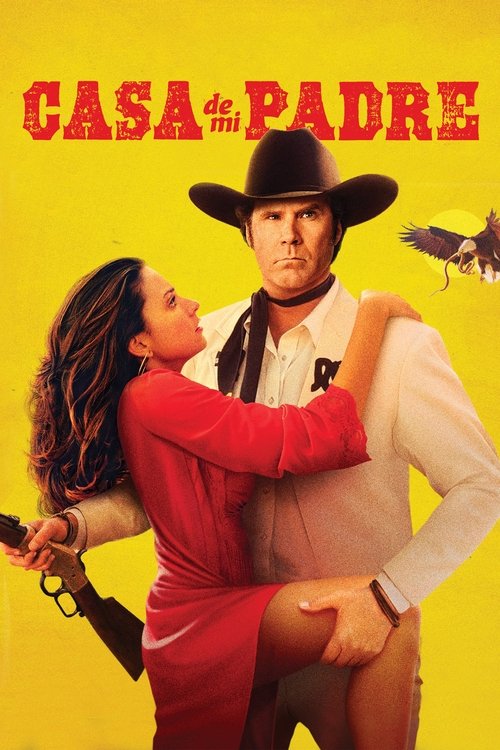
Casa de Mi Padre
Scheming of a way to save their father's ranch, the Alvarez brothers find themselves in a war with Mexico's most feared drug lord.
The film earned $5.9M at the global box office.
3 wins & 7 nominations
Plot Structure
Story beats plotted across runtime


Narrative Arc
Emotional journey through the story's key moments
Story Circle
Blueprint 15-beat structure
Arcplot Score Breakdown
Weighted: Precision (70%) + Arc (15%) + Theme (15%)
Casa de Mi Padre (2012) exhibits meticulously timed narrative architecture, characteristic of Matt Piedmont's storytelling approach. This structural analysis examines how the film's 15-point plot structure maps to proven narrative frameworks across 1 hour and 24 minutes. With an Arcplot score of 7.0, the film balances conventional beats with creative variation.
Characters
Cast & narrative archetypes

Armando Álvarez
Sonia
Raúl Álvarez
Onza
Miguel Álvarez
Main Cast & Characters
Armando Álvarez
Played by Will Ferrell
A simple-minded rancher who must defend his family's land from a drug lord while competing with his more successful brother.
Sonia
Played by Genesis Rodriguez
The beautiful fiancée of Raúl who becomes romantically entangled with Armando.
Raúl Álvarez
Played by Diego Luna
Armando's smooth and successful younger brother who returns home with Sonia and hidden criminal connections.
Onza
Played by Gael García Bernal
A ruthless and violent drug lord who terrorizes the region and seeks to destroy the Álvarez family.
Miguel Álvarez
Played by Pedro Armendáriz Jr.
The patriarch of the Álvarez family who owns the ranch and favors his younger son Raúl.
Structural Analysis
The Status Quo at 1 minutes (1% through the runtime) establishes Armando Álvarez rides the ranch, content as a simple rancher while his father dismisses him as dim-witted. He lives peacefully on the family rancho, unaware of the corruption surrounding him.. Significantly, this early placement immediately immerses viewers in the story world.
The inciting incident occurs at 10 minutes when Armando's younger brother Raul returns home with his fiancée Sonia, bringing sophisticated city ways and mysterious wealth that immediately disrupts the simple ranch life and raises questions about his business dealings.. At 12% through the film, this Disruption aligns precisely with traditional story structure. This beat shifts the emotional landscape, launching the protagonist into the central conflict.
The First Threshold at 20 minutes marks the transition into Act II, occurring at 24% of the runtime. This shows the protagonist's commitment to Armando actively chooses to investigate Raul's activities and enters the dangerous world of drug cartels. He can no longer remain ignorant or passive about the violence threatening his family's ranch., moving from reaction to action.
At 42 minutes, the Midpoint arrives at 50% of the runtime—precisely centered, creating perfect narrative symmetry. Significantly, this crucial beat False defeat: Onza's forces attack the ranch in a major confrontation. Armando's father is killed in the violence, raising the stakes and making the conflict deeply personal. The fun and games are over., fundamentally raising what's at risk. The emotional intensity shifts, dividing the narrative into clear before-and-after phases.
The Collapse moment at 63 minutes (75% through) represents the emotional nadir. Here, Raul is killed in a confrontation, and the ranch is completely overrun. Armando loses both his brother and father, facing the death of his family legacy. He is alone, outgunned, and seemingly defeated., illustrates the protagonist at their lowest point. This beat's placement in the final quarter sets up the climactic reversal.
The Second Threshold at 67 minutes initiates the final act resolution at 80% of the runtime. Sonia's love and faith in him, combined with the memory of his father's words about honor, gives Armando clarity. He realizes he must fight not because he's smart or sophisticated, but because he has courage and heart., demonstrating the transformation achieved throughout the journey.
Emotional Journey
Casa de Mi Padre's emotional architecture traces a deliberate progression across 15 carefully calibrated beats.
Narrative Framework
This structural analysis employs proven narrative structure principles that track dramatic progression. By mapping Casa de Mi Padre against these established plot points, we can identify how Matt Piedmont utilizes or subverts traditional narrative conventions. The plot point approach reveals not only adherence to structural principles but also creative choices that distinguish Casa de Mi Padre within the comedy genre.
Comparative Analysis
Additional comedy films include The Bad Guys, Ella Enchanted and The Evening Star.
Plot Points by Act
Act I
SetupStatus Quo
Armando Álvarez rides the ranch, content as a simple rancher while his father dismisses him as dim-witted. He lives peacefully on the family rancho, unaware of the corruption surrounding him.
Theme
Armando's father speaks about family honor and what it means to be a real man who protects his land, foreshadowing Armando's journey from naive rancher to defender of his family legacy.
Worldbuilding
Establishment of the rancho life, Armando's simple routines, his father's ranch operations, and the introduction of the idyllic yet isolated world of the Álvarez family before disruption arrives.
Disruption
Armando's younger brother Raul returns home with his fiancée Sonia, bringing sophisticated city ways and mysterious wealth that immediately disrupts the simple ranch life and raises questions about his business dealings.
Resistance
Armando struggles with his attraction to Sonia and growing suspicions about Raul's drug trafficking. He debates whether to confront his brother or remain the passive, simple rancher everyone believes him to be.
Act II
ConfrontationFirst Threshold
Armando actively chooses to investigate Raul's activities and enters the dangerous world of drug cartels. He can no longer remain ignorant or passive about the violence threatening his family's ranch.
Mirror World
Armando and Sonia share an intimate moment where she reveals her unhappiness with Raul. Their connection deepens, and she represents the life of courage and authenticity Armando must embrace to become a true man.
Premise
The fun premise: a telenovela-style melodrama with cartel warfare, passionate romance, shootouts, and absurdist comedy. Armando navigates his forbidden love for Sonia while drug lord Onza threatens the ranch.
Midpoint
False defeat: Onza's forces attack the ranch in a major confrontation. Armando's father is killed in the violence, raising the stakes and making the conflict deeply personal. The fun and games are over.
Opposition
Armando must defend the ranch while dealing with his grief and rage. Raul's betrayal deepens, Onza's forces close in, and Armando's inadequacy as a leader becomes apparent as everything falls apart around him.
Collapse
Raul is killed in a confrontation, and the ranch is completely overrun. Armando loses both his brother and father, facing the death of his family legacy. He is alone, outgunned, and seemingly defeated.
Crisis
Armando mourns in darkness, questioning whether he has the strength to fight. He processes the loss of his family and contemplates abandoning the ranch and everything his father stood for.
Act III
ResolutionSecond Threshold
Sonia's love and faith in him, combined with the memory of his father's words about honor, gives Armando clarity. He realizes he must fight not because he's smart or sophisticated, but because he has courage and heart.
Synthesis
Armando leads a final assault against Onza, combining his simple rancher skills with newfound courage. The climactic showdown resolves the cartel threat and Armando claims his place as protector of his family's legacy.
Transformation
Armando stands on his land with Sonia, no longer the dismissed simple rancher but a man of honor who proved his worth. The ranch is saved, and he has become the man his father hoped he could be.