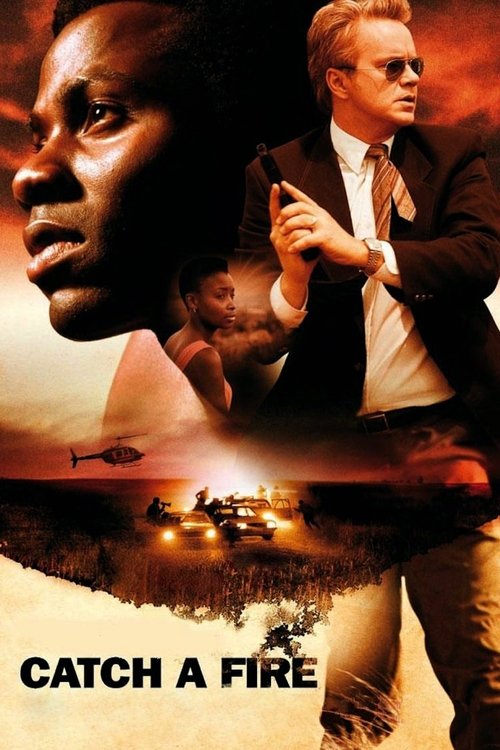
Catch a Fire
The true story of anti-apartheid activists in South Africa, and particularly the life of Patrick Chamusso, a timid foreman at Secunda CTL, the largest synthetic fuel plant in the world. Patrick is wrongly accused, imprisoned and tortured for an attempt to bomb the plant, with the injustice transforming the apolitical worker into a radicalised insurgent, who then carries out his own successful sabotage mission.
The film commercial failure against its tight budget of $14.0M, earning $5.7M globally (-59% loss). While initial box office returns were modest, the film has gained appreciation for its distinctive approach within the action genre.
2 wins & 14 nominations


Plot Structure
Story beats plotted across runtime


Narrative Arc
Emotional journey through the story's key moments
Story Circle
Blueprint 15-beat structure
Arcplot Score Breakdown
Weighted: Precision (70%) + Arc (15%) + Theme (15%)
Catch a Fire (2006) exemplifies precise narrative design, characteristic of Phillip Noyce's storytelling approach. This structural analysis examines how the film's 15-point plot structure maps to proven narrative frameworks across 1 hour and 41 minutes. With an Arcplot score of 7.7, the film showcases strong structural fundamentals.
Characters
Cast & narrative archetypes

Patrick Chamusso
Nic Vos
Precious Chamusso
Katie Vos
Obadi
Main Cast & Characters
Patrick Chamusso
Played by Derek Luke
An apolitical oil refinery foreman who becomes an ANC operative after he and his family are tortured by apartheid security forces.
Nic Vos
Played by Tim Robbins
A methodical security police colonel who pursues Chamusso, torn between duty to the apartheid regime and growing moral doubts.
Precious Chamusso
Played by Bonnie Henna
Patrick's devoted wife who endures torture alongside her husband and supports his transformation.
Katie Vos
Played by Mncedisi Shabangu
Nic's progressive wife who represents moral conscience and challenges his work for the apartheid state.
Obadi
Played by Tumisho Masha
ANC recruiter who recognizes Patrick's potential and guides his radicalization into the armed struggle.
Structural Analysis
The Status Quo at 1 minutes (1% through the runtime) establishes Patrick Chamusso works at the Secunda oil refinery as a foreman, living a peaceful apolitical life with his wife and children in apartheid South Africa. He is focused on his family and job, deliberately staying out of politics.. Notably, this early placement immediately immerses viewers in the story world.
The inciting incident occurs at 11 minutes when The Secunda oil refinery is bombed by ANC operatives. Patrick has an alibi - he was at a soccer match - but this event will irrevocably disrupt his peaceful existence.. At 11% through the film, this Disruption aligns precisely with traditional story structure. This beat shifts the emotional landscape, launching the protagonist into the central conflict.
The First Threshold at 25 minutes marks the transition into Act II, occurring at 24% of the runtime. This demonstrates the protagonist's commitment to Patrick and his wife Precious are arrested and detained by the security police. This marks his forced entry into a new world of detention, interrogation, and understanding the brutality of the apartheid system firsthand., moving from reaction to action.
At 49 minutes, the Midpoint arrives at 49% of the runtime—precisely centered, creating perfect narrative symmetry. Notably, this crucial beat Patrick and Precious are released due to lack of evidence. This appears to be a victory - they are free. However, the damage is done: Patrick's worldview has been shattered, and he now sees the regime's true nature. This false victory masks the transformation beginning within him., fundamentally raising what's at risk. The emotional intensity shifts, dividing the narrative into clear before-and-after phases.
The Collapse moment at 74 minutes (73% through) represents the emotional nadir. Here, Patrick's old self dies completely. His family life is destroyed, his innocence is gone, and he faces the reality that he cannot go back to who he was. The "whiff of death" is the death of his former apolitical identity and peaceful existence., illustrates the protagonist at their lowest point. This beat's placement in the final quarter sets up the climactic reversal.
The Second Threshold at 80 minutes initiates the final act resolution at 80% of the runtime. Patrick fully commits to the ANC and travels to Mozambique for military training. He synthesizes his personal experience of injustice with the broader liberation struggle, becoming an active revolutionary rather than a victim., demonstrating the transformation achieved throughout the journey.
Emotional Journey
Catch a Fire's emotional architecture traces a deliberate progression across 15 carefully calibrated beats.
Narrative Framework
This structural analysis employs a 15-point narrative structure framework that maps key story moments. By mapping Catch a Fire against these established plot points, we can identify how Phillip Noyce utilizes or subverts traditional narrative conventions. The plot point approach reveals not only adherence to structural principles but also creative choices that distinguish Catch a Fire within the action genre.
Phillip Noyce's Structural Approach
Among the 10 Phillip Noyce films analyzed on Arcplot, the average structural score is 7.2, reflecting strong command of classical structure. Catch a Fire represents one of the director's most structurally precise works. For comparative analysis, explore the complete Phillip Noyce filmography.
Comparative Analysis
Additional action films include The Bad Guys, Puss in Boots and Venom: The Last Dance. For more Phillip Noyce analyses, see The Bone Collector, Clear and Present Danger and Sliver.
Plot Points by Act
Act I
SetupStatus Quo
Patrick Chamusso works at the Secunda oil refinery as a foreman, living a peaceful apolitical life with his wife and children in apartheid South Africa. He is focused on his family and job, deliberately staying out of politics.
Theme
A character remarks about the nature of resistance and what drives ordinary people to take extraordinary action against injustice. The theme explores how oppression creates revolutionaries.
Worldbuilding
Establishment of Patrick's ordinary world: his work at the refinery, family life, his affair with a woman whose son is an ANC activist, and the omnipresent tension of apartheid. We see the police state apparatus through Nic Vos, the security police officer.
Disruption
The Secunda oil refinery is bombed by ANC operatives. Patrick has an alibi - he was at a soccer match - but this event will irrevocably disrupt his peaceful existence.
Resistance
Nic Vos investigates the bombing and identifies Patrick as a suspect due to circumstantial evidence. Patrick initially believes his innocence will protect him. He tries to cooperate and maintain his normal life while under increasing surveillance and suspicion.
Act II
ConfrontationFirst Threshold
Patrick and his wife Precious are arrested and detained by the security police. This marks his forced entry into a new world of detention, interrogation, and understanding the brutality of the apartheid system firsthand.
Mirror World
During detention, Patrick witnesses and experiences torture. His relationship with his wife under duress and his growing awareness of the ANC's cause creates a mirror to his former apolitical stance.
Premise
Patrick and Precious endure interrogation and torture. Vos uses psychological and physical brutality to extract a confession. Patrick maintains his innocence but sees his wife tortured. Despite his alibi, the security police continue to pressure him. This section delivers the premise: an innocent man caught in apartheid's machinery.
Midpoint
Patrick and Precious are released due to lack of evidence. This appears to be a victory - they are free. However, the damage is done: Patrick's worldview has been shattered, and he now sees the regime's true nature. This false victory masks the transformation beginning within him.
Opposition
Patrick cannot return to his old life. His marriage is strained, his community views him with suspicion, and he is fundamentally changed. He begins to seek out the ANC, making contact with underground operatives. The security police continue surveillance, and Vos becomes increasingly obsessed with Patrick.
Collapse
Patrick's old self dies completely. His family life is destroyed, his innocence is gone, and he faces the reality that he cannot go back to who he was. The "whiff of death" is the death of his former apolitical identity and peaceful existence.
Crisis
Patrick processes his transformation in the darkness of what he has lost. He sits with the weight of his decision to join the armed struggle, understanding there is no turning back.
Act III
ResolutionSecond Threshold
Patrick fully commits to the ANC and travels to Mozambique for military training. He synthesizes his personal experience of injustice with the broader liberation struggle, becoming an active revolutionary rather than a victim.
Synthesis
Patrick trains with the ANC, becomes a operative, and the narrative shows both his transformation and Vos's parallel journey. The finale brings resolution to Patrick's arc as he fully embodies his new identity as a freedom fighter.
Transformation
Closing images show Patrick fully transformed from apolitical family man to committed ANC operative. End titles reveal the real Patrick Chamusso became a significant figure in the liberation movement. The transformation from victim to agent is complete.