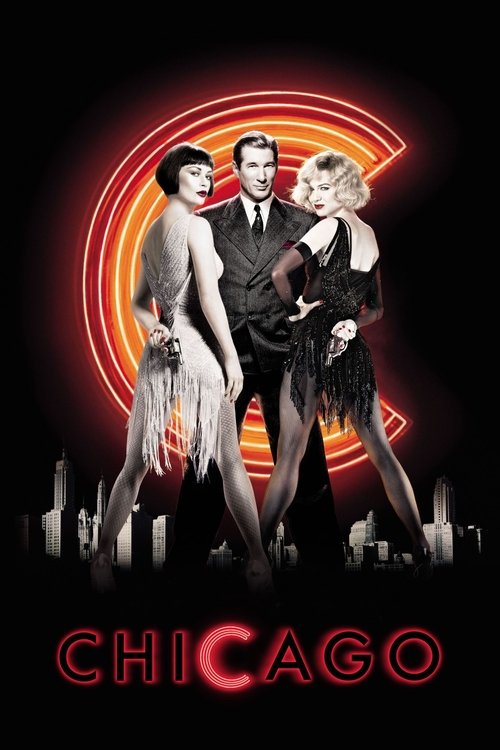
Chicago
Murderesses Velma Kelly and Roxie Hart find themselves on death row together and fight for the fame that will keep them from the gallows in 1920s Chicago.
Despite a mid-range budget of $45.0M, Chicago became a massive hit, earning $306.8M worldwide—a remarkable 582% return.
6 Oscars. 60 wins & 129 nominations


Plot Structure
Story beats plotted across runtime


Narrative Arc
Emotional journey through the story's key moments
Story Circle
Blueprint 15-beat structure
Arcplot Score Breakdown
Weighted: Precision (70%) + Arc (15%) + Theme (15%)
Chicago (2002) demonstrates carefully calibrated story structure, characteristic of Rob Marshall's storytelling approach. This structural analysis examines how the film's 15-point plot structure maps to proven narrative frameworks across 1 hour and 53 minutes. With an Arcplot score of 7.5, the film showcases strong structural fundamentals.
Characters
Cast & narrative archetypes

Roxie Hart
Velma Kelly
Billy Flynn
Amos Hart
Mama Morton
Mary Sunshine
Main Cast & Characters
Roxie Hart
Played by Renée Zellweger
A ambitious chorus girl who murders her lover and manipulates the media to become a celebrity while on trial.
Velma Kelly
Played by Catherine Zeta-Jones
A vaudeville star and double murderess who initially dominates the spotlight before Roxie steals her thunder.
Billy Flynn
Played by Richard Gere
A slick, charismatic defense attorney who turns murder trials into media spectacles for profit.
Amos Hart
Played by John C. Reilly
Roxie's devoted, naive husband who supports her unconditionally despite her betrayals.
Mama Morton
Played by Queen Latifah
The corrupt matron of Cook County Jail who brokers deals between inmates and their lawyers for a price.
Mary Sunshine
Played by Christine Baranski
A gossip columnist who sensationalizes the murderesses' stories for public consumption.
Structural Analysis
The Status Quo at 1 minutes (1% through the runtime) establishes Roxie Hart watches Velma Kelly perform at a Chicago nightclub, mesmerized by the glamour and fame. She dreams of being a vaudeville star herself, stuck in her mundane reality.. Significantly, this early placement immediately immerses viewers in the story world.
The inciting incident occurs at 12 minutes when Roxie shoots and kills Fred Casely when she discovers he lied about helping her career and was just using her for sex. Her dream of stardom collapses into the nightmare of murder.. At 11% through the film, this Disruption aligns precisely with traditional story structure. This beat shifts the emotional landscape, launching the protagonist into the central conflict.
The First Threshold at 28 minutes marks the transition into Act II, occurring at 25% of the runtime. This demonstrates the protagonist's commitment to Billy Flynn takes Roxie's case and transforms her into a media sensation. Roxie chooses to fully embrace the lie, fabricating a story of self-defense and seducing the press. She commits to becoming the star she always wanted to be, even if it's built on murder., moving from reaction to action.
At 55 minutes, the Midpoint arrives at 49% of the runtime—precisely centered, creating perfect narrative symmetry. Structural examination shows that this crucial beat Katalin Hunyak, an innocent Hungarian woman who doesn't speak English, is hanged despite her obvious innocence. The false victory of Roxie's fame is undercut by the stark reality: the system kills, and celebrity is fleeting. Another woman's crime immediately steals Roxie's headlines., fundamentally raising what's at risk. The emotional intensity shifts, dividing the narrative into clear before-and-after phases.
The Collapse moment at 83 minutes (74% through) represents the emotional nadir. Here, Amos discovers Roxie's pregnancy is fake and that he's not the father. He publicly denounces her in court, withdrawing his support and testimony. Billy quits the case. Roxie is completely alone, abandoned by everyone, facing certain conviction and hanging., shows the protagonist at their lowest point. This beat's placement in the final quarter sets up the climactic reversal.
The Second Threshold at 88 minutes initiates the final act resolution at 78% of the runtime. Billy Flynn returns, unable to resist the spotlight of the trial. He realizes Roxie has learned his tricks and can perform on her own. Together they concoct a brilliant courtroom performance, combining Billy's showmanship with Roxie's newfound confidence., demonstrating the transformation achieved throughout the journey.
Emotional Journey
Chicago's emotional architecture traces a deliberate progression across 15 carefully calibrated beats.
Narrative Framework
This structural analysis employs structural analysis methodology used to understand storytelling architecture. By mapping Chicago against these established plot points, we can identify how Rob Marshall utilizes or subverts traditional narrative conventions. The plot point approach reveals not only adherence to structural principles but also creative choices that distinguish Chicago within the comedy genre.
Rob Marshall's Structural Approach
Among the 8 Rob Marshall films analyzed on Arcplot, the average structural score is 7.0, demonstrating varied approaches to story architecture. Chicago represents one of the director's most structurally precise works. For comparative analysis, explore the complete Rob Marshall filmography.
Comparative Analysis
Additional comedy films include The Bad Guys, Ella Enchanted and The Evening Star. For more Rob Marshall analyses, see Mary Poppins Returns, Pirates of the Caribbean: On Stranger Tides and The Little Mermaid.
Plot Points by Act
Act I
SetupStatus Quo
Roxie Hart watches Velma Kelly perform at a Chicago nightclub, mesmerized by the glamour and fame. She dreams of being a vaudeville star herself, stuck in her mundane reality.
Theme
Fred Casely tells Roxie "You're a star, kid" and promises to get her into vaudeville, exploiting her desperate need for fame. The theme: in Chicago, everyone is selling a story, and fame matters more than truth.
Worldbuilding
Establishment of 1920s Chicago's murder-obsessed culture. Velma Kelly arrested for killing her husband and sister. Roxie's affair with Fred Casely revealed. Her dull marriage to Amos established. The city's appetite for celebrity criminals shown.
Disruption
Roxie shoots and kills Fred Casely when she discovers he lied about helping her career and was just using her for sex. Her dream of stardom collapses into the nightmare of murder.
Resistance
Roxie tries to convince Amos to take the blame, fails, and is arrested. She enters Cook County Jail and meets Matron "Mama" Morton, who explains the system: everything has a price. Velma offers partnership but Roxie refuses. Amos mortgages everything to hire Billy Flynn.
Act II
ConfrontationFirst Threshold
Billy Flynn takes Roxie's case and transforms her into a media sensation. Roxie chooses to fully embrace the lie, fabricating a story of self-defense and seducing the press. She commits to becoming the star she always wanted to be, even if it's built on murder.
Mirror World
Roxie's relationship with Billy Flynn deepens as he teaches her how to manipulate the press and public. He represents the cynical truth: justice is performance, and he's the director. Their partnership embodies the theme of truth vs. showmanship.
Premise
The "razzle dazzle" of the trial machine. Roxie becomes a media darling, overshadowing Velma. Press conferences, interviews, and performances. Amos stands by her. Velma grows desperate and jealous. The public eats up every manufactured detail of Roxie's story.
Midpoint
Katalin Hunyak, an innocent Hungarian woman who doesn't speak English, is hanged despite her obvious innocence. The false victory of Roxie's fame is undercut by the stark reality: the system kills, and celebrity is fleeting. Another woman's crime immediately steals Roxie's headlines.
Opposition
Roxie loses the spotlight to a new murderess. Velma and Mama plot against her. Roxie lies about being pregnant to regain attention. The press turns fickle. Billy manipulates Amos into believing he's the father. Opposition intensifies as Roxie's lies compound.
Collapse
Amos discovers Roxie's pregnancy is fake and that he's not the father. He publicly denounces her in court, withdrawing his support and testimony. Billy quits the case. Roxie is completely alone, abandoned by everyone, facing certain conviction and hanging.
Crisis
Roxie faces the reality of her situation: no lawyer, no husband, no fame, no future. She sits in despair, contemplating her imminent execution. The dark night where all her manipulations have led to nothing but the gallows.
Act III
ResolutionSecond Threshold
Billy Flynn returns, unable to resist the spotlight of the trial. He realizes Roxie has learned his tricks and can perform on her own. Together they concoct a brilliant courtroom performance, combining Billy's showmanship with Roxie's newfound confidence.
Synthesis
The trial becomes pure theater. Roxie performs brilliantly on the stand, playing innocent. Billy manipulates evidence and delivers his "razzle dazzle" closing. The jury acquits Roxie. She's free, but immediately forgotten when another crime breaks. Velma proposes a double act.
Transformation
Roxie and Velma perform together as "The Kelly Sisters," finally achieving the vaudeville fame Roxie always wanted. But it's hollow—built on murder, lies, and cynical showmanship. She got her dream, but at the cost of her soul. The system won.