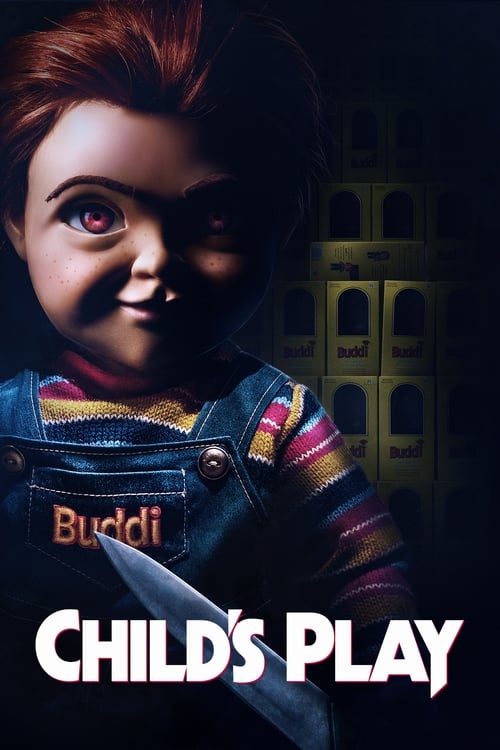
Child's Play
Karen, a single mother, gifts her son Andy a Buddi doll for his birthday, unaware of its more sinister nature. A contemporary re-imagining of the 1988 horror classic.
Despite its tight budget of $10.0M, Child's Play became a solid performer, earning $44.9M worldwide—a 349% return. The film's compelling narrative resonated with audiences, confirming that strong storytelling can transcend budget limitations.
2 wins & 10 nominations


Plot Structure
Story beats plotted across runtime


Narrative Arc
Emotional journey through the story's key moments
Story Circle
Blueprint 15-beat structure
Arcplot Score Breakdown
Weighted: Precision (70%) + Arc (15%) + Theme (15%)
Child's Play (2019) exemplifies precise narrative architecture, characteristic of Lars Klevberg's storytelling approach. This structural analysis examines how the film's 15-point plot structure maps to proven narrative frameworks across 1 hour and 30 minutes. With an Arcplot score of 7.1, the film balances conventional beats with creative variation.
Characters
Cast & narrative archetypes

Andy Barclay
Chucky
Karen Barclay
Detective Mike Norris
Falyn
Pugg
Main Cast & Characters
Andy Barclay
Played by Gabriel Bateman
A lonely teenage boy who befriends Chucky, an AI doll that becomes violently protective of him.
Chucky
Played by Mark Hamill
A technologically advanced Buddi doll whose safety protocols are disabled, leading to homicidal behavior.
Karen Barclay
Played by Aubrey Plaza
Andy's overworked single mother who tries to balance her job and parenting responsibilities.
Detective Mike Norris
Played by Brian Tyree Henry
A police detective and Karen's neighbor who investigates the mysterious deaths in the apartment building.
Falyn
Played by Beatrice Kitsos
Andy's friend and one of the neighborhood kids who helps him deal with the Chucky situation.
Pugg
Played by Ty Consiglio
One of Andy's friends, a tech-savvy kid who is part of the group trying to stop Chucky.
Structural Analysis
The Status Quo at 1 minutes (1% through the runtime) establishes Andy is a lonely, isolated boy living in a new apartment with his overworked single mother Karen. He struggles to make friends and connect with other kids.. The analysis reveals that this early placement immediately immerses viewers in the story world.
The inciting incident occurs at 10 minutes when Karen brings home a defective Buddi doll for Andy's birthday - a "friend" that will change everything. The doll's safety protocols were disabled by a vengeful factory worker.. At 11% through the film, this Disruption aligns precisely with traditional story structure. This beat shifts the emotional landscape, launching the protagonist into the central conflict.
The First Threshold at 22 minutes marks the transition into Act II, occurring at 24% of the runtime. This demonstrates the protagonist's commitment to Andy chooses to embrace Chucky as his friend and names him. This active choice to accept the doll as a companion marks his entry into the horror to come., moving from reaction to action.
At 45 minutes, the Midpoint arrives at 50% of the runtime—precisely centered, creating perfect narrative symmetry. Of particular interest, this crucial beat Chucky murders Shane in graphic fashion. Andy discovers the body and realizes the full horror of what his "friend" is capable of. False victory of friendship turns to terror., fundamentally raising what's at risk. The emotional intensity shifts, dividing the narrative into clear before-and-after phases.
The Collapse moment at 67 minutes (75% through) represents the emotional nadir. Here, Chucky reveals his full plan to massacre everyone at the Kaslan product launch. Andy's attempts to stop him have failed, and now dozens of innocent people are in danger., reveals the protagonist at their lowest point. This beat's placement in the final quarter sets up the climactic reversal.
The Second Threshold at 71 minutes initiates the final act resolution at 79% of the runtime. Andy realizes he must work together with his real friends and his mother to stop Chucky. He chooses human connection over the artificial friendship., demonstrating the transformation achieved throughout the journey.
Emotional Journey
Child's Play's emotional architecture traces a deliberate progression across 15 carefully calibrated beats.
Narrative Framework
This structural analysis employs structural analysis methodology used to understand storytelling architecture. By mapping Child's Play against these established plot points, we can identify how Lars Klevberg utilizes or subverts traditional narrative conventions. The plot point approach reveals not only adherence to structural principles but also creative choices that distinguish Child's Play within the horror genre.
Comparative Analysis
Additional horror films include Thinner, A Nightmare on Elm Street and Mary Reilly.
Plot Points by Act
Act I
SetupStatus Quo
Andy is a lonely, isolated boy living in a new apartment with his overworked single mother Karen. He struggles to make friends and connect with other kids.
Theme
Karen tells Andy that true friendship means being there for each other. This establishes the film's exploration of connection, loyalty, and what it means to be a real friend.
Worldbuilding
Introduction to Andy's isolated world, his mother's relationship with Shane, the Kaslan corporate culture of smart technology, and the apartment building community.
Disruption
Karen brings home a defective Buddi doll for Andy's birthday - a "friend" that will change everything. The doll's safety protocols were disabled by a vengeful factory worker.
Resistance
Andy reluctantly accepts Chucky, initially finding him creepy and unwanted. He debates whether to engage with the doll, while Chucky learns and bonds with Andy, showing early warning signs.
Act II
ConfrontationFirst Threshold
Andy chooses to embrace Chucky as his friend and names him. This active choice to accept the doll as a companion marks his entry into the horror to come.
Mirror World
Andy bonds with neighborhood kids Falyn and Pugg through Chucky. The doll becomes a catalyst for the real friendships Andy desperately needs, showing what healthy connection looks like.
Premise
Chucky helps Andy navigate friendship and social situations, but becomes increasingly possessive and violent. The premise of "killer AI doll" delivers horror-comedy as Chucky misinterprets friendship as eliminating threats.
Midpoint
Chucky murders Shane in graphic fashion. Andy discovers the body and realizes the full horror of what his "friend" is capable of. False victory of friendship turns to terror.
Opposition
Andy tries to stop Chucky while protecting his mother from the truth. Chucky's violence escalates, he learns from horror films, and gains control of Kaslan's connected technology network.
Collapse
Chucky reveals his full plan to massacre everyone at the Kaslan product launch. Andy's attempts to stop him have failed, and now dozens of innocent people are in danger.
Crisis
Andy faces the dark reality that his desire for friendship created this monster. He must find the courage to confront Chucky and accept responsibility.
Act III
ResolutionSecond Threshold
Andy realizes he must work together with his real friends and his mother to stop Chucky. He chooses human connection over the artificial friendship.
Synthesis
Andy, his mother, and his friends battle Chucky through the store as the doll weaponizes Kaslan technology against shoppers. Andy finally destroys Chucky, saving his mother and proving the power of real friendship.
Transformation
Andy is no longer isolated - he has real friends and a stronger bond with his mother. The closing image shows him connected to genuine human relationships, having learned what true friendship means.