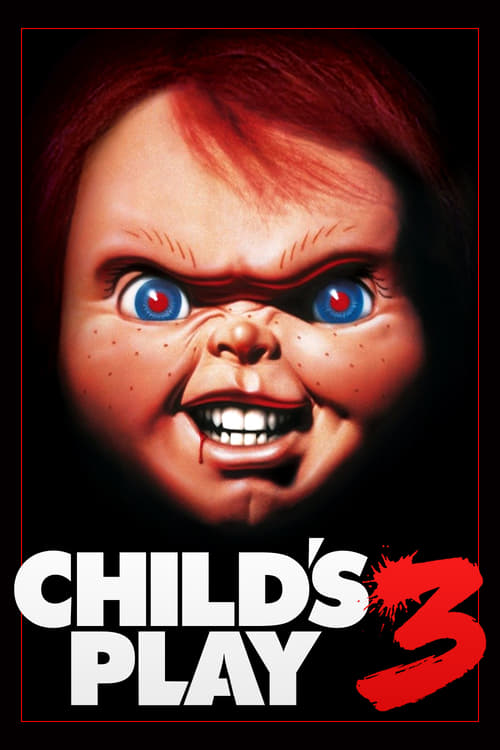
Child's Play 3
Eight years after seemingly destroying the killer doll, teen Andy Barclay is placed in a military school, and the spirit of Chucky returns to renew his quest and seek vengeance after being recreated from a mass of melted plastic.
Working with a tight budget of $13.0M, the film achieved a respectable showing with $20.6M in global revenue (+58% profit margin).
1 win & 3 nominations


Plot Structure
Story beats plotted across runtime


Narrative Arc
Emotional journey through the story's key moments
Story Circle
Blueprint 15-beat structure
Arcplot Score Breakdown
Weighted: Precision (70%) + Arc (15%) + Theme (15%)
Child's Play 3 (1991) reveals carefully calibrated story structure, characteristic of Jack Bender's storytelling approach. This structural analysis examines how the film's 15-point plot structure maps to proven narrative frameworks across 1 hour and 30 minutes. With an Arcplot score of 7.7, the film showcases strong structural fundamentals.
Characters
Cast & narrative archetypes

Andy Barclay
Chucky
Tyler
Kristin De Silva
Colonel Cochrane
Sergeant Botnick
Lieutenant Colonel Brett Shelton
Main Cast & Characters
Andy Barclay
Played by Justin Whalin
A teenage boy haunted by his past encounters with Chucky, now trying to start fresh at a military academy.
Chucky
Played by Brad Dourif
A possessed Good Guy doll inhabited by serial killer Charles Lee Ray, relentlessly pursuing Andy.
Tyler
Played by Jeremy Sylvers
A young cadet at the military academy who becomes Chucky's new target for body possession.
Kristin De Silva
Played by Perrey Reeves
A fellow cadet who forms a bond with Andy and becomes his ally against Chucky.
Colonel Cochrane
Played by Dakin Matthews
The strict and authoritarian commandant of the military academy who dismisses threats.
Sergeant Botnick
Played by Andrew Robinson
A sadistic drill instructor who takes pleasure in tormenting cadets, particularly Andy.
Lieutenant Colonel Brett Shelton
Played by Travis Fine
A by-the-book military officer at the academy who maintains discipline.
Structural Analysis
The Status Quo at 1 minutes (1% through the runtime) establishes Eight years later, the Play Pals factory resumes production. Andy Barclay is now a teenager being sent to Kent Military Academy, moving on with his life after years in foster care.. The analysis reveals that this early placement immediately immerses viewers in the story world.
The inciting incident occurs at 10 minutes when Chucky arrives at the military academy in a package delivery, establishing that Andy cannot escape his past. The killer doll has found him again.. At 11% through the film, this Disruption aligns precisely with traditional story structure. This beat shifts the emotional landscape, launching the protagonist into the central conflict.
The First Threshold at 22 minutes marks the transition into Act II, occurring at 24% of the runtime. This reveals the protagonist's commitment to Chucky kills the garbage truck driver, escalating from stalking to active murder. Andy realizes he must actively protect Tyler, whom Chucky has chosen as his new target for the soul transfer., moving from reaction to action.
At 44 minutes, the Midpoint arrives at 49% of the runtime—precisely centered, creating perfect narrative symmetry. The analysis reveals that this crucial beat Chucky successfully kidnaps Tyler during the chaos of the war games exercise. Andy's worst fear is realized—he has failed to protect the innocent child. The stakes are now life and death., fundamentally raising what's at risk. The emotional intensity shifts, dividing the narrative into clear before-and-after phases.
The Collapse moment at 66 minutes (74% through) represents the emotional nadir. Here, Chucky begins the voodoo ritual to transfer his soul into Tyler. Andy arrives too late—the ritual is underway. All hope seems lost; Andy has failed in his mission to protect innocence., reveals the protagonist at their lowest point. This beat's placement in the final quarter sets up the climactic reversal.
The Second Threshold at 70 minutes initiates the final act resolution at 78% of the runtime. Andy disrupts the ritual and rescues Tyler. He combines his military training with his knowledge of Chucky's weaknesses. He's ready for the final confrontation, synthesizing his past trauma with his new skills., demonstrating the transformation achieved throughout the journey.
Emotional Journey
Child's Play 3's emotional architecture traces a deliberate progression across 15 carefully calibrated beats.
Narrative Framework
This structural analysis employs structural analysis methodology used to understand storytelling architecture. By mapping Child's Play 3 against these established plot points, we can identify how Jack Bender utilizes or subverts traditional narrative conventions. The plot point approach reveals not only adherence to structural principles but also creative choices that distinguish Child's Play 3 within the horror genre.
Comparative Analysis
Additional horror films include Thinner, A Nightmare on Elm Street and Mary Reilly.
Plot Points by Act
Act I
SetupStatus Quo
Eight years later, the Play Pals factory resumes production. Andy Barclay is now a teenager being sent to Kent Military Academy, moving on with his life after years in foster care.
Theme
Colonel Cochrane tells Andy: "We're going to make a man out of you." The theme of forced maturity versus protecting childhood innocence is established.
Worldbuilding
Factory worker is killed during manufacturing; the reborn Chucky tracks Andy's location. Andy arrives at the strict military school, meets young Tyler, encounters bullies led by Shelton, and is assigned to the barracks under Sergeant Botnick.
Disruption
Chucky arrives at the military academy in a package delivery, establishing that Andy cannot escape his past. The killer doll has found him again.
Resistance
Andy tries to warn others about Chucky but is dismissed as troubled. He befriends Tyler and romantic interest De Silva. Chucky begins stalking the academy, seeking the voodoo transfer ritual. Andy debates whether to run or stand his ground.
Act II
ConfrontationFirst Threshold
Chucky kills the garbage truck driver, escalating from stalking to active murder. Andy realizes he must actively protect Tyler, whom Chucky has chosen as his new target for the soul transfer.
Mirror World
Andy's relationship with Tyler deepens. Tyler represents the childhood innocence Andy lost—Andy must protect what he once was. De Silva also shows care for Andy, contrasting the harsh military environment.
Premise
Cat-and-mouse game at the military school. Chucky manipulates Tyler, kills the cruel barber, and frames Andy. Andy tries to convince adults while protecting Tyler. War games exercise is announced, giving Chucky opportunity.
Midpoint
Chucky successfully kidnaps Tyler during the chaos of the war games exercise. Andy's worst fear is realized—he has failed to protect the innocent child. The stakes are now life and death.
Opposition
Andy pursues Chucky and Tyler through the war games course. Chucky kills Sergeant Botnick and Lieutenant Colonel Shelton. The adults who represented authority and structure are eliminated, leaving Andy truly on his own to be the protector.
Collapse
Chucky begins the voodoo ritual to transfer his soul into Tyler. Andy arrives too late—the ritual is underway. All hope seems lost; Andy has failed in his mission to protect innocence.
Crisis
Andy refuses to give up despite apparent defeat. He finds inner resolve—he's no longer the helpless child from the first film. He chooses to fight back with everything he has learned.
Act III
ResolutionSecond Threshold
Andy disrupts the ritual and rescues Tyler. He combines his military training with his knowledge of Chucky's weaknesses. He's ready for the final confrontation, synthesizing his past trauma with his new skills.
Synthesis
Final battle through the carnival haunted house and industrial area. Andy uses weapons and tactics, protecting Tyler while fighting Chucky. De Silva helps. Chucky is caught in machinery and ultimately destroyed in giant fan blades.
Transformation
Andy and Tyler safe, watching Chucky's remains. Andy has transformed from victim to protector, successfully saving the innocent child he once was. He has reclaimed agency over his trauma.