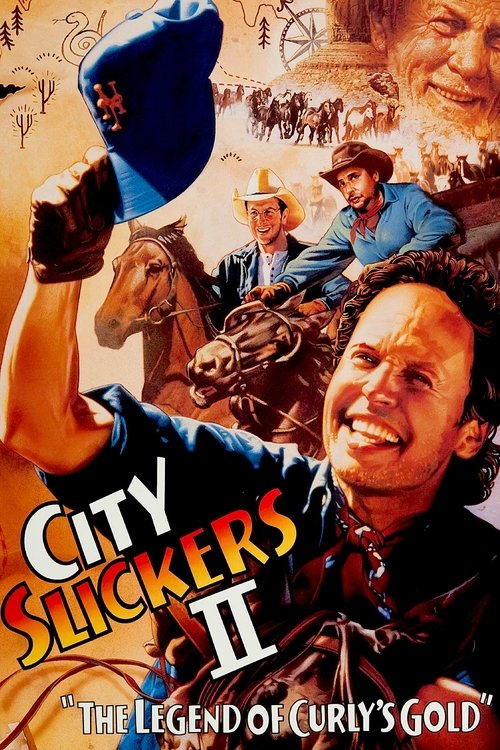
City Slickers II: The Legend of Curly's Gold
Mitch Robbins' 40th birthday begins quite well until he returns home and finds his brother Glen, the black sheep of the family, in his sofa. Nevertheless he is about to have a wonderful birthday-night with his wife when he discovers a treasure map of Curly by chance. Together with Phil and unfortunately Glen he tries to find the hidden gold of Curly's father in the desert of Arizona.
Working with a moderate budget of $40.0M, the film achieved a respectable showing with $72.0M in global revenue (+80% profit margin).


Plot Structure
Story beats plotted across runtime


Narrative Arc
Emotional journey through the story's key moments
Story Circle
Blueprint 15-beat structure
Arcplot Score Breakdown
Weighted: Precision (70%) + Arc (15%) + Theme (15%)
City Slickers II: The Legend of Curly's Gold (1994) showcases meticulously timed dramatic framework, characteristic of Paul Weiland's storytelling approach. This structural analysis examines how the film's 15-point plot structure maps to proven narrative frameworks across 1 hour and 56 minutes. With an Arcplot score of 7.5, the film showcases strong structural fundamentals.
Characters
Cast & narrative archetypes

Mitch Robbins
Phil Berquist
Glen Robbins
Duke Washburn
Barbara Robbins
Main Cast & Characters
Mitch Robbins
Played by Billy Crystal
Ad executive on another adventure to find Curly's hidden gold with his brother. Still searching for meaning beyond his midlife crisis.
Phil Berquist
Played by Daniel Stern
Mitch's loyal friend, now divorced and running an ultraviolet sunglasses cart in Florida. Eager for adventure and escape.
Glen Robbins
Played by Jon Lovitz
Mitch's estranged younger brother, a scam artist with a checkered past who brings the treasure map that starts the adventure.
Duke Washburn
Played by Jack Palance
Curly's evil twin brother who also seeks the gold. Ruthless, cunning, and willing to kill to claim his brother's treasure.
Barbara Robbins
Played by Patricia Wettig
Mitch's supportive wife who reluctantly lets him go on another dangerous adventure. Grounded and practical voice of reason.
Structural Analysis
The Status Quo at 1 minutes (1% through the runtime) establishes Mitch addresses a group at his former school, reflecting on his previous adventure. He appears settled but still searching for meaning, a year after Curly's death.. The analysis reveals that this early placement immediately immerses viewers in the story world.
The inciting incident occurs at 13 minutes when Glen appears at Mitch's door with Curly's old hat and reveals a treasure map hidden inside, showing the location of gold that Curly and their father once found. This disrupts Mitch's settled existence.. At 12% through the film, this Disruption aligns precisely with traditional story structure. This beat shifts the emotional landscape, launching the protagonist into the central conflict.
The First Threshold at 29 minutes marks the transition into Act II, occurring at 25% of the runtime. This indicates the protagonist's commitment to Mitch decides to go on the treasure hunt with Glen, Phil, and Ed. He chooses adventure over safety and commits to reconciling with his brother, leaving his comfortable life behind., moving from reaction to action.
At 57 minutes, the Midpoint arrives at 50% of the runtime—precisely centered, creating perfect narrative symmetry. Significantly, this crucial beat The group discovers they're being followed by Duke and his gang, dangerous cowboys who also want the gold. The stakes raise dramatically as the fun adventure becomes a dangerous pursuit. False victory turns to real threat., fundamentally raising what's at risk. The emotional intensity shifts, dividing the narrative into clear before-and-after phases.
The Collapse moment at 86 minutes (74% through) represents the emotional nadir. Here, Duke captures the group and takes the map. All seems lost - the treasure hunt has failed, they're prisoners, and Mitch confronts Glen about his lifetime of betrayals. Their brotherhood appears dead., reveals the protagonist at their lowest point. This beat's placement in the final quarter sets up the climactic reversal.
The Second Threshold at 92 minutes initiates the final act resolution at 80% of the runtime. Mitch realizes that the real treasure is his relationship with Glen and chooses forgiveness. He synthesizes the adventure-seeking spirit with family values. The group escapes and formulates a plan to confront Duke., demonstrating the transformation achieved throughout the journey.
Emotional Journey
City Slickers II: The Legend of Curly's Gold's emotional architecture traces a deliberate progression across 15 carefully calibrated beats.
Narrative Framework
This structural analysis employs proven narrative structure principles that track dramatic progression. By mapping City Slickers II: The Legend of Curly's Gold against these established plot points, we can identify how Paul Weiland utilizes or subverts traditional narrative conventions. The plot point approach reveals not only adherence to structural principles but also creative choices that distinguish City Slickers II: The Legend of Curly's Gold within the comedy genre.
Paul Weiland's Structural Approach
Among the 2 Paul Weiland films analyzed on Arcplot, the average structural score is 7.3, reflecting strong command of classical structure. City Slickers II: The Legend of Curly's Gold represents one of the director's most structurally precise works. For comparative analysis, explore the complete Paul Weiland filmography.
Comparative Analysis
Additional comedy films include The Bad Guys, Ella Enchanted and The Evening Star. For more Paul Weiland analyses, see Made of Honor.
Plot Points by Act
Act I
SetupStatus Quo
Mitch addresses a group at his former school, reflecting on his previous adventure. He appears settled but still searching for meaning, a year after Curly's death.
Theme
Phil tells Mitch "Some things are worth pursuing" during conversation about living life fully. This establishes the film's theme about pursuing adventure versus settling for ordinary existence.
Worldbuilding
Mitch's ordinary life established: happy marriage, stable job, but haunted by Curly's memory. His friends Phil and Ed are introduced, as is the strained relationship with his estranged brother Glen.
Disruption
Glen appears at Mitch's door with Curly's old hat and reveals a treasure map hidden inside, showing the location of gold that Curly and their father once found. This disrupts Mitch's settled existence.
Resistance
Mitch debates whether to pursue the treasure. Glen tries to convince him despite their troubled history. Phil and Ed get involved. Mitch researches the map and wrestles with trust issues regarding Glen.
Act II
ConfrontationFirst Threshold
Mitch decides to go on the treasure hunt with Glen, Phil, and Ed. He chooses adventure over safety and commits to reconciling with his brother, leaving his comfortable life behind.
Mirror World
The relationship with Glen becomes central as they journey together. Glen represents the mirror of Mitch's choices - the irresponsible dreamer versus the settled family man.
Premise
The treasure hunt adventure begins. The group navigates the wilderness, following clues, facing comedic obstacles, and bonding. They encounter the same locations from the map and experience the thrill of the quest.
Midpoint
The group discovers they're being followed by Duke and his gang, dangerous cowboys who also want the gold. The stakes raise dramatically as the fun adventure becomes a dangerous pursuit. False victory turns to real threat.
Opposition
Duke's gang closes in. Trust issues between Mitch and Glen resurface. The treasure becomes harder to find. Physical dangers mount. Glen's past lies and irresponsibility threaten to destroy the mission and their relationship.
Collapse
Duke captures the group and takes the map. All seems lost - the treasure hunt has failed, they're prisoners, and Mitch confronts Glen about his lifetime of betrayals. Their brotherhood appears dead.
Crisis
Mitch processes his anger at Glen while imprisoned. The brothers have their darkest moment of emotional honesty. Glen admits his failures. Mitch must decide whether treasure and revenge matter more than family.
Act III
ResolutionSecond Threshold
Mitch realizes that the real treasure is his relationship with Glen and chooses forgiveness. He synthesizes the adventure-seeking spirit with family values. The group escapes and formulates a plan to confront Duke.
Synthesis
The finale showdown with Duke. The group works together using skills learned on the journey. They recover the gold, defeat the villains, and Mitch and Glen fully reconcile. The treasure is found but proves secondary to brotherhood.
Transformation
Mitch returns home transformed, now connected to his brother. The gold brought them together but the relationship is the real treasure. Mirror of opening - still ordinary life, but enriched by reconciliation and brotherhood.