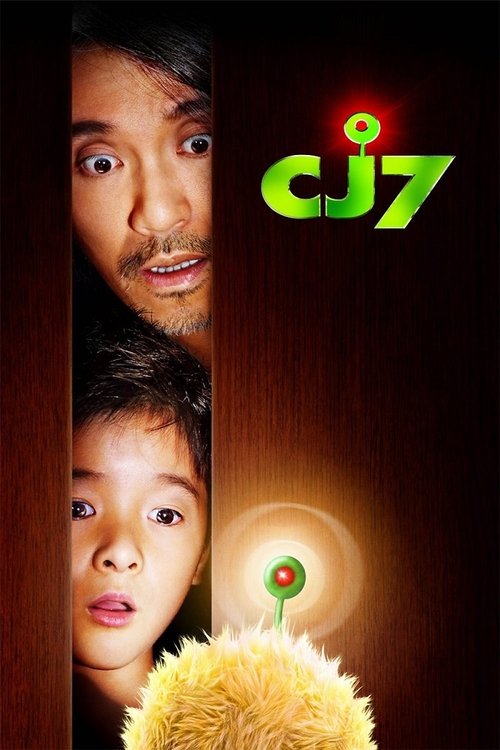
CJ7
A poor construction worker, who struggles to keep his son in private school, mistakes an orb he finds in a junkjard for a toy which proves to be much, much more once the young boy starts to play with it.
Despite a mid-range budget of $20.0M, CJ7 became a commercial success, earning $47.3M worldwide—a 137% return.
5 wins & 15 nominations


Plot Structure
Story beats plotted across runtime


Narrative Arc
Emotional journey through the story's key moments
Story Circle
Blueprint 15-beat structure
Arcplot Score Breakdown
Weighted: Precision (70%) + Arc (15%) + Theme (15%)
CJ7 (2008) exemplifies deliberately positioned narrative architecture, characteristic of Stephen Chow's storytelling approach. This structural analysis examines how the film's 15-point plot structure maps to proven narrative frameworks across 1 hour and 28 minutes. With an Arcplot score of 7.2, the film balances conventional beats with creative variation.
Characters
Cast & narrative archetypes

Dicky Chow
Ti Chow
CJ7
Miss Yuen
Johnny
Main Cast & Characters
Dicky Chow
Played by Xu Jiao
A poor young boy struggling in school who befriends an alien dog toy that brings hope to his difficult life.
Ti Chow
Played by Stephen Chow
Dicky's hardworking construction worker father who struggles to provide for his son while teaching him values of honesty and hard work.
CJ7
Played by N/A
A mysterious alien creature disguised as a toy dog who possesses magical healing powers and forms a bond with Dicky.
Miss Yuen
Played by Kitty Zhang
Dicky's kind and attractive teacher who shows compassion toward her students and becomes a love interest for Ti.
Johnny
Played by Han Yong-hwa
A wealthy, arrogant classmate who bullies Dicky and flaunts his expensive toys and privileged lifestyle.
Structural Analysis
The Status Quo at 1 minutes (1% through the runtime) establishes Ti (Dicky) wakes up in their dilapidated home, highlighting the poverty he and his father endure. His classmates mock him for being poor and dirty.. Of particular interest, this early placement immediately immerses viewers in the story world.
The inciting incident occurs at 10 minutes when Zhou finds a strange green orb in a junkyard and brings it home as a substitute for the expensive CJ1 toy. Ti is initially disappointed but accepts it.. At 11% through the film, this Disruption aligns precisely with traditional story structure. This beat shifts the emotional landscape, launching the protagonist into the central conflict.
The First Threshold at 21 minutes marks the transition into Act II, occurring at 24% of the runtime. This indicates the protagonist's commitment to Ti decides to keep CJ7 secret and tries to use its powers to excel at school, believing this magical shortcut will solve his problems and earn respect from classmates., moving from reaction to action.
At 43 minutes, the Midpoint arrives at 49% of the runtime—precisely centered, creating perfect narrative symmetry. Significantly, this crucial beat Ti fails his exam despite CJ7's attempted help. His father discovers he cheated and is deeply disappointed. Zhou beats Ti (false defeat) - the relationship between father and son reaches its lowest point., fundamentally raising what's at risk. The emotional intensity shifts, dividing the narrative into clear before-and-after phases.
The Collapse moment at 65 minutes (74% through) represents the emotional nadir. Here, Zhou falls from scaffolding at the construction site and dies from his injuries. Ti loses his father - literal death. CJ7 attempts to resurrect Zhou but appears to die in the process, disintegrating., reveals the protagonist at their lowest point. This beat's placement in the final quarter sets up the climactic reversal.
The Second Threshold at 70 minutes initiates the final act resolution at 80% of the runtime. CJ7 revives, having used its life force to resurrect Zhou. Ti realizes the true magic wasn't powers or shortcuts, but love and sacrifice. He understands his father's lessons and chooses to honor them., demonstrating the transformation achieved throughout the journey.
Emotional Journey
CJ7's emotional architecture traces a deliberate progression across 15 carefully calibrated beats.
Narrative Framework
This structural analysis employs a 15-point narrative structure framework that maps key story moments. By mapping CJ7 against these established plot points, we can identify how Stephen Chow utilizes or subverts traditional narrative conventions. The plot point approach reveals not only adherence to structural principles but also creative choices that distinguish CJ7 within the comedy genre.
Stephen Chow's Structural Approach
Among the 3 Stephen Chow films analyzed on Arcplot, the average structural score is 6.8, demonstrating varied approaches to story architecture. CJ7 represents one of the director's most structurally precise works. For comparative analysis, explore the complete Stephen Chow filmography.
Comparative Analysis
Additional comedy films include The Bad Guys, Ella Enchanted and The Evening Star. For more Stephen Chow analyses, see The Mermaid, Shaolin Soccer.
Plot Points by Act
Act I
SetupStatus Quo
Ti (Dicky) wakes up in their dilapidated home, highlighting the poverty he and his father endure. His classmates mock him for being poor and dirty.
Theme
Ti's teacher tells the class that hard work and education are the keys to success, not material possessions. This theme of inner worth versus external wealth runs throughout the film.
Worldbuilding
Establish Ti's struggles at the elite school where wealthy kids bully him. His father Zhou works grueling construction jobs to afford tuition. They share dreams of owning a CJ1 toy dog that Ti desperately wants.
Disruption
Zhou finds a strange green orb in a junkyard and brings it home as a substitute for the expensive CJ1 toy. Ti is initially disappointed but accepts it.
Resistance
Ti discovers the orb is alive - an alien creature with magical powers. He names it CJ7. Ti debates whether to use CJ7's powers for personal gain or listen to his father's teachings about honesty and hard work.
Act II
ConfrontationFirst Threshold
Ti decides to keep CJ7 secret and tries to use its powers to excel at school, believing this magical shortcut will solve his problems and earn respect from classmates.
Mirror World
Miss Yuen, Ti's kind teacher, shows genuine concern for him beyond his poverty. She represents the thematic truth - that people's worth isn't measured by wealth but by character.
Premise
Ti explores life with CJ7, experiencing the "promise of the premise" - magical hijinks at school. But CJ7's powers don't work as expected, leading to comedic failures and humiliation rather than success.
Midpoint
Ti fails his exam despite CJ7's attempted help. His father discovers he cheated and is deeply disappointed. Zhou beats Ti (false defeat) - the relationship between father and son reaches its lowest point.
Opposition
Ti rejects CJ7 in anger. Zhou continues working dangerous construction to provide for Ti. Pressure mounts as Zhou takes riskier jobs. Ti slowly realizes his father's sacrifices and begins to understand the lesson about hard work.
Collapse
Zhou falls from scaffolding at the construction site and dies from his injuries. Ti loses his father - literal death. CJ7 attempts to resurrect Zhou but appears to die in the process, disintegrating.
Crisis
Ti grieves both losses. He reflects on his father's teachings about integrity, hard work, and inner worth. The dark night before he finds new resolve.
Act III
ResolutionSecond Threshold
CJ7 revives, having used its life force to resurrect Zhou. Ti realizes the true magic wasn't powers or shortcuts, but love and sacrifice. He understands his father's lessons and chooses to honor them.
Synthesis
Ti returns to school transformed, no longer seeking validation through wealth or cheating. He earns respect through character. CJ7 leaves, having taught Ti what he needed. Ti excels through genuine effort.
Transformation
Ti walks with his father, poor but content. Multiple CJ7s appear in the sky, suggesting magic exists but Ti no longer needs it. He has internalized the lesson: true worth comes from within, not from shortcuts or material possessions.