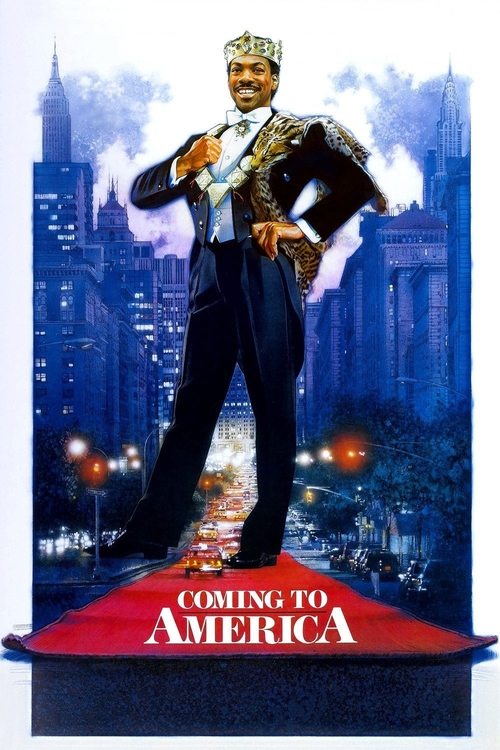
Coming to America
An African prince decides it’s time for him to find a princess... and his mission leads him and his most loyal friend to Queens, New York. In disguise as an impoverished immigrant, the pampered prince quickly finds himself a new job, new friends, new digs, new enemies and lots of trouble.
Despite a respectable budget of $30.0M, Coming to America became a massive hit, earning $288.8M worldwide—a remarkable 863% return.
Nominated for 2 Oscars. 5 wins & 5 nominations


Plot Structure
Story beats plotted across runtime


Narrative Arc
Emotional journey through the story's key moments
Story Circle
Blueprint 15-beat structure
Arcplot Score Breakdown
Weighted: Precision (70%) + Arc (15%) + Theme (15%)
Coming to America (1988) showcases precise narrative architecture, characteristic of John Landis's storytelling approach. This structural analysis examines how the film's 15-point plot structure maps to proven narrative frameworks across 1 hour and 57 minutes. With an Arcplot score of 6.2, the film takes an unconventional approach to traditional narrative frameworks.
Characters
Cast & narrative archetypes

Prince Akeem Joffer
Semmi
Lisa McDowell
Cleo McDowell
King Jaffe Joffer
Darryl Jenks
Queen Aoleon
Main Cast & Characters
Prince Akeem Joffer
Played by Eddie Murphy
Crown prince of Zamunda who travels to Queens, New York to find a wife who will love him for who he is, not his royal status.
Semmi
Played by Arsenio Hall
Akeem's loyal but comfort-loving best friend and royal aide who reluctantly accompanies him to America.
Lisa McDowell
Played by Shari Headley
Intelligent, independent daughter of a fast-food franchise owner who captures Akeem's heart with her genuine character.
Cleo McDowell
Played by John Amos
Lisa's father, owner of McDowell's restaurant, a man with big dreams who eagerly seeks advancement for his family.
King Jaffe Joffer
Played by James Earl Jones
Akeem's traditional, authoritative father who expects his son to follow royal customs and marry the woman chosen for him.
Darryl Jenks
Played by Eriq La Salle
Lisa's arrogant, self-centered boyfriend who takes her for granted and represents everything Akeem is not.
Queen Aoleon
Played by Madge Sinclair
Akeem's supportive mother who understands her son's desire for true love and subtly aids his quest.
Structural Analysis
The Status Quo at 1 minutes (1% through the runtime) establishes Prince Akeem wakes in his luxurious palace in Zamunda, surrounded by servants who cater to his every whim. His life is one of absolute privilege but lacks genuine human connection or personal agency.. Structural examination shows that this early placement immediately immerses viewers in the story world.
The inciting incident occurs at 15 minutes when Akeem rejects his arranged bride after she robotically barks like a dog on command, realizing this is not the authentic partnership he seeks. He confronts the emptiness of his privileged but controlled existence and the prospect of a loveless arranged marriage.. At 13% through the film, this Disruption is delayed, allowing extended setup of the story world. This beat shifts the emotional landscape, launching the protagonist into the central conflict.
The First Threshold at 29 minutes marks the transition into Act II, occurring at 25% of the runtime. This indicates the protagonist's commitment to Akeem and Semmi arrive in Queens, New York, deliberately choosing to live as poor commoners in a rundown apartment. Akeem makes the active choice to disguise his identity and wealth, entering the "mirror world" of American working-class life., moving from reaction to action.
At 59 minutes, the Midpoint arrives at 50% of the runtime—precisely centered, creating perfect narrative symmetry. Notably, this crucial beat False victory: Akeem and Lisa share a romantic evening at a basketball game and begin genuinely falling in love. Lisa breaks up with her arrogant boyfriend Darryl. Everything seems perfect—Akeem has found true love. But the foundation is built on deception, and the stakes are raised., fundamentally raising what's at risk. The emotional intensity shifts, dividing the narrative into clear before-and-after phases.
The Collapse moment at 88 minutes (75% through) represents the emotional nadir. Here, All is lost: The King and Queen of Zamunda arrive with full royal pageantry, exposing Akeem's true identity to Lisa and her family at the worst possible moment. Lisa feels completely betrayed—the authentic connection she thought they had was built on lies. She rejects Akeem entirely. His quest for true love has destroyed the very thing he sought., demonstrates the protagonist at their lowest point. This beat's placement in the final quarter sets up the climactic reversal.
The Second Threshold at 94 minutes initiates the final act resolution at 80% of the runtime. At the wedding ceremony, Akeem realizes he cannot go through with the arranged marriage. He tells his father he cannot marry someone he doesn't love, fully ready to defy tradition and his duty as prince. He chooses authentic love over duty, even if it means losing everything., demonstrating the transformation achieved throughout the journey.
Emotional Journey
Coming to America's emotional architecture traces a deliberate progression across 15 carefully calibrated beats.
Narrative Framework
This structural analysis employs systematic plot point analysis that identifies crucial turning points. By mapping Coming to America against these established plot points, we can identify how John Landis utilizes or subverts traditional narrative conventions. The plot point approach reveals not only adherence to structural principles but also creative choices that distinguish Coming to America within the comedy genre.
John Landis's Structural Approach
Among the 13 John Landis films analyzed on Arcplot, the average structural score is 7.1, reflecting strong command of classical structure. Coming to America takes a more unconventional approach compared to the director's typical style. For comparative analysis, explore the complete John Landis filmography.
Comparative Analysis
Additional comedy films include The Bad Guys, Ella Enchanted and The Evening Star. For more John Landis analyses, see Spies Like Us, The Blues Brothers and ¡Three Amigos!.
Plot Points by Act
Act I
SetupStatus Quo
Prince Akeem wakes in his luxurious palace in Zamunda, surrounded by servants who cater to his every whim. His life is one of absolute privilege but lacks genuine human connection or personal agency.
Theme
Akeem's father states the theme when discussing the arranged marriage: "I met your mother only once before we were married. It was a beautiful ceremony and we have been perfectly happy ever since." Akeem responds he wants a woman who will love him for who he is, not what he is—establishing the thematic question about authentic love versus arranged duty.
Worldbuilding
We see Akeem's gilded cage existence in Zamunda: servants bathe him, trained exotic animals entertain him, and his bride has been chosen and trained to agree with everything he says. His 21st birthday arrives, and he meets his pre-selected bride who has no personality or opinions of her own, only programmed responses.
Disruption
Akeem rejects his arranged bride after she robotically barks like a dog on command, realizing this is not the authentic partnership he seeks. He confronts the emptiness of his privileged but controlled existence and the prospect of a loveless arranged marriage.
Resistance
Akeem debates his options with his friend Semmi and eventually convinces his father to give him 40 days to travel and find a bride. His father reluctantly agrees. Akeem and Semmi plan their journey to America, specifically Queens, New York, where Akeem hopes to find a woman who will love him for himself.
Act II
ConfrontationFirst Threshold
Akeem and Semmi arrive in Queens, New York, deliberately choosing to live as poor commoners in a rundown apartment. Akeem makes the active choice to disguise his identity and wealth, entering the "mirror world" of American working-class life.
Mirror World
Akeem meets Lisa McDowell at a black awareness rally. She embodies everything he seeks: intelligence, independence, and strength of character. She has her own opinions and doesn't know he's royalty. This relationship will teach Akeem the cost and value of authentic connection.
Premise
The "fish out of water" fun: Akeem gets a job at McDowell's (a McDonald's ripoff), experiences American working-class life, courts Lisa while hiding his true identity, and navigates the comedy of pretending to be poor. He genuinely connects with Lisa and her family while keeping up his elaborate disguise.
Midpoint
False victory: Akeem and Lisa share a romantic evening at a basketball game and begin genuinely falling in love. Lisa breaks up with her arrogant boyfriend Darryl. Everything seems perfect—Akeem has found true love. But the foundation is built on deception, and the stakes are raised.
Opposition
Pressure intensifies from multiple directions: Lisa's father wants her to marry Darryl for business reasons, Semmi grows tired of poverty and secretly contacts the royal family, Akeem's deception deepens as his relationship with Lisa grows more serious, and the arrival of the king's advance team begins to expose the truth.
Collapse
All is lost: The King and Queen of Zamunda arrive with full royal pageantry, exposing Akeem's true identity to Lisa and her family at the worst possible moment. Lisa feels completely betrayed—the authentic connection she thought they had was built on lies. She rejects Akeem entirely. His quest for true love has destroyed the very thing he sought.
Crisis
Akeem returns to Zamunda in defeat, preparing for the arranged marriage to Imani (his original bride). He has lost Lisa and faces returning to the empty life he tried to escape. He wrestles with whether authentic love is even possible for someone in his position.
Act III
ResolutionSecond Threshold
At the wedding ceremony, Akeem realizes he cannot go through with the arranged marriage. He tells his father he cannot marry someone he doesn't love, fully ready to defy tradition and his duty as prince. He chooses authentic love over duty, even if it means losing everything.
Synthesis
The finale: Akeem lifts his bride's veil to discover his father has brought Lisa to Zamunda—showing the King has learned the lesson too. Lisa has chosen to give Akeem another chance, accepting both who he is (a prince) and who he really is (a man who genuinely loves her). They marry in a grand ceremony that now represents true love, not arranged duty.
Transformation
Final image mirrors the opening: Akeem and Lisa in the royal bed, but this time with mutual love and equality. When Lisa playfully orders him around, Akeem joyfully complies—showing he has found the authentic partnership he sought. The gilded cage is now a home built on genuine love.