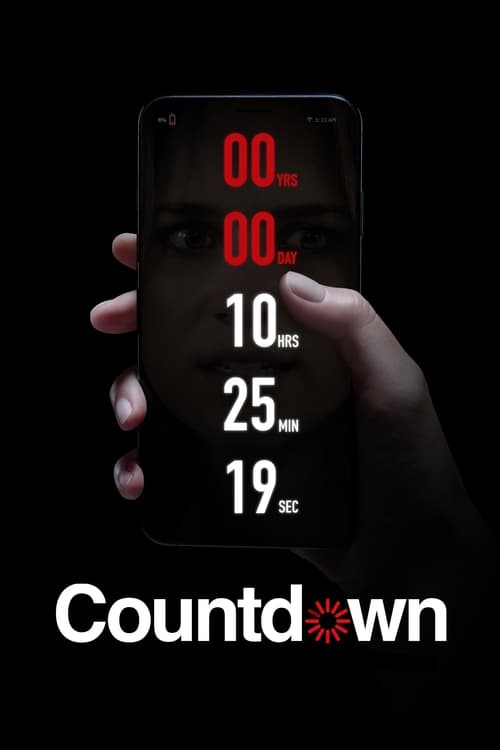
Countdown
A young nurse downloads an app that tells her she only has three days to live. With time ticking away and a mysterious figure haunting her, she must find a way to save her life before time runs out.
Despite its tight budget of $6.5M, Countdown became a commercial juggernaut, earning $48.0M worldwide—a remarkable 639% return. The film's innovative storytelling found its audience, illustrating how strong storytelling can transcend budget limitations.


Plot Structure
Story beats plotted across runtime


Narrative Arc
Emotional journey through the story's key moments
Story Circle
Blueprint 15-beat structure
Arcplot Score Breakdown
Weighted: Precision (70%) + Arc (15%) + Theme (15%)
Countdown (2019) showcases strategically placed dramatic framework, characteristic of Justin Dec's storytelling approach. This structural analysis examines how the film's 15-point plot structure maps to proven narrative frameworks across 1 hour and 30 minutes. With an Arcplot score of 7.0, the film balances conventional beats with creative variation.
Characters
Cast & narrative archetypes

Quinn Harris
Matt Monroe
Father John
Dr. Sullivan
Derek
Jordan Harris
Main Cast & Characters
Quinn Harris
Played by Elizabeth Lail
A young nurse who downloads a cursed app that predicts her death in three days
Matt Monroe
Played by Jordan Calloway
Quinn's friend and colleague who discovers the app and its deadly consequences
Father John
Played by P.J. Byrne
An eccentric priest who helps Quinn understand and fight the demonic curse
Dr. Sullivan
Played by Peter Facinelli
Quinn's superior at the hospital who sexually harasses her
Derek
Played by Tom Segura
A phone store employee who helps Quinn try to hack the app
Jordan Harris
Played by Talitha Bateman
Quinn's younger sister who also downloads the app
Structural Analysis
The Status Quo at 1 minutes (1% through the runtime) establishes Quinn Harris is introduced as a dedicated nurse working at a hospital, caring for her younger sister after their mother's death. She represents competence and responsibility in her ordinary world.. Structural examination shows that this early placement immediately immerses viewers in the story world.
The inciting incident occurs at 10 minutes when Quinn downloads the Countdown app and discovers she has only three days left to live. This transforms the app from a party game into a death sentence, disrupting her rational worldview.. At 11% through the film, this Disruption aligns precisely with traditional story structure. This beat shifts the emotional landscape, launching the protagonist into the central conflict.
The First Threshold at 22 minutes marks the transition into Act II, occurring at 25% of the runtime. This shows the protagonist's commitment to After witnessing undeniable proof that the app's predictions are real and supernatural, Quinn commits to actively fighting her fate rather than passively accepting death, crossing into a world where the supernatural is real., moving from reaction to action.
At 44 minutes, the Midpoint arrives at 49% of the runtime—precisely centered, creating perfect narrative symmetry. Structural examination shows that this crucial beat They discover a potential loophole: the app's user agreement states breaking it voids the contract. They believe they've found a way to survive by deliberately violating the terms, giving them false hope., fundamentally raising what's at risk. The emotional intensity shifts, dividing the narrative into clear before-and-after phases.
The Collapse moment at 66 minutes (73% through) represents the emotional nadir. Here, Matt dies despite their efforts to save him, proving their solution was a false hope. Quinn is now alone, her countdown running out, and her sister is now marked for death as well. All seems lost., indicates the protagonist at their lowest point. This beat's placement in the final quarter sets up the climactic reversal.
The Second Threshold at 72 minutes initiates the final act resolution at 80% of the runtime. Quinn realizes that true sacrifice—dying to save her sister—is the loophole that breaks the contract. She chooses to die in Jordan's place, accepting her fate to save someone she loves, transforming fear into love., demonstrating the transformation achieved throughout the journey.
Emotional Journey
Countdown's emotional architecture traces a deliberate progression across 15 carefully calibrated beats.
Narrative Framework
This structural analysis employs a 15-point narrative structure framework that maps key story moments. By mapping Countdown against these established plot points, we can identify how Justin Dec utilizes or subverts traditional narrative conventions. The plot point approach reveals not only adherence to structural principles but also creative choices that distinguish Countdown within the horror genre.
Comparative Analysis
Additional horror films include Thinner, A Nightmare on Elm Street and Mary Reilly.
Plot Points by Act
Act I
SetupStatus Quo
Quinn Harris is introduced as a dedicated nurse working at a hospital, caring for her younger sister after their mother's death. She represents competence and responsibility in her ordinary world.
Theme
A patient or colleague mentions something about fate and whether we can change what's meant to happen, establishing the film's central question about predestination versus free will.
Worldbuilding
Establishment of Quinn's world: her job at the hospital, relationship with her sister Jordan, the workplace dynamics including Dr. Sullivan, and the introduction of the Countdown app as a viral phenomenon among young people.
Disruption
Quinn downloads the Countdown app and discovers she has only three days left to live. This transforms the app from a party game into a death sentence, disrupting her rational worldview.
Resistance
Quinn tries to rationalize the app, researches its victims, discovers a pattern of deaths matching the app's predictions, and debates whether to believe in the supernatural threat or dismiss it as coincidence.
Act II
ConfrontationFirst Threshold
After witnessing undeniable proof that the app's predictions are real and supernatural, Quinn commits to actively fighting her fate rather than passively accepting death, crossing into a world where the supernatural is real.
Mirror World
Quinn meets Matt, another person marked for death by the app. This relationship introduces the thematic element of connection and mutual support in facing mortality, contrasting with facing death alone.
Premise
Quinn and Matt explore ways to break the curse: consulting a tech expert to hack the app, visiting a priest named Father John who explains the demonic nature of the curse, and attempting various methods to cheat death.
Midpoint
They discover a potential loophole: the app's user agreement states breaking it voids the contract. They believe they've found a way to survive by deliberately violating the terms, giving them false hope.
Opposition
The demon intensifies its attacks, Matt's countdown expires, their attempts to break the user agreement fail in unexpected ways, and Quinn realizes the entity is more cunning than they thought. Her sister Jordan downloads the app.
Collapse
Matt dies despite their efforts to save him, proving their solution was a false hope. Quinn is now alone, her countdown running out, and her sister is now marked for death as well. All seems lost.
Crisis
Quinn processes Matt's death and confronts her deepest guilt: her mother's death. She realizes she's been living in fear and guilt, which the demon has been exploiting. She must forgive herself to break free.
Act III
ResolutionSecond Threshold
Quinn realizes that true sacrifice—dying to save her sister—is the loophole that breaks the contract. She chooses to die in Jordan's place, accepting her fate to save someone she loves, transforming fear into love.
Synthesis
Quinn executes her plan to sacrifice herself, confronts the demon, dies to save Jordan, but is resuscitated by her sister, technically fulfilling the death prophecy while surviving. The curse is broken through love and sacrifice.
Transformation
Quinn is alive, reunited with her sister, having overcome both the supernatural threat and her internal guilt. She has transformed from someone running from death and guilt into someone who faced both with courage and love.